
Short version: students do not buy student section seats. Each school carves a block of its home-game inventory out for students, then distributes that block through one of four mechanisms — a free lottery, a priority-points system earned by attendance, a first-come claim window, or guest seats a season-ticket holder allocates. Knowing which model your school runs tells you exactly when to act and what to do if you miss.
That distinction matters more than it sounds. A student who waits for a sale never finds one, and a student who treats the claim window like an optional email spends a season watching from the parking lot TV. The mechanics are public, the timing is narrow, and the schools that hand out seats have one goal above all else: filling empty chairs in the section that is supposed to be the loudest part of the stadium.
What follows is the process as it actually runs, from eligibility through game-day entry, plus what to do when the seats are gone. Policies differ by university and change from year to year, so treat everything here as a map rather than a rulebook and confirm the details with your own ticket office.
Table of Contents
- What You Need
- Step-by-Step: How Student Sections Get Tickets Each Season
- Common Mistakes
- Frequently Asked Questions
- Do students pay for student section tickets in college football?
- Do you have to be a student to sit in the student section?
- Can I transfer my student section ticket to a friend?
- What happens to student tickets that nobody claims?
- How many student tickets can one student get per game?
- Do student section tickets work for away games and bowl games?
- Conclusion
What You Need
Four things, and you can line up the first three in an afternoon.
- A verified student identity. Nearly every school ties ticket access to a current enrollment record and a physical or digital student ID. If your ID expired at the end of last term, get it replaced before anything else.
- An account on the school’s ticket portal. Most programs use the same vendor that handles season tickets, and the student allocation usually lives in the same account. Registering with the email your school issued you matters more than any other single step.
- The right email address on file. Allocation windows are frequently announced by email only, sometimes with just a few days of notice.
- A working knowledge of your school’s model. Some programs run points, some run lotteries, some just open a link and take whoever gets there first. The plan below shows you where to find that answer for your school.
Step-by-Step: How Student Sections Get Tickets Each Season
Check Student Eligibility and School Requirements
Eligibility is narrower than “I go to school here.” Most programs define a student as an enrolled undergraduate or graduate student carrying a full-time course load, and a surprising number exclude students who fail to pick up a season-ticket account or complete an annual student-athletics acknowledgment.
Graduate students, nontraditional students, and students living abroad or off campus can sit in different buckets depending on the school. Before you invest any effort in points or requests, read the eligibility paragraph on the ticket office page and confirm your status matches it exactly.
How you can tell it worked: your name shows up in the student section of your account, and the system lets you view or request an allocation rather than showing a generic public page.
Find the School’s Student-Ticket Allocation Policy
Go to the athletics website first, then the ticket office page inside it. That is where the current claim dates, point values, and eligibility wording live. School websites change constantly, and the most useful detail you will find is almost never in a press release.
Three things to look for on that page: the allocation model the school uses, the date student requests open for the season, and the deadline for claiming any seat you are awarded. If your program also handles away-game requests, bowl games, or parking passes through the same system, note those dates too — they are frequently separate from home-game claims and easy to miss.
Students on school-specific forums report that requests often need to be filed about a week before kickoff and that decisions land by point total, so build your own reminders a week earlier than the school’s.
Understand Student Priority, Points, and Lotteries
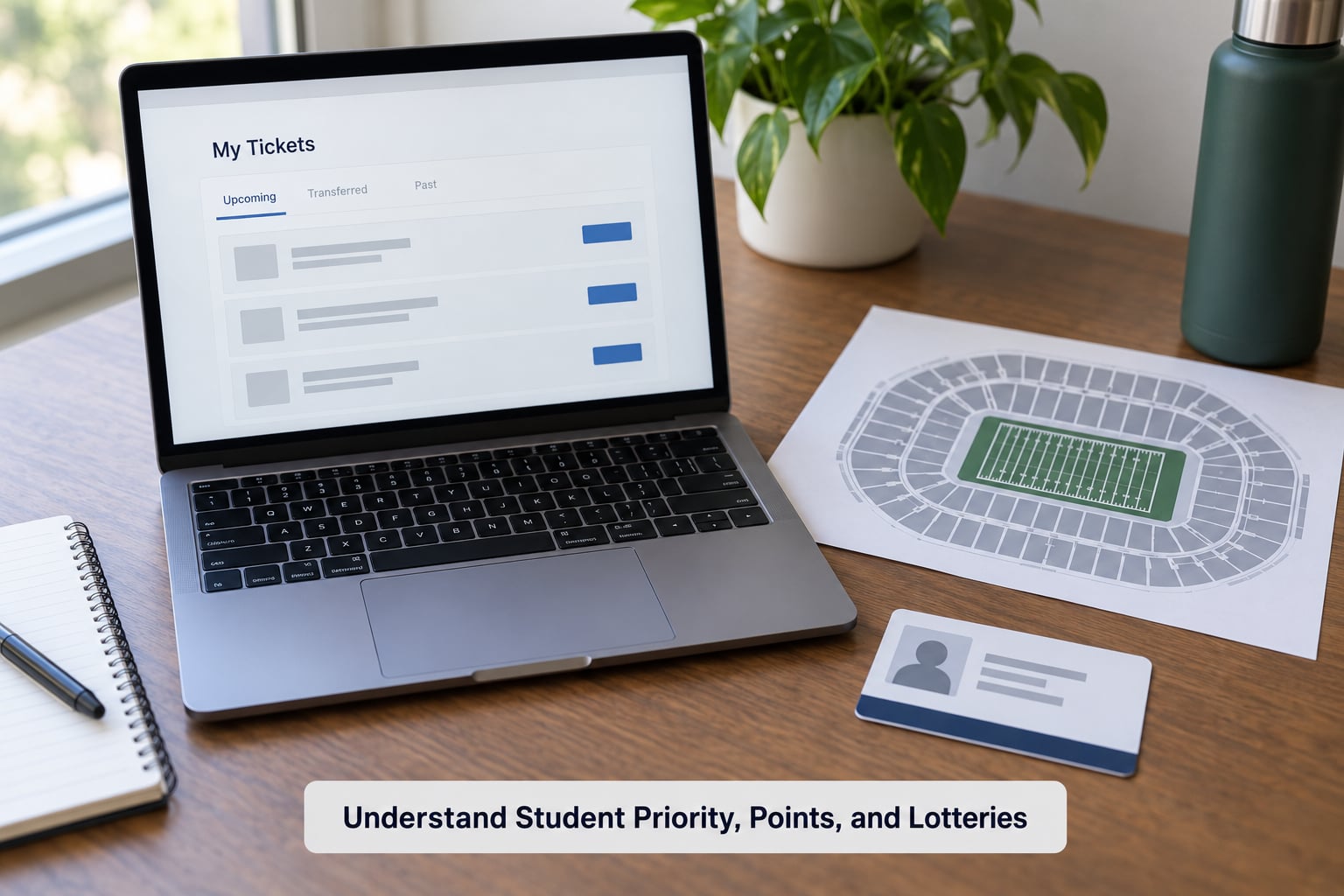
Priority-points systems reward attendance and participation, and the point values reveal what the school actually wants you at. Northwestern’s system, described in a September 2023 Inside Northwestern column, paid one to five points depending on the sport attended, with football worth three and men’s conference basketball worth one. Mizzou announced Zou Loyalty Points in a November 2023 Columbia Missourian report, developed with student section leaders, after student attendance to basketball climbed 121 percent, with rewards including a trip to the Kansas game and other all-expense-paid travel.
The pattern is consistent: points buy access to scarce games, not to the season. Cincinnati’s ticket office documented that its UCATS Black Priority points apply to away sporting events, postseason events, and season parking pass allocation, which is a useful reminder that a points balance can unlock more than home football seats.
Lotteries work differently. You request a ticket, sometimes for a specific game, and a random draw decides. The problem is that no school publishes a win rate, so odds are genuinely unknown. First-come systems skip both points and luck and simply reward whoever submits first, which is the fairest option on paper and the hardest one to win.
Either way, the useful move is the same: figure out the model early, then decide how many games you are actually going to attend before you commit points to any of them.
Request or Purchase the Available Student Seats
When the window opens, log in and claim what you were allocated inside the deadline. A student ticket allotment is a claim, not a gift — unclaimed seats typically return to the athletic department, and then to the general public.
The clearest documented example came at Penn State, where a December 2024 Athlon Sports report found that students did not request their full allotment for an SMU game and roughly 5,000 tickets ended up released to the general public. That is the single biggest reason to claim every seat you are offered, even the games you are not sure about.
Keep the confirmation. Screenshot the claim, check that the ticket appears in your account with a date, section, and seat number, and note the deadline for any payment step. Where a student ticket carries a service charge, pay it before the window closes or the claim can be released back to the pool.
Prepare for Game-Day Entry
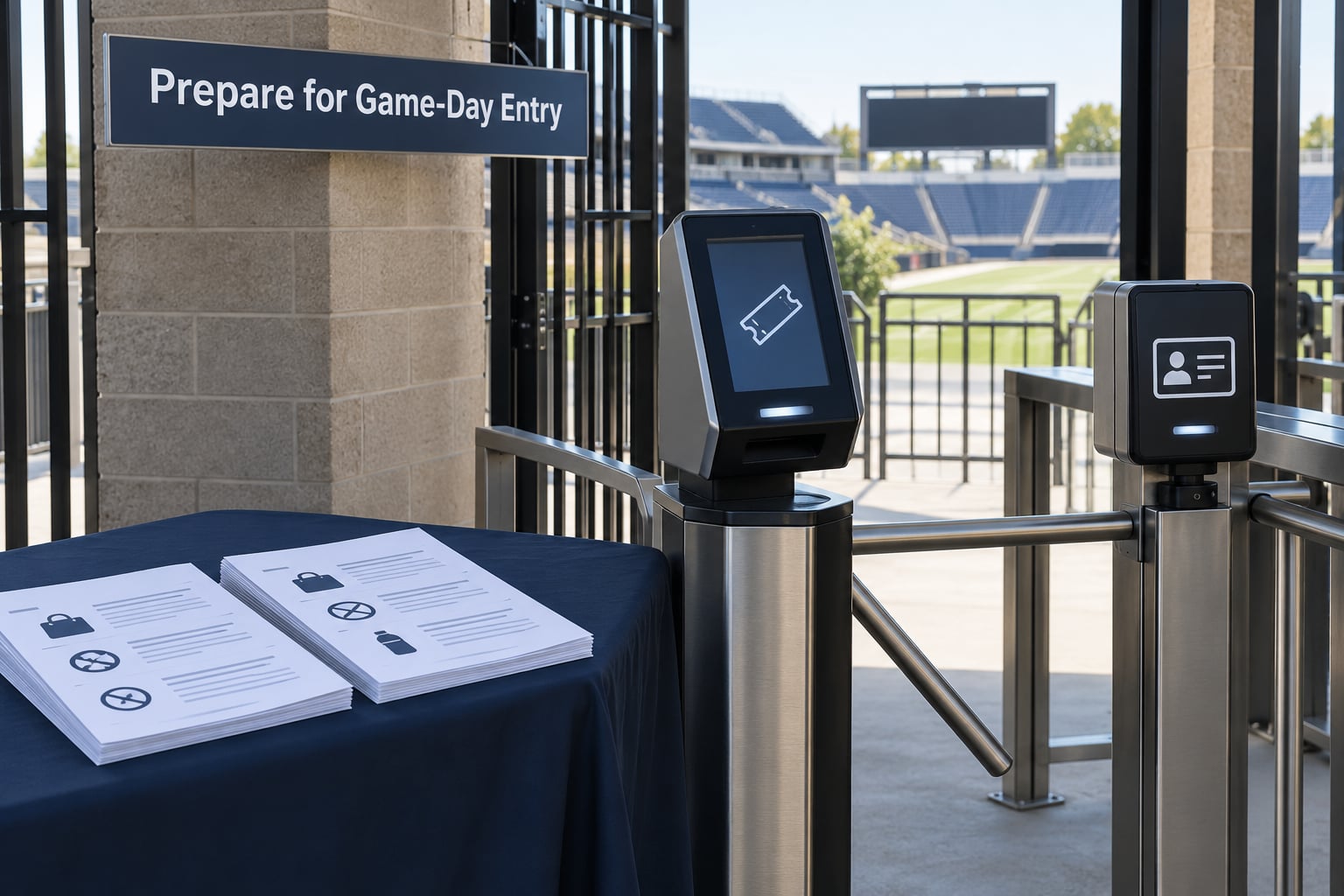
Most programs deliver the ticket to your account as a mobile barcode a few days before kickoff, and some require the ticket and a matching student ID scanned separately. Download the ticket before you leave home, because stadium Wi-Fi will not save you when the app needs to refresh.
Check the current entry rules rather than last year’s memory: gate open times, which entrance serves the student section, bag size and prohibited items, whether re-entry is allowed, and the transfer cutoff. Guest seats are the most common entry problem, since a ticket transferred to a non-student may scan fine but still leave you subject to a guest policy.
Arrive earlier than you think you need to. Student lines are long by design, and a seat in that section is only worth having if you are in it before the first quarter.
What If Student Tickets Are Unavailable?
Plenty, in this order.
- Join the waitlist. Cancellations, weather changes, and unused season-ticket-holder seats all flow back into the pool. Read the waitlist instructions closely, since some schools require you to be logged in and eligible at the moment a seat is released.
- Take a guest seat through a season-ticket holder. This is the most overlooked route to the student section. Season-ticket holders routinely receive a set number of guest or student benefits per season, and a friend with extras can sometimes allocate them to a student who missed the claim window.
- Use the school’s official resale or exchange. Many athletic departments run their own exchange for season-ticket holders, which keeps money inside the program and keeps the resale rules enforceable.
- Check visiting-student programs. Schools in the same conference often host official visiting-student ticket blocks for students at member institutions.
- Buy into the general admission tier. If the school sells general admission, that is the legitimate fallback when the student block is gone.
Avoid secondary-market resale for section entry. Ticket offices publish the prohibited-item list and the scan rules, and resellers do not always transfer cleanly through the school’s system.
Common Mistakes
Missing the claim window. The most common failure, and the most avoidable. Put the open and close dates in your calendar the day you read them, not the day you get the email.
Using an outdated email address. Allocation notices go to the address on file with the registrar or ticket office. Update it during registration, not during kickoff week.
Assuming you are eligible. Part-time status, an unrenewed ID, or a missed annual acknowledgment can disqualify an otherwise registered student. Verify before you spend the season earning points toward a claim you cannot make.
Ignoring waitlist instructions. Some waitlists require you to be present and checked in at the gate, and some expire the release within minutes. Read the terms rather than assuming you will be emailed.
Assuming student seats cover away or postseason games. Home-game student allocations almost never extend to conference road games, non-conference road games, bowl games, or the College Football Playoff. Those travel through separate request processes, often with different eligibility rules.
Sitting on unclaimed seats. If you cannot use a game, transfer or donate it through the school’s system before the deadline. Letting it lapse costs your standing in priority systems and hands the seat to a paying customer, which is the fastest way to make a ticket office tighten its rules.
One more worth flagging: transferring a ticket can cost points. Several programs treat a transferred or donated student ticket as an unused allocation, so check your school’s rule before you hand one to a friend.
Frequently Asked Questions
Do students pay for student section tickets in college football?
Most student section seats are free or carry only a small service charge, because the athletic department wants the section full and counts on students to supply the atmosphere. The cost to you is usually time, not money: you claim seats through a lottery, points system, or claim window, and you pay a service fee only if your school requires one. Secondary-market prices for the same seat are typically far higher, which is the core of the fairness complaint around these systems.
Do you have to be a student to sit in the student section?
Almost always. Schools define student section eligibility around current enrollment, full-time status, and a valid student ID, and ticket scanners check both the mobile ticket and a matching credential at the gate. Guests are the exception: a season-ticket holder can sometimes allocate a guest or student benefit to a non-student, but those seats sit under the holder’s policy and may be capped. Rules differ by school, so read the eligibility language on your ticket office page.
Can I transfer my student section ticket to a friend?
Often, through the school’s own transfer system, and it is safer than handing over a screenshot. Be aware that many programs treat a transferred or donated student ticket as an unused allocation, which can cost you priority points or future claim eligibility. Always transfer before the official cutoff rather than at the gate, and confirm the receiving student is still eligible, since some schools check credentials at entry.
What happens to student tickets that nobody claims?
Unclaimed seats go back to the athletic department, and most departments then release them to the general public or other ticket holders. A December 2024 Athlon Sports report on Penn State found that students did not request their full allotment for an SMU game and about 5,000 tickets were released to the general public. The practical lesson is simple: claim what you are allocated inside the deadline, even for games you might skip.
How many student tickets can one student get per game?
It varies by school, and it usually depends on your priority rather than a flat number. Some programs set a per-game cap for every student, while others let higher-priority students claim several seats at once. Points or seniority often determine how deep you can go. Read the allotment language on your ticket office page, because a school that allows generous claims for seniors may allow only one seat for a first-year student.
Do student section tickets work for away games and bowl games?
Rarely. Home-game student allocations generally cover only home regular-season games at your school. Away conference games, non-conference road games, bowl games, and College Football Playoff contests run through separate request processes with their own eligibility rules and deadlines, often administered by an alumni or donor group instead of the student allocation. Start those applications early, because they typically close well before the season starts.
Conclusion
If you want the plain answer to how student sections get tickets in college football, it is allocation, not sale. Start on your school’s official athletics site, then open the ticket office page and find three things: whether you qualify as a student, which allocation model they use, and the open and close dates for the claim window. Everything else in this guide is a variation on those three facts.
Put the dates in your calendar the same day you read them, claim every seat you are offered, and if you come up empty, check the waitlist and ask about season-ticket-holder guest benefits before you spend anything on the secondary market. Policies change every year, so confirm the current rules with your ticket office before you plan a game around them.