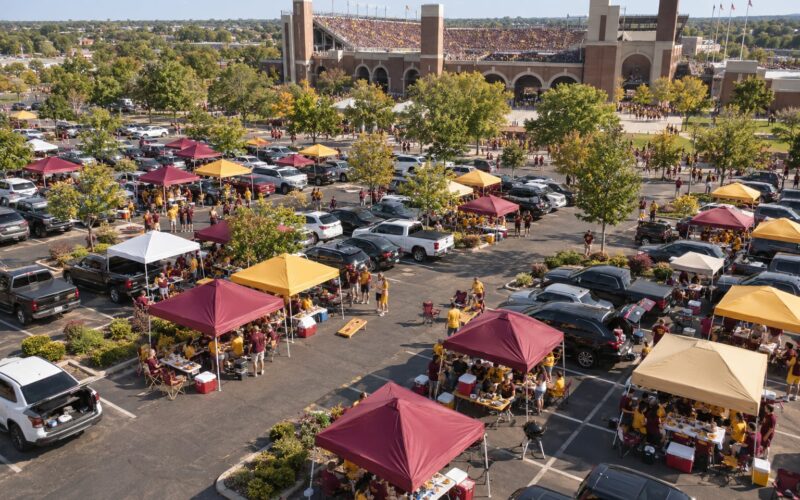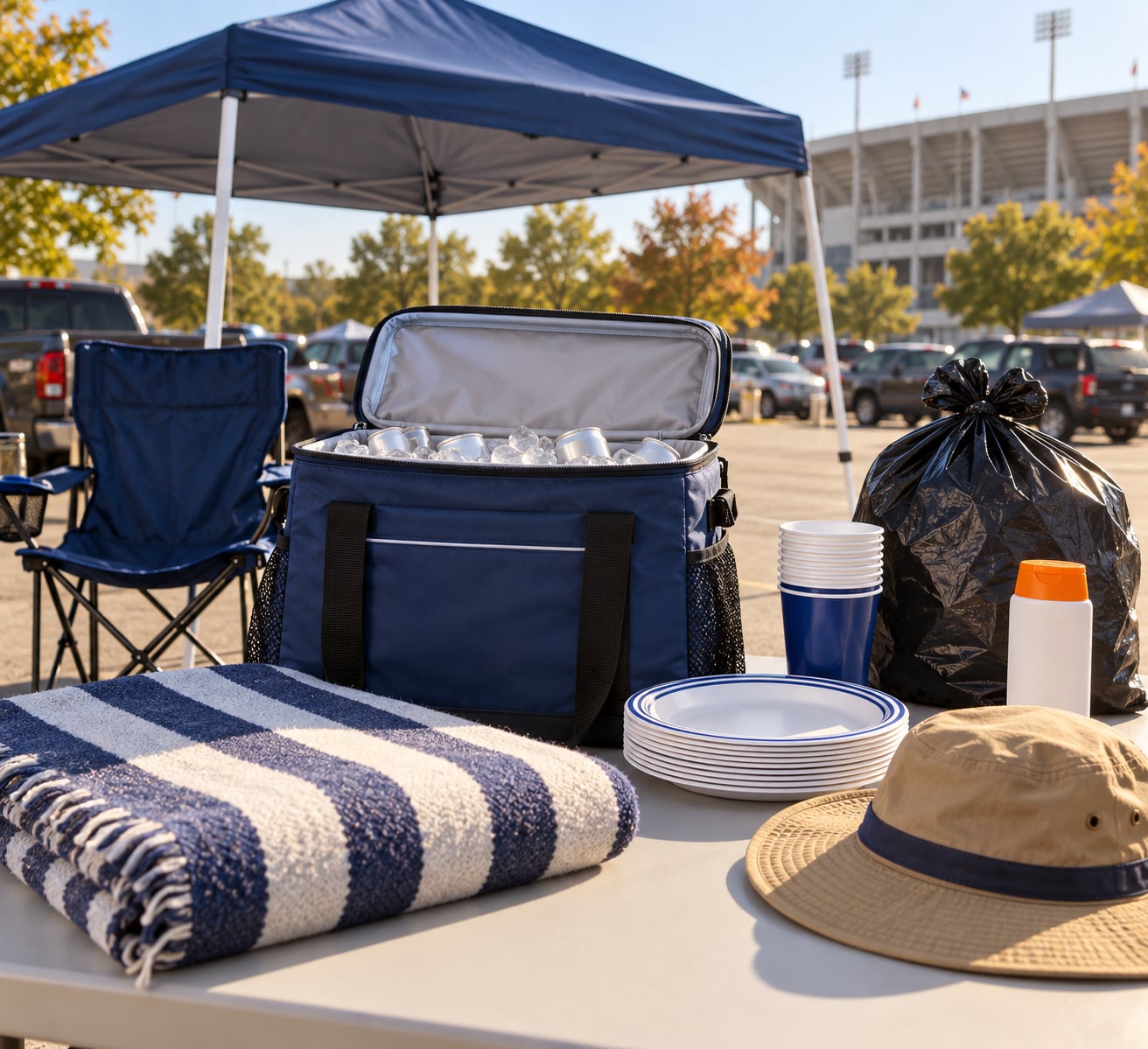
Bring shade and seating, a cooler packed with ice and drinks, and food you can eat with one hand. Everything else on this checklist for what to bring to a college football tailgate builds on those three: a grill or precooked dishes, paper goods, a trash bag, a speaker, and the sun protection you will wish you had at 11 a.m. in October.
Here is the short version of what a tailgate is: the pre-game gathering in the stadium parking lot where fans cook, eat, play cornhole, and hang out before kickoff. Plenty of groups skip the stands entirely and watch the game from the lot, so treat your setup as your viewing spot if you do not have tickets.
One thing first-timers never expect is that parking space, venue rules, and arrival order decide whether the day works. Fans on r/Tulane put it plainly: go a few hours before kickoff to secure a spot, because the university sends out trash cans and porta-potties once the lot fills.
Table of Contents
- What to Bring to a College Football Tailgate at a Glance
- 1. Game Tickets and a Photo ID
- 2. A Picnic Blanket or Outdoor Seating
- 3. Shade From a Tent, Canopy, or Umbrella
- 4. A Well-Iced Cooler
- 5. Ice and Frozen Ice Packs
- 6. Simple Tailgate Food
- 7. Drinks for the Whole Group
- 8. Plates, Cups, and Serving Utensils
- 9. Food Safety and Cleanup Supplies
- 10. Trash Bags and a Small Cleaning Kit
- 11. A Portable Speaker
- 12. Chargers and a Portable Battery
- 13. Weather-Ready Clothing and Sun Protection
- 14. Parking Details, Cash, and a Small First-Aid Kit
- Frequently Asked Questions
- What Should You Pack First?
What to Bring to a College Football Tailgate at a Glance
Fourteen items, split by job. The right-hand column tells you whether you truly need it or whether it depends on your group size and the weather forecast.
| Item | What it does | Every time or situational |
|---|---|---|
| Game ticket and photo ID | Entry, and a fallback if your phone dies | Every time |
| Blanket or folding chairs | Somewhere to sit for three hours | Every time |
| Canopy or umbrella | Shade from direct sun | Every time in Arizona |
| Cooler | Cold drinks and safe food storage | Every time |
| Ice and frozen ice packs | Keeps everything cold for hours | Every time |
| Tailgate food | The reason people show up early | Every time |
| Drinks | Water first, then whatever your group prefers | Every time |
| Plates, cups, utensils | Serving without a sink | Every time |
| Food safety gear | Thermometer, separate containers, hand sanitizer | Every time |
| Trash bags and wipes | Leaving the lot cleaner than you found it | Every time |
| Portable speaker | Music before kickoff | Every time |
| Power bank and cables | Tickets, photos, a flashlight | Every time |
| Sun and weather layers | Sunscreen, hat, poncho, closed-toe shoes | Every time |
| Cash, parking details, first aid | Food stands, flat tires, blisters | Situational |
1. Game Tickets and a Photo ID
Check the ticket situation the night before, not the morning of. If the group is splitting tickets across phones, confirm who has the primary copy and how transfers work, because a screenshot is not always a valid ticket.
Bring a government-issued photo ID if your stadium asks for one, and save the gate, lot, and entry information on your phone before you leave the house. A dead battery at the gate with no screenshot is the single most common game-day disaster, so bring a portable power bank (item 12).
2. A Picnic Blanket or Outdoor Seating
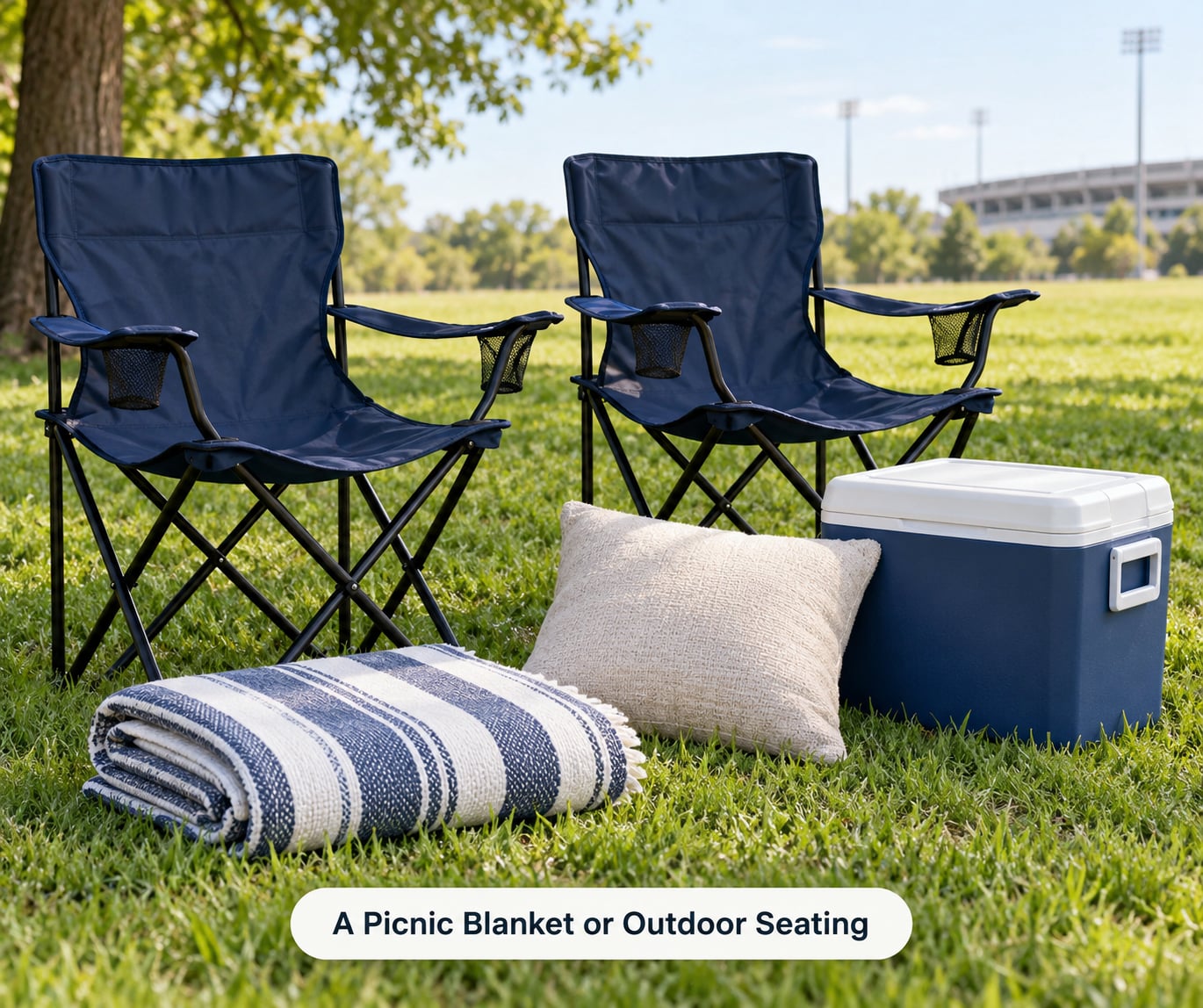
Choosing seating for a college football tailgate in good weather
A standard parking spot is roughly 10 feet wide by 18 feet deep, which is exactly why groups ask on r/WVU whether a truck, a 12-by-12 tent, and two tables will ever fit. Measure your footprint before you buy the tent.
Blankets are the simple choice and cost nothing but space. Folding chairs win when anyone in the group has trouble getting up off the ground or when you plan to stand and move around a lot.
Stadium grass seating is the third option, but it only works if you actually hold tickets, and it costs you the tailgate. My rule: if the group is bigger than six, bring at least one chair per two people plus one spare.
3. Shade From a Tent, Canopy, or Umbrella
Shade is the item people skip and then regret by noon. A 10-by-10 pop-up canopy covers a table and a few standing adults, and a market umbrella handles a smaller group with nothing else to anchor it.
Anchor it properly. Canopies go up as light structures that snag on wind, and a half-set tent in a crowded lot is how you meet your neighbors fast. Stake it or weight every leg, and keep it far enough from the aisle that it does not block a walkway.
Venue rules vary, so read your stadium’s official game-day page before you load the canopy. Some programs limit tent size, stake depth, or structures entirely.
4. A Well-Iced Cooler
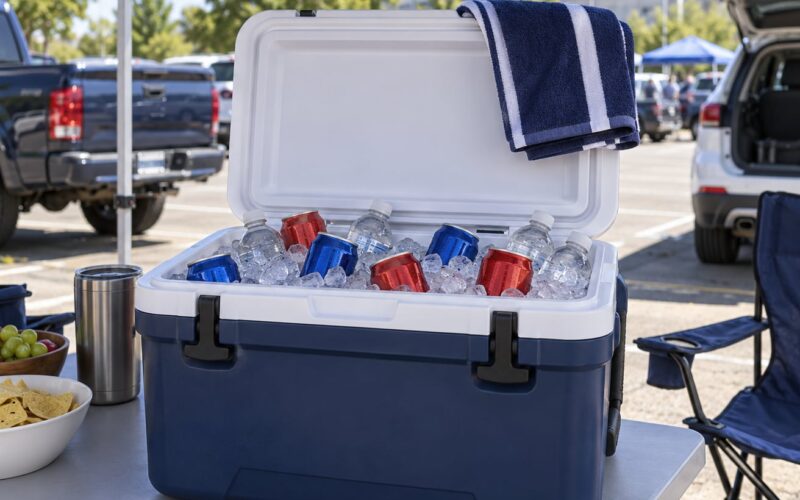
Size to your group. Six people can run a mid-size cooler; twenty people need two coolers and a plan for ice. Bigger is not automatically better, because a full cooler you cannot lift is a cooler you will not open.
Two details change everything. Keep it in the shade, and stop opening it. Every lid lift lets warm air in, so open it to grab a stack of drinks or a whole tray at once.
Pack perishable food in a separate clean container from the drinks. A cooler that holds sandwiches and canned drinks at the same time keeps neither at the right temperature.
5. Ice and Frozen Ice Packs
Budget roughly 1 to 2 pounds of ice per person, then add about a fifth more for a hot day. Twelve people means 15 to 24 pounds, which is realistically two 20-pound bags. Twenty-plus people means a dedicated ice cooler plus a stop for more on the way in.
Block ice lasts longer than cubes and takes up less room, so buy a few blocks for drinks and use cubes for the food cooler. Frozen ice packs cost less and lose cold more slowly, but they only help if something is still frozen when you pack the cooler.
Top the cooler off with a bagged block or a couple of frozen packs on top of everything else. Cold sinks, so the top layer is what keeps the bottom of the pile cold longest.
6. Simple Tailgate Food
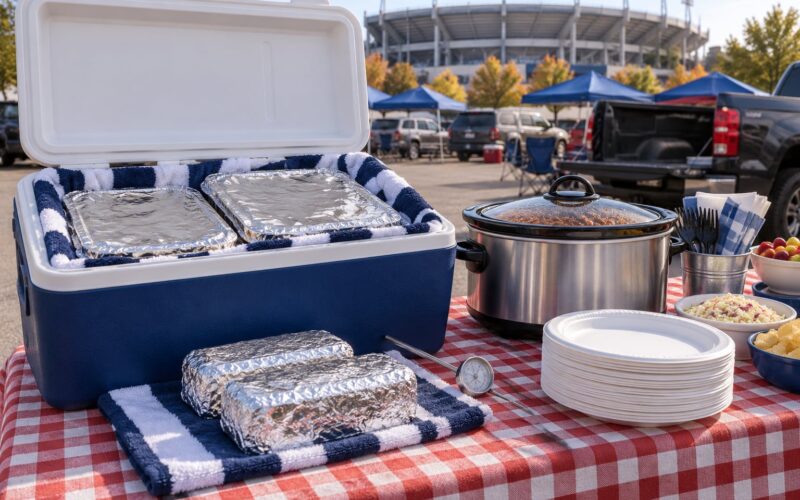
Pick food you can eat standing up with one hand and pass around a circle. Wraps, sandwiches, sliders, burgers, chicken, nachos, and vegetable trays all travel and serve well. Cut sandwiches into halves or quarters before they leave the house.
Cooking is optional. The grill queue at a busy lot can eat an hour, so precooked food from home often beats a live fire. If you do cook, bring a lid so the burgers keep their juices and stay hot.
Whole cuts hold heat better than ground meat, which is worth remembering when you are packing a pork butt or a brisket. Bring a meat thermometer so you are checking instead of guessing.
7. Drinks for the Whole Group
Water comes first, and more of it than you think. In Arizona in October, a person can burn through a couple of liters between a morning arrival and a noon kickoff, so pack water plus an electrolyte drink or two.
Then plan the rest. Most groups mix soda, sports drinks, and whatever the adults are drinking. Figure on about two cups per person for the whole tailgate and pack a reusable cup or a squeeze bottle if you want to cut down on waste.
On alcohol: most college stadiums restrict outside drinks and many ban them outright, so check your venue’s page first. If you are drinking, keep the designated-driver plan in place, keep water in the cooler, and decide in advance that the cooler stays closed before anyone drives.
8. Plates, Cups, and Serving Utensils
Paper plates, napkins, and plastic utensils are not optional. Nobody washes dishes in a parking lot, and a stack of plates, forks, and a roll of paper towels covers most of a large group’s needs.
Pack one cup per person and then double it if drinks are flowing, because cups disappear fast. Add at least two openers, a few serving spoons, and a box of foil for anything that needs covering.
Bring a container for food people will want to take home. It costs you one zip-top bag and it saves you from watching half the tray disappear when the group gets called to the stands.
9. Food Safety and Cleanup Supplies
Follow the USDA minimum internal temperatures and do not eyeball it: 165°F for poultry, 160°F for ground meat, and 145°F for whole cuts and fish. A pocket thermometer is the cheapest item on this whole list.
Keep raw meat in its own sealed container and away from the food you plan to serve ready to eat. Once you cook, move the cooked food to a clean container and do not put it back on the board the raw chicken sat on.
Keep perishables under 40°F and use the two-hour rule as your limit. If meat or dairy has sat in the sun for more than two hours, one hour when it is over 90°F outside, toss it. Hand sanitizer and a pack of wipes round out the safety kit.
10. Trash Bags and a Small Cleaning Kit
Take a heavy-duty bag and a separate bag for food scraps. Most university lots put out trash cans, but they run out by the third quarter, and a full car of napkins and bottles is miserable on the drive home.
Paper towels, a gallon of water, and wet wipes handle spills on a folding table or in the grass. Some groups loop a trash bag to a canopy leg so there is a bin within arm’s reach.
Bag it before you leave and check for stragglers, because litter around a stadium is the fastest way to annoy the parking attendants who control the lot. Do not leave a full bag beside a full can. Carry it to the can.
11. A Portable Speaker
A small battery-powered speaker covers the music before kickoff. Volume is the part to get right: keep it at a conversation level, or lower, so you can hear a person talking across the canopy.
Charge it the night before, and pack the cable. If you rent the same gear as everyone else in the lot, yours is probably the one with a dead battery.
A short playlist beats a long one, and at some point somebody is going to start singing whether the speaker is there or not.
12. Chargers and a Portable Battery
The power bank is the item you will use most and notice least. Mobile tickets, group chats, photos, and a flashlight at halftime all depend on it.
Pack a cable long enough to reach from the cooler to the tailgate spot, since the car’s outlet is rarely near where you sit. A battery-powered flashlight is more useful than a phone light because it drains nothing else.
Do not leave a device baking on the dashboard in the sun while you set up. Park in the shade if you can, and keep one phone at low battery as your ticket backup.
13. Weather-Ready Clothing and Sun Protection
Dress for both ends of the day, because early-morning kickoff tailgates start cool and end hot, and noon kickoffs in Arizona can run 95°F before the game even starts.
- Sunscreen, a wide-brim hat, and sunglasses
- A light long sleeve for shade and sun protection
- A poncho or rain jacket in a bag, not in the car
- Closed-toe shoes that work on grass, gravel, and concrete
- A light jacket or layer for the last quarter under lights
Stingray is normal in warm grass, and a parking lot is mostly asphalt by 3 p.m. Shoes you can walk a long way in matter more than shoes that look good.
14. Parking Details, Cash, and a Small First-Aid Kit
Confirm your lot and gate in advance, and screenshot the parking map before you leave. Big programs overflow into under-the-interstate and nearby lots, and knowing the backup plan saves an hour of circling.
Carry a modest amount of cash for food stands, parking meters, and the ice run, since card readers fail more often in a gravel lot. Keep tickets accessible in your pocket, not buried in the cooler.
A small first-aid kit takes up less space than a pair of shoes: adhesive bandages for blisters, antiseptic wipes for cuts, any prescriptions, a blister pad, and a bottle of water for minor spills.
Frequently Asked Questions
Can I bring a tent or canopy to a college football tailgate?
Most college programs let you tailgate with a canopy as long as it fits your parking spot, but rules on size, stakes, and placement differ by stadium. Some limit footprints to 10 by 10 feet, some restrict how far stakes can go into the ground, and a few ban structures entirely. Check your stadium’s official game-day page, then anchor every leg so the wind does not take it.
How should I keep food cold and safe at a football tailgate?
Pack perishables in a separate cooler from drinks, keep it shaded, and open it as few times as possible. Keep everything under 40°F, use frozen packs on top of the food, and follow USDA minimum internal temperatures: 165°F for poultry, 160°F for ground meat, and 145°F for whole cuts and fish. Discard perishable food left in the sun for more than two hours, or one hour above 90°F.
What should I bring if it is hot or sunny at the stadium?
Shade comes first, so pack a 10-by-10 pop-up canopy or a market umbrella and anchor every leg. Then bring sunscreen, a wide-brim hat, sunglasses, and a light long sleeve. Plan on roughly 1 to 2 pounds of ice per person plus about a fifth extra, keep coolers in the shade, and add water and an electrolyte drink for every person, not just the ones who drink them.
Are coolers and outside food allowed at college football stadiums?
It depends entirely on the school. Many programs allow outside food and a soft-sided cooler, often within a size limit, while others permit only clear bags of a set dimension. Blankets, crossbody bags, and outside drinks are the most commonly unclear items. Read the stadium’s game-day page or call the athletics office before you pack, because the penalty is usually a long line or a refused entry.
How much ice do I need for a large tailgate group?
Plan on roughly 1 to 2 pounds of ice per person, plus about 20 percent more on a hot day. Twelve people means 15 to 24 pounds, which is two 20-pound bags. Twenty or more means a dedicated ice cooler and a refill stop on the way in. Block ice lasts longer than cubes for drinks, while frozen packs cost less and lose cold more slowly, so many groups use both.
What Should You Pack First?
Work in this order and you cannot really go wrong. Confirm the tickets, the lot, and the stadium’s bag and canopy rules the night before, because those are the only items you cannot improvise on game day.
Next, chill everything: freeze the ice packs and block ice the night before so you can load a full cooler in minutes. Pack perishables in their own cooler, keep raw meat separate, and set out plates, cups, and utensils while the food stays cold.
Last come the comfort and cleanup items: canopy and seats, the speaker and power bank, sunscreen and a hat, then the trash bags you will use on the way out. Pack the tent on top of the cooler so it is the first thing out of the trunk, and you will have shade before the group finishes unloading.