Nothing about college football requires prior knowledge, and that is the part almost every stadium guide gets wrong. The game is built on two ideas: the offense gets four chances to move the ball ten yards, and points come from getting into the end zone. Learn those two things and the rest is atmosphere.
So what to know before your first college football game? Mostly logistics. Tickets, bag rules, parking, arrival time and where you can sit account for ninety percent of what makes a first visit go smoothly, and almost all of it is settled online a few days ahead.
This guide covers what to expect from the parking lot to the final whistle, plus the football basics that let you follow a conversation instead of nodding along. Updated for the 2026 season.
Table of Contents
- What to Know Before Your First College Football Game: Quick Guide
- How Do College Football Tickets and Seating Work?
- What Can You Bring Into a College Football Stadium?
- How Do College Football Games Begin and End?
- Which College Football Traditions Should You Know?
- What Is College Football Etiquette?
- How Do You Handle Parking, Arrival, and Bad Weather?
- What Should You Wear and Bring to a College Football Game?
- How Do You Read a College Football Scoreboard?
- How Do You Stay Engaged During the Game?
- Frequently Asked Questions
- What Should You Do First?
What to Know Before Your First College Football Game: Quick Guide
If you read one section, read this one. Five things cover the majority of what a first-time spectator needs.
- Arrive 60 to 90 minutes early. Big stadium parking lots fill on a clock you do not control, and the last twenty minutes before kickoff is when every car in the state seems to arrive at once. At many schools that also means finding a seat, hitting a bathroom and a concession line before the opening kickoff.
- Check the stadium bag policy first. Most large venues require a clear bag no larger than a specific size, and many have tightened that in recent seasons. Bring a photo ID, and pack light enough that a line of strangers can see everything in your bag.
- Download your ticket to your phone. Most programs now issue mobile tickets, and many entry gates will not print one for you. Screenshot it as a backup and know the gate number in advance.
- Learn four words. Down, first down, touchdown and field goal. That is genuinely enough to follow a scoreboard and understand why the crowd stands on third down.
- Stand when the crowd stands, and stay seated when the play is live. Cheer on third down, sing the fight song if you know it, and do not walk the row while the ball is in play. That is the whole etiquette list.
Everything else in this guide is detail underneath those five points.
How Do College Football Tickets and Seating Work?
College tickets come from one of two places: the school’s official ticket office or the secondary market. Both are legitimate, but they work very differently, and the difference matters for a first visit.
Official sales are where seat location is best controlled. Season ticket holders get first pick, then student season tickets, then a general sale weeks or months ahead. Single-game tickets often remain at a school box office or website closer to kickoff, which is the safest option if you are flexible.
The secondary market includes official resale, ticket exchange sites and individual sellers. Prices there vary widely, and so does buyer protection. Use a platform that shows a clear refund or credit policy, and be skeptical of any deal that arrives through a social media message from someone you have never met.
Student sections, guest policies and season ticket holders
A student section is usually the cheapest or most sought-after seating in the building, and access is usually restricted to students with a valid credential. Some schools release a small number of student section seats to the general public on a game-by-game basis, and others do not. Guests of season ticket holders frequently get a fixed allotment per account, which is a common way to attend without buying your own seat.
Ask the ticket office, not a reseller, about guest and transfer rules. Transfer windows close a set number of days before kickoff at some schools, and an unclaimed transfer at the gate is a bad afternoon.
Mobile tickets and seat assignment
Almost every major program has moved to mobile delivery. The buyer transfers the ticket in an app, the recipient accepts it, and the ticket sits in a wallet with a scannable barcode that refreshes. Screenshots of most modern tickets do not work, because the barcode changes, so keep the ticket loaded and your brightness turned up.
Seat assignment happens early. If you care about the view, look at the stadium seating chart before you buy rather than after. Higher rows give you the whole field; lower rows near the 40-yard line put you close to the noise and to the players coming off the field.
What Can You Bring Into a College Football Stadium?
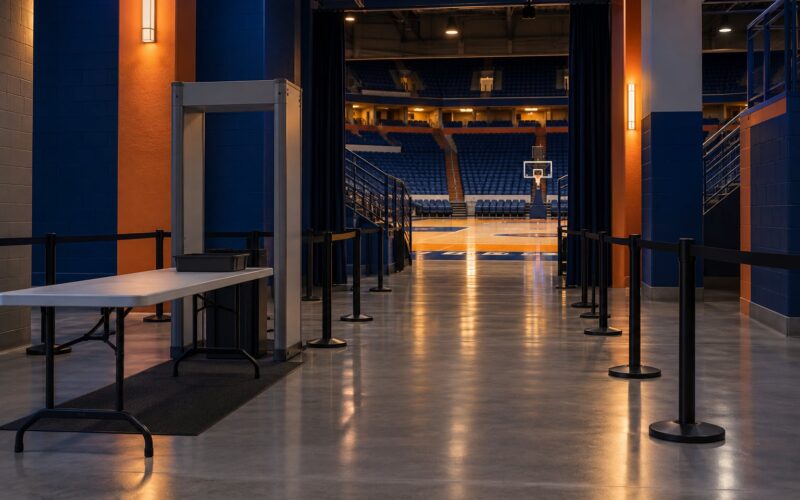
Most major college stadiums operate a clear bag policy, and the specifics differ at every venue. A common setup is a clear plastic or clear mesh bag within a stated size, sometimes with only a limited number of pockets. Others moved to a small-bag or no-bag policy entirely.
Because every school sets its own rules and adjusts them season to season, treat the stadium’s own bag policy page as the only reliable source. Check it the week you go, not the week of the season.
Prohibited items you will see named
- Bags that are not clear, or clear bags over the posted size limit
- Outside alcohol, glass bottles and most coolers
- Outside food, though many venues have loosened this and some do not
- Pepper spray, weapons, laser pointers and umbrellas with points
- Professional cameras and large tripods in some buildings
- Flashes, horns and noisemakers during play, where the venue bans them
Phones, medical items and the empty-bag trick
Phones are fine. Nearly every venue is a phone-forward space now, and many have brought back in-stadium cellular service after years of pushing it onto Wi-Fi. Small electronics, chargers, power banks and a decent battery are a good idea for a three-hour-plus event.
Medical items, insulin, and infant or accessibility gear are normally exempt from the clear bag rule, though you may be asked to show them at a screening lane. Arrive early to find that lane. A simple trick that works in most places: pack the clear bag at home the night before, then restock it with snacks and a refillable water bottle at a nearby store.
How Do College Football Games Begin and End?
A college game is four 15-minute quarters with a halftime break, but the clock runs far less than 60 minutes of actual play. Expect three hours plus at the venue, and a little over three and a half for a night game or one that goes to overtime.
What happens before kickoff
You will arrive to teams warming up on the field, both for their home fans and for the visiting side. Then come the introductions. Player introductions are the loudest indoor moment of the night, and the visiting team typically gets a polite round too.
After introductions, expect the team to run out to a song, the national anthem, and a coin toss at midfield that nobody really watches. Kickoff follows shortly after, with the home team’s choice of which direction to attack. Some programs still do a run-out onto the field through the end zone, and others trot out from the sideline entrance.
Quarters, halftime and the final whistle
Quarters one and two are the most open football, when both teams test what the other has. Halftime features a marching band performance, which is a genuine show rather than filler, and is a good moment to stand and stretch. The third quarter is where the shortest players get tired, and the fourth quarter is a clock and field position game.
College football has no stop-the-clock rule by default, so the game clock runs through most of the fourth quarter and stops in the first two and on some change of possession. The last play of the game is called the final whistle, and unlike the pros it is followed by the handshake line: the two teams meet at midfield and walk past each other, shaking or tapping hands. Fans often stay for that, and for a final song, before heading out.
Overtime
If the score is tied at the end of regulation, college football plays overtime in a different format than the NFL. Teams do not start from the 40-yard line. Instead, each team takes possession at its own 25-yard line with a 25-play limit, and if a team scores a touchdown it can attempt a two-point conversion, which does not create new overtime rules. Repeats happen until the score is no longer tied, so a night that ends in a tie is genuinely rare.
Which College Football Traditions Should You Know?
Traditions differ by school, and that variation is the fun part. The general pattern is consistent enough that you will recognize what is happening even if you have never been to that campus before.
- The fight song. Most programs have one, and it gets played after scores, at the end of the game, and by the band at halftime. A handful of very famous songs, including the one every stadium sings before kickoff, are close to universal.
- The alma mater. Sung after a win, and often joined by the whole stadium standing. It is the emotional peak of the night, and you are welcome to stay on your feet for it even if you do not know the words.
- The call to arms or entrance music. A pregame address or a song with lyrics built for loudness. Some schools do a video board routine that tells a story about the team or the season.
- The mascot entrance. A costumed mascot runs out, usually with the team. It may involve an inflatable, a cannon, a moat jump or a live animal, depending on the school.
- Colors and the student section. The student section is loud, organized and relentless, and it coordinates its own chants. Sitting in or near it is a choice you make with your legs the morning of the game.
- Rivalry rituals. Rivalry games add specific customs, from a trophy presentation to traditions that are genuinely weird. If you attend one, read up on it beforehand so you are not the only one who does not get the joke.
The marching band is worth its own mention. A college band is a large ensemble of student musicians that performs at halftime, sits in the stands before the game, and often spells out formations. Between pieces you will hear the fight song and a drum cadence that the student section joins.
What Is College Football Etiquette?
College football is more participatory than the NFL, and the crowd expects you to take part. Sit in the student section and you are expected to stand, chant, clap in rhythm and stay for all four quarters. Sit in the upper deck and nobody will mind if you stay seated, though it is a little quieter.
When to stand and when to sit
Stand during the pregame entrance, the national anthem, the fight song and the alma mater. Stand when the team is in the red zone or on third down, which is the stadium’s favorite moment, and when a big play happens. Sit down when the ball is snapped and the play is live, because an official may call a penalty on a fan for being in the way of play.
How to treat everyone else
Opposing fans are guests in the same building. A good-natured chant at a visiting team is part of the sport, harassment of individual fans is not, and most schools publish a code of conduct with real consequences. Do not throw anything on the field, for any reason, including after a score.
Toward players, coaches, band members and students, the baseline is simple: appreciate the effort, skip the heckles aimed at undergraduates, and keep an eye on children in your row. Many first-timers bring kids and are surprised by how loud a college stadium gets. Bring ear protection for younger children, and front seats near an aisle make an exit much easier.
How Do You Handle Parking, Arrival, and Bad Weather?
Arrive 60 to 90 minutes before kickoff, and treat that as a floor rather than a suggestion. Stadium lots at big programs are enormous and often fill three hours before kickoff for rivalry games and late-season matchups with playoff implications.
Getting there and back
Campus parking usually requires a pre-paid pass or a reserved-lot arrangement, and gameday rules differ from normal weekdays. Visitor parking is often remote, with a shuttle bus to the stadium. If you can reach the venue by transit or a walkable route, that is usually the least stressful option on game day.
For rideshare and taxi, expect a designated pickup zone away from the main gates and a surge in price after the game. A stadium of tens of thousands of people leaves in a wave, so either wait twenty minutes or walk a few blocks before you call. The drive home is the part most first-timers underestimate.
Weather
September and November games can swing between humid heat and cold rain in the same afternoon. The stadium is mostly outdoors, so your gear choices in the next section matter more here than in a domed NFL venue. Lightning policy varies: at many schools play pauses if a storm is close, so keep an eye on the scoreboard and the announcements.
Hydration is the practical concern. Bring an empty refillable bottle and use the free water fountains, or buy a drink inside, because the lines get worse as kickoff nears.
What Should You Wear and Bring to a College Football Game?
Dress for the stadium you are in, not the city you came from. In an open-air bowl in the South in October, a hoodie and a knit cap can matter. In California or Arizona in September, sunscreen and a hat are the difference between a good day and a red one.
The clear bag checklist
- Clear bag within the stadium’s posted size limit
- Photo ID matching the name on the order, where required
- Your ticket, loaded in the app on your phone, with a backup screenshot
- Refillable water bottle if the venue allows one in
- Sunscreen and a hat for daytime games
- A light layer for evening games, since it cools down fast once the sun goes
- Ear protection if children are coming
- Your payment method; many stands are card-only now, though some accept cash
Team colors and the jersey number rule
Wear the home team’s colors if you have no stake in the outcome. It makes the experience considerably easier, because the person next to you will like you and will explain plays to you without being asked.
Fan jerseys are widely sold now, and you can buy almost any name. Numbers are the one restriction: college numbers run from 1 to 99, so 00 is not available, and 69 is not allowed either. In the NFL, 00 was retired league-wide out of respect for a former player and because of confusion with the numbers referees use to signal players.
How Do You Read a College Football Scoreboard?
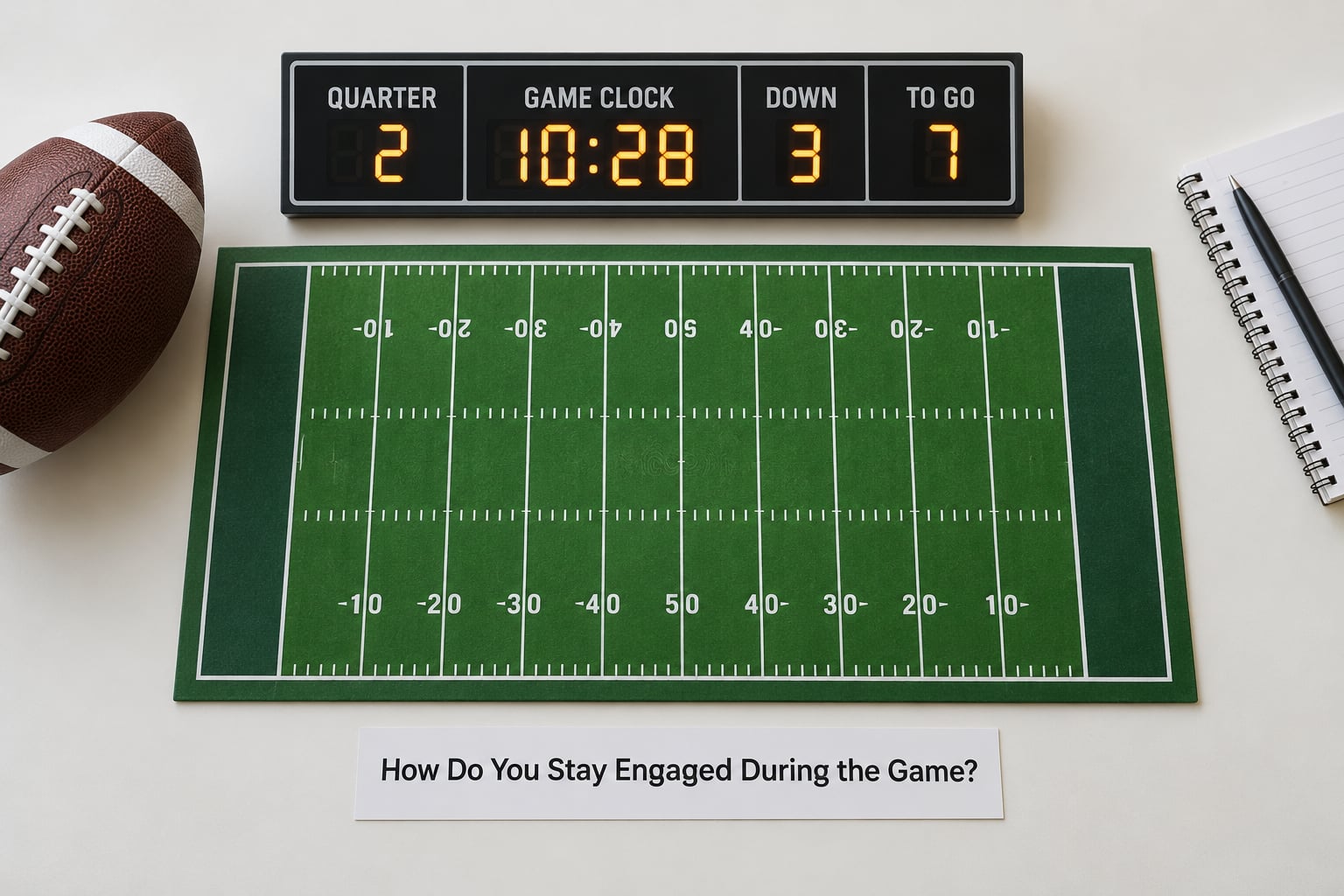
A scoreboard looks packed, but six fields do nearly all the work: the quarter, the game clock, the down, the yards to go, the play clock and the score. Learn those and the rest is flavor.
Here is the downs and distance system, which is the single biggest source of confusion for beginners.
| Display | What it means | Typical next move |
|---|---|---|
| 1st and 10 | Start of a new set of four downs, 10 yards needed | Establish the run or pass game |
| 2nd and 7 | Gained 3 yards on first down, 7 still needed | Convert or fall short and punt |
| 3rd and 3 | Short yardage, the crowd’s favorite spot | Convert to keep the drive alive |
| 4th and 2 | Last chance, likely a punt | Punt, field goal or go for it |
Note the nuance, because it trips up almost everyone: ten yards is the requirement, not the location. If the offense gains eight yards, the next first down marker is placed where the ball actually stopped, and the new requirement is two more yards.
When the fourth down ends without a first down, the other team takes over. That is called a turnover on downs, and it is a real change of possession without a fumble or a throw being intercepted.
| Scoring play | Points | How it happens |
|---|---|---|
| Touchdown | 6 | Ball carried or caught in the end zone |
| Extra point (PAT) | 1 | Kick after a touchdown |
| Two-point conversion | 2 | Run or pass after a touchdown |
| Field goal | 3 | Kick through the uprights |
| Safety | 2 | Offense tackled in its own end zone |
Clocks, chains and flags
The game clock counts down continuously except in the first two quarters, where it stops after a change of possession, an incomplete pass, a penalty, or a timeout. The play clock, usually 40 seconds in college football, forces the offense to snap the ball quickly; the crowd noise during that countdown is part of the experience, and the offense can be flagged for a delay.
The chain crew holds the down marker and the pole showing the line to gain, so the officials can spot the ball. Penalties show up as a yellow flag thrown by an official, followed by the referee’s arm signal. The most common ones you will see are holding, false start, defensive pass interference, and personal foul, and each one moves the ball or costs a down.
How Do You Stay Engaged During the Game?
You do not need a playbook to stay interested. Field position, turnovers and the red zone produce most of the big moments, and all three are easy to track.
The red zone is the 20-yard line and closer, where a scoring play is likely. Field position is simply where the offense is starting from, and it matters because a team that starts near midfield will usually score more easily than one backed up near its own goal line.
A turnover is any loss of possession: an interception, where a pass is caught by a defender, or a fumble, where the ball hits the ground and either team may recover it. That is why the crowd noise gets so loud on third down and after a fumble. Momentum in a stadium is audible.
Who is who, in one line each
The offense has a quarterback who passes and hands off, a running back who carries, a tight end who blocks and catches, wide receivers who split wide, and an offensive line of five who block. The defense has a defensive line, linebackers behind them, and a secondary of cornerbacks and safeties in the back. Special teams handles kickoffs, punts, field goals and returns, and it decides field position more than most new fans expect.
Questions that let you join the conversation
- Is the offense going for it on fourth down, or punting?
- Which way is the wind helping, and is that a deep ball?
- Did they have a flag on that play?
- Is the quarterback being pressured, or is that a blitz?
- How much time is left in the quarter, and where is the ball?
Asking one of those out loud is a fast way to end up in a conversation, which is most of what people want from a first game.
Frequently Asked Questions
How early should I show up to a college football game?
Plan to be at the stadium parking lot 60 to 90 minutes before kickoff, more for a rivalry game. That window covers traffic, the walk to the gate, screening your bag, finding your seat and a bathroom stop. If you plan to tailgate, arrive three hours early instead. Leaving after the final whistle is its own traffic jam, so budget 30 to 45 minutes to get out of the lot.
What can you bring into a college football stadium?
Most large college venues require a clear bag within a posted size limit, usually about 12 by 6 by 6 inches, and many have moved to small-bag or no-bag rules. You can usually bring a photo ID, your mobile ticket, a phone and charger, a refillable water bottle if allowed, snacks where outside food is permitted, sunscreen and ear protection. Check the specific stadium’s bag policy page before you leave home.
How long does a college football game last?
Four 15-minute quarters plus halftime add up to 60 minutes of scheduled play, but the clock stops often, so a typical game runs about three hours in the building. Add 30 minutes or so for parking and the walk in, and expect three and a half hours or more for a night game or one that reaches overtime. Halftime itself runs 20 to 30 minutes including the band.
Is every 10 yards a first down?
The offense needs to gain at least 10 yards within four downs, but the marker is placed where the ball actually stops, not at a fixed line. If the offense gains 8 yards, the next first down requires 2 more yards. That is why you see displays like 3rd and 3 or 2nd and 7 instead of a constant 1st and 10.
Can you sit in the student section if you are not a student?
Sometimes. Most schools require a student credential for the student section, though some release a limited number of seats to the general public on a game-by-game basis and some allow student section ticket holders to bring a guest. Ask the official ticket office about availability before game day, because resale for these seats is aggressive and the price is not what the face value suggests.
Can you wear 69 in college football?
No. College football jersey numbers run from 1 to 99, which rules out 00 and also blocks 69, among a handful of restricted numbers. Number 00 is retired in the NFL league-wide, both out of respect for a former player and because officials use 00 on their signals to identify a player. Custom fan jerseys are still sold with almost any name, just within the legal number range.
What Should You Do First?
Start with the stadium’s official game day information page, because bag rules, parking and gate assignments are set by the school and change more often than the football does. Then confirm your ticket in the app, note your seat and section, and set an arrival time 60 to 90 minutes before kickoff.
What to know before your first college football game comes down to that: the rules are simpler than they sound, and the logistics are the part you control. Get those right and the rest is just a loud Saturday with people who are very happy to explain the game to you.