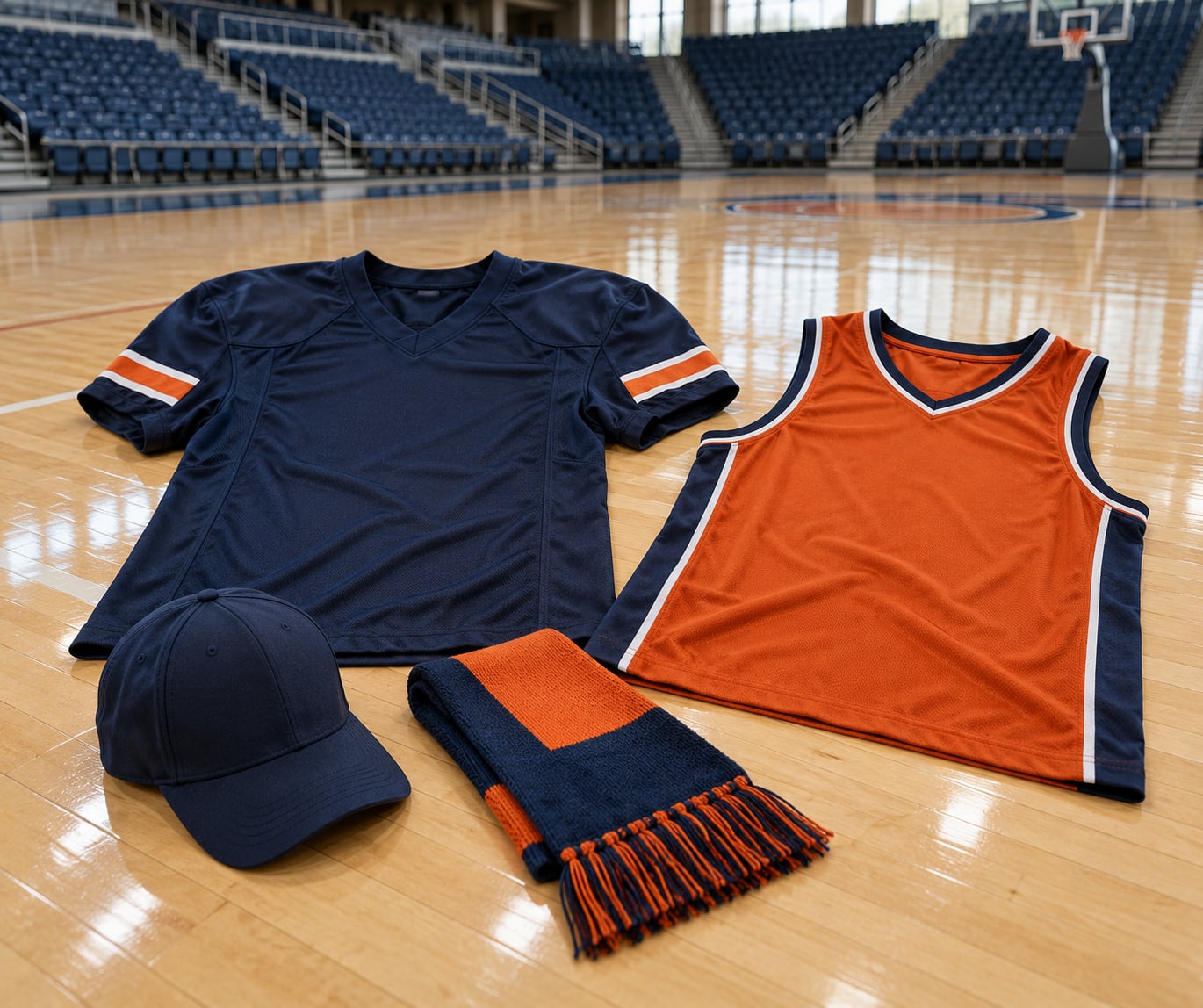
Alternate uniforms are popular with fans because they do three jobs at once: they refresh a look people see every week, they hand fans a piece of team history to wear, and they give a club something rare to sell. A team can play eight or ten home games a season and wear the new set once or twice. That scarcity is the whole appeal.
The rest is emotional. Fans treat a uniform as more than fabric. It marks a decade of family Saturdays, a rivalry game, a player they remember, a city they live in. Change the colors and every one of those memories gets a fresh surface to land on.
This site covers college sports and fan culture, so we spend a lot of time in the subculture around uniforms. What follows is the mechanics and the psychology, without the marketing gloss.
Table of Contents
- What Makes an Alternate Uniform Appeal to Fans?
- How Does a New Uniform Create Game-Day Excitement?
- Why Alternate Uniforms Are Popular With Fans
- How Do Uniform Traditions Build Long-Term Value?
- How Can Uniform Design Reveal a Team’s Identity?
- Why Do Fans Collect Alternate Uniforms and Merchandise?
- Are Alternate Uniforms Popular With Every Sports Fan?
- What Criticisms Do Alternate Uniforms Sometimes Receive?
- How Can Teams Launch an Alternate Uniform Fans Will Like?
- Frequently Asked Questions
- Conclusion: What Makes an Alternate Uniform Memorable?
What Makes an Alternate Uniform Appeal to Fans?
An alternate uniform is any second or third set a team wears instead of its primary home or away look. The common nickname is the third jersey, or in soccer the third kit. Most alternate uniforms fall into four families that fans recognize instantly.
The four kinds fans actually notice
- Throwback uniform. A design pulled from the team or school archive, often a specific championship era. Its whole purpose is memory.
- Rivalry uniform. A limited design released around a division or conference rival. It is a one-game uniform by design.
- City or heritage edition. A design built around the place itself, usually featuring landmarks, local industries or regional color.
- Freedom or color edition. A bold one-off, often monochrome, designed to stand out rather than blend in.
What fans respond to in all four is the same thing: a visible break from the routine. A team that looks identical for forty straight home games has trained its own audience to stop noticing.
How Does a New Uniform Create Game-Day Excitement?
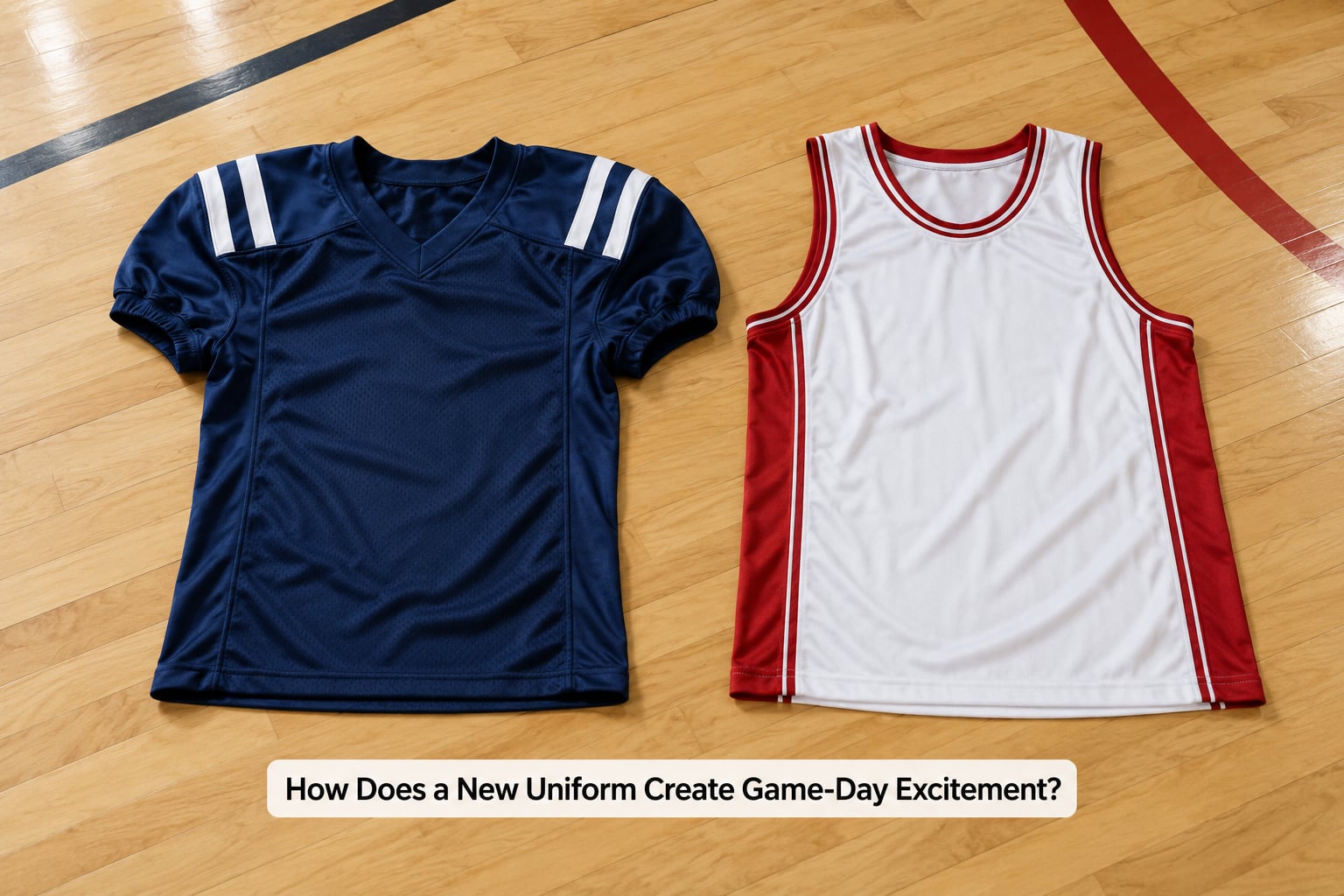
A new uniform changes the rhythm of a season. Uniform reveals land weeks before a game, and the argument about them runs on social media for days, which is attention no marketing budget buys.
Teams pick the occasion carefully. Rivalry games carry the most emotional weight. Friday and weekend home games give the alternate a bigger crowd than a Tuesday night. Holiday games, cause nights, season openers, conference championship games and nationally televised windows all work, because the audience at home is larger and the design is being seen by people who never attend in person.
| Program | Sport | What it is | How often it is worn |
|---|---|---|---|
| Throwback or heritage | All major sports | Archived design from a specific era | Rarely, often tied to an anniversary |
| Rivalries program | Football | Division-specific rivalry design | Once or twice a season |
| Color Rush | Football | Single-color alternate | Capped and limited to certain games |
| City edition | Baseball, basketball, hockey | Design built around the city | Mostly home games, special nights |
| Earned edition set | Basketball | Association, Icon, Statement and City editions | Team chooses freely each home game |
| Players Weekend | Baseball | City uniform worn across a weekend | Friday through Sunday home series |
| Modular system | College football | Many interchangeable parts, new combo most weeks | Effectively every home game |
College is the outlier on that table. There is no formal cap on how often a program can wear an alternate look, so teams debut new combinations almost weekly, and the reveal never goes stale.
Why Alternate Uniforms Are Popular With Fans
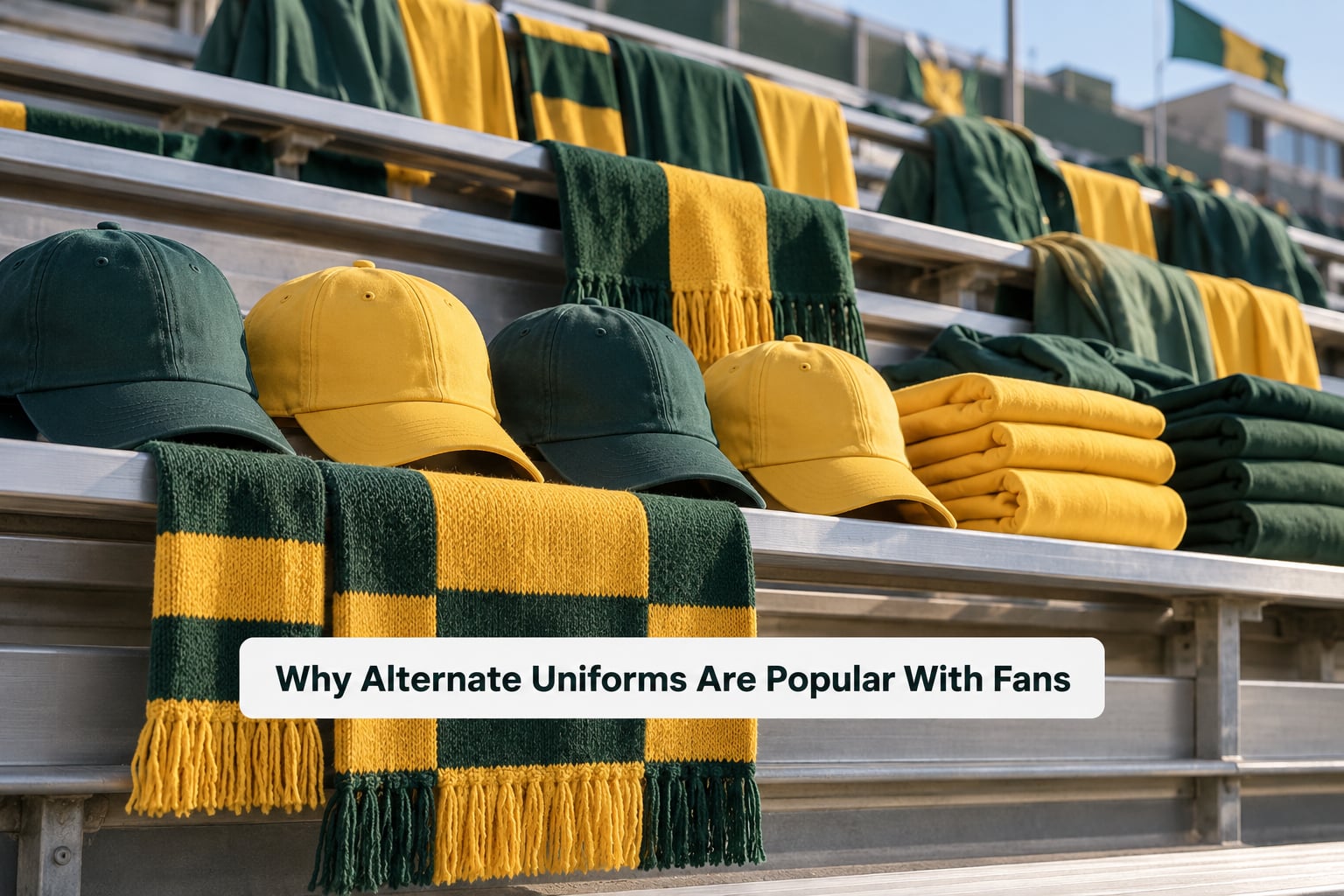
The popularity comes down to a short list, and it is worth being precise about it rather than calling it a marketing success.
Nostalgia arrives faster than a new design would
A throwback uniform skips the warm-up period. A brand-new set has to earn affection over years. A design from 1987 already has thirty-plus years of affection attached to it, and putting it back on the field triggers it immediately.
Scarcity makes it feel like something
If a team wears the set one night a season, it stops being merchandise and starts being an object. Fans understand immediately that they will not see it every week, which is exactly why they want it in their closet.
Identity gets a new way to show
Regular uniforms are for regular days. An alternate is for the day you went all out, and fans wear that distinction on purpose. A graduation gift, a rivalry week, a first stadium visit: people choose the alternate because it marks the moment.
It gives the team a story to tell
Every alternate needs a reason. A city skyline, a founding year, a retired number, a championship roster. That story is something a front office can point to, and fans can repeat.
It breaks the visual boredom of a home stand
Season tickets mean eight or ten consecutive looks. Teams know that, so they save the alternate for the weekend dates when the building is fullest.
It travels well on the internet
Uniform arguments are some of the most reliably shared sports content. Hot takes about a bad design travel about as far as takes about a great one, and both outcomes help the team.
Some fans bought the whole thing without following the team
One of the strongest examples is the 25th anniversary plum and teal design from a hockey franchise. The person who wrote about loving it did not follow that team or even that sport. The design simply looked like a good object and carried enough feeling to sell itself.
How Do Uniform Traditions Build Long-Term Value?
Uniform traditions turn apparel into a record of a program. A jersey from 1998 that matches a championship run is not a shirt. It is a ticket back to a specific Saturday.
Several tradition types do the heavy lifting:
Throwbacks that reconnect a fan to a childhood team
The most requested category by far. Fans who watched a program as kids rarely saw an alternate look at all, so the throwback feels like a reveal even for people who have followed the team for thirty years.
Rivalry designs attached to one opponent
These are deliberate one-game uniforms. The upside is a genuine event each season. The downside, which fans complain about constantly, is that they become predictable rather than exciting.
Memorial and cause designs
A uniform dedicated to a person or a cause gives a game an extra layer, and fans tend to judge those more generously because intent matters to them.
Championship and anniversary designs
Anniversary sets tie a club’s current look to its archive, and they tend to age well because the reference is a fact rather than a fashion choice.
Programs that keep a visual archive
College programs with modular systems accumulate decades of looks by accident, and fans treat the archive like a museum. Michigan, Oregon, Notre Dame and Michigan State all have alternates people argue about as if they were art.
How Can Uniform Design Reveal a Team’s Identity?
A design says something about a school or club only when it connects to something people already know. The strongest elements are rarely decorative.
- School colors used in a way nobody expects. Notre Dame wearing kelly green instead of gold reads instantly as tradition, not fashion.
- Regional references. A desert palette in Arizona, a peach in the Southeast, a skyline in a city edition. Fans like feeling the place is part of the design.
- An era borrowed with real specifics. Throwbacks that copy the actual template, font and stripe layout of a past decade land better than vague retro templates.
- A helmet treated as the anchor. In college football, a helmet-only alternate changes the game’s look more cheaply than a full new set, which is why so many programs rely on it.
- A single dominant color. Monochrome alternates read as bold and modern, and they photograph well, which matters for a program with a national audience.
None of these work alone. A design needs a recognizable base, and a team that abandons its most recognizable look usually gets a colder response than one that keeps the core and adds a twist.
Why Do Fans Collect Alternate Uniforms and Merchandise?
Collecting is about memory with a physical anchor. The reasons fans give repeat.
- Rarity. Seeing it once or twice a season is the core driver of wanting it.
- The memorable game. Fans attach the jersey to a night that mattered, and the garment becomes the souvenir whether or not they attended.
- Player association. A rookie season, a breakout year, a final season. Numbers become part of why a design matters.
- Personalization. A name and number stitched in turns mass merchandise into something personal.
- Limited releases. Short-run designs that are retired after a season feel like an archive piece rather than a leftover.
- Display value. Many fans frame or hang a cap or jersey rather than wear it, which is why color-coordinated gear shows up in so many households before game day.
The business side explains why teams keep approving designs fans argue about. Alternate and throwback sets are reported to make up as much as 30 percent of football jersey sales even though the sets are rarely worn, and league-wide jersey sales run into the billions every year. A design seen once a season and disliked by 20 percent of fans can still be an excellent business decision.
Are Alternate Uniforms Popular With Every Sports Fan?
No, and the split is sharper than the sales numbers suggest. The top-ranking social thread on this topic is literally titled with someone loving the alternate uniforms, while the replies underneath call designs horrendous. That is the honest picture.
Support tends to be strongest with certain groups
Younger fans collect designs the way they collect patches. Alumni and students treat an alternate as a school tradition, not a fashion choice. Long-time fans who remember a specific era want that era back on the field. And collectors actively prefer designs that will disappear.
Resistance comes from tradition-minded fans
Some fans read a new set as an attack on the version of the team they hold in memory. A subreddit thread titled with a complaint about the league and its suppliers cheapening out on jersey designs captures a real, ongoing mood rather than a passing complaint.
Some teams refuse the whole category
Not every club plays this game. The Yankees are the most cited example of a franchise that keeps its look nearly frozen, and that refusal is itself part of why the team remains distinctive. A few basketball franchises held the same line early on before joining in. When most rivals adopt alternates and one team does not, the holdout becomes the identity.
What Criticisms Do Alternate Uniforms Sometimes Receive?
Fair criticism exists, and ignoring it makes any explanation of popularity sound like an advertisement.
Readability and resemblance problems
A design that looks close to an opponent’s uniform creates confusion for officials, broadcasters and fans on short notice. Baseball’s color-clash rules and football’s restrictions on similar colors exist because of exactly this problem.
Over-marketing
Fans notice when a design feels built for the reveal clip rather than for wearing. That reaction is why genuine heritage designs tend to survive and gimmicks do not.
Repetition drains the scarcity
Wear the same alternate every season and it stops being an event. The complaint you hear most on college boards is that teams repeat an identical look until nobody reacts to it anymore.
Confusion about home and away rules
Fans regularly ask whether an alternate counts as a team’s white uniform, which is why people assume alternates are worn less often than they actually are. The rules differ by league, and they have changed recently in football, which now allows four regular-season wearings.
Some ideas simply miss
Baseball’s yellow alternate experiment and football’s forward-looking design of the late 2020s are the two names most often raised when fans talk about an alternate that did not land. Naming them honestly is the fastest way to be taken seriously.
The revenue-versus-backlash math rarely changes behavior
The question fans ask most is why teams keep shipping designs people hate. The blunt answer is that the units move even when the internet is angry, and a polarizing design that sells is still a good business outcome for a club.
How Can Teams Launch an Alternate Uniform Fans Will Like?
Look at the programs that come back and the pattern is consistent.
Test contrast before anything else
Check the design against every opponent on the schedule and against grey, white and colored backgrounds on a screen. A uniform that fails this test fails on the field in front of thousands of people.
Anchor the concept in something the fans already know
A championship era, a landmark, a founding year, a retired number. Concept work that references nothing real gets read as an ad.
Keep the core look recognizable
Fans tolerate a twist. They punish a replacement. Keeping the primary colors and one familiar element keeps the brand intact while still giving the alternate its own identity.
Coordinate every fan touchpoint
On-field set, sideline gear, caps, the arena graphics, the reveal video, the merchandise drop. A design that looks strong but arrives without matching apparel reads as an oversight.
Give it a real occasion for the debut
A rivalry week, an anniversary home game, a nationally televised window. Debuting on a low-stakes date wastes the event you just built.
Retire it when it stops working
The programs that keep their best alternates in rotation are the ones that let a design retire on its own terms rather than killing it after one disappointing season.
Frequently Asked Questions
Do college sports fans actually buy alternate jerseys?
They do, and they buy them in bulk. Alternate and throwback designs make up a large share of football jersey sales even though teams rarely wear them. In college the pattern is even stronger, because programs have no cap on how often a new look can appear, so fans get a different design most home weeks and learn to collect them like patches.
Why do universities introduce alternate uniforms?
Universities introduce alternate uniforms to refresh a look fans see every week, to connect with tradition, and to sell merchandise tied to a specific season or event. College programs also have more freedom than professional teams, so a new combination can debut nearly every home game without breaking a league rule.
What makes an alternate uniform collectible?
Scarcity is the biggest factor. If a team wears a design once or twice a season, it stops being ordinary apparel and becomes an object fans want to own. Add a memorable game, a notable player season, a limited production run or personalized stitching, and the piece becomes something worth framing rather than wearing.
Are throwback uniforms always more popular than novelty designs?
No, and the two categories attract different fans. Throwbacks win with alumni and long-time fans who remember the era being copied, while bold novelty designs pull younger collectors who want something nobody else has. The programs that hold attention long term usually mix both, which is why a rotation beats a one-off.
How do teams choose colors for alternate uniforms?
Leagues set the boundaries and teams fill in the choices. Football restricts how often an alternate can be worn and bars colors too similar to an opponent. Basketball teams pick freely among several branded editions. In college there is no formal cap, so equipment managers work from school colors and tradition rather than a rulebook.
Conclusion: What Makes an Alternate Uniform Memorable?
An alternate uniform sticks with fans when three things line up: the design connects to something the audience already cares about, it wears well enough to look right in person, and it appears on an occasion worth remembering. Miss any one of those and the reveal gets a shrug.
Start there when you judge a new set. Ask what it references, when it gets worn, and how often. The answer to why alternate uniforms are popular with fans is not that people like change. It is that a rare, meaningful look gives a season one night that feels different from all the others.