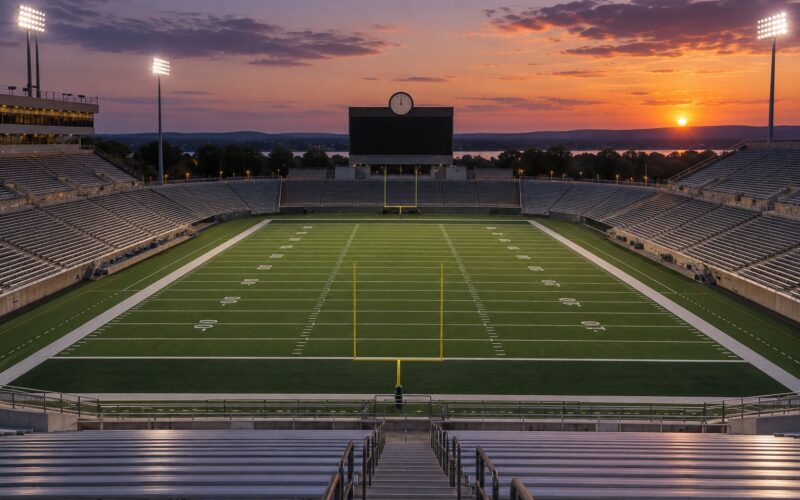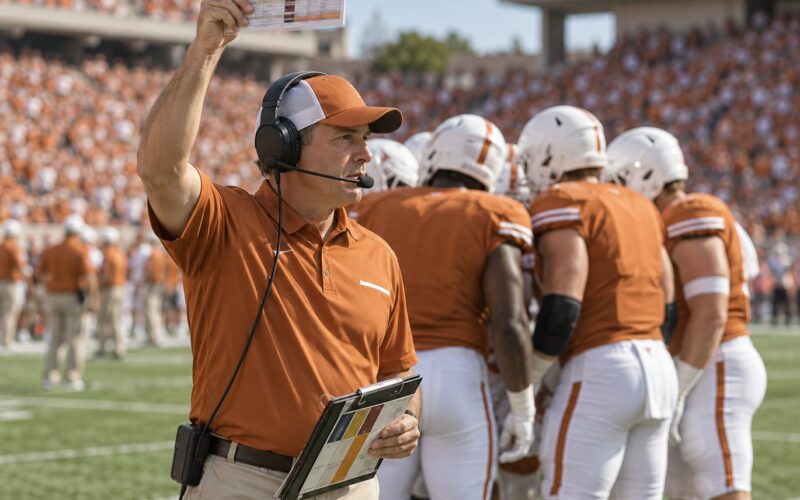
A college football spring game is the final, fan-facing scrimmage of spring practice, usually played on a Saturday in March or April, where the roster is split into two teams that compete in a shortened, often non-contact format so coaches can evaluate players in a game-like setting. Fans get one of the only public windows into a season that is still months from kickoff.
That last part is why people show up. A spring game is not a dress rehearsal for a regular season game, and treating it like one is the fastest way to leave disappointed.
Table of Contents
- What Happens at a College Football Spring Game?
- How Is a College Football Spring Game Structured?
- What Do Players Do During the Spring Game?
- What Is the Purpose of the Spring Game for Coaches?
- What Can Fans Expect at a College Football Spring Game?
- How Does a Spring Game Differ From a Regular Game?
- Why Do Rosters and Depth Charts Change After Spring?
- What Kinds of Plays and Drills Should Fans Watch For?
- Frequently Asked Questions
- Is a college football spring game the same as a regular game?
- Can fans attend a college football spring game?
- Are spring games scored?
- Does playing well in a spring game guarantee a starting job?
- How long does a college football spring game usually last?
- Why do some players sit out or participate in limited roles during spring games?
- Bottom Line
What Happens at a College Football Spring Game?
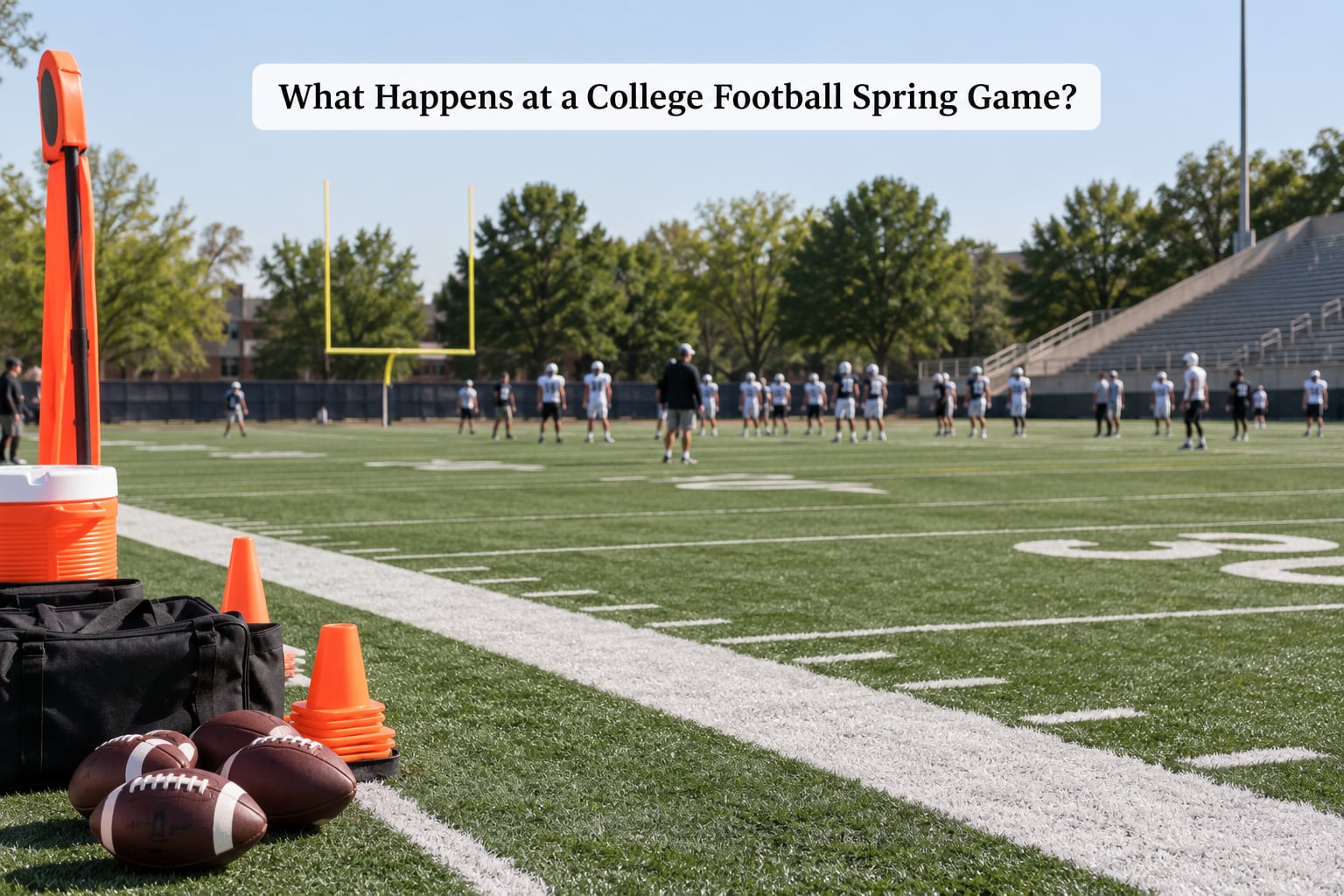
What happens at a college football spring game is fairly predictable once you know the format: players run up, go through warmups and position work, hear their names in the starting lineup, play a condensed scrimmage, and then stick around for autographs. The band plays, the mascot does his thing, concessions are cheaper than a fall Saturday, and most of the roster goes home healthy.
Every program runs its own version. Some play a straight 60-minute scrimmage with the clock barely moving. Others build in a playoff bracket, a skills challenge, or a shortened game-like format that resembles an actual game more closely. A handful of schools have scaled theirs back to a closed practice, so checking the specific athletics site before you drive out matters more than it used to.
One thing stays consistent across programs. The spring game is an evaluation, not a contest. Whatever the scoreboard says at the end, the tape coaches pull from it matters far more.
How Is a College Football Spring Game Structured?
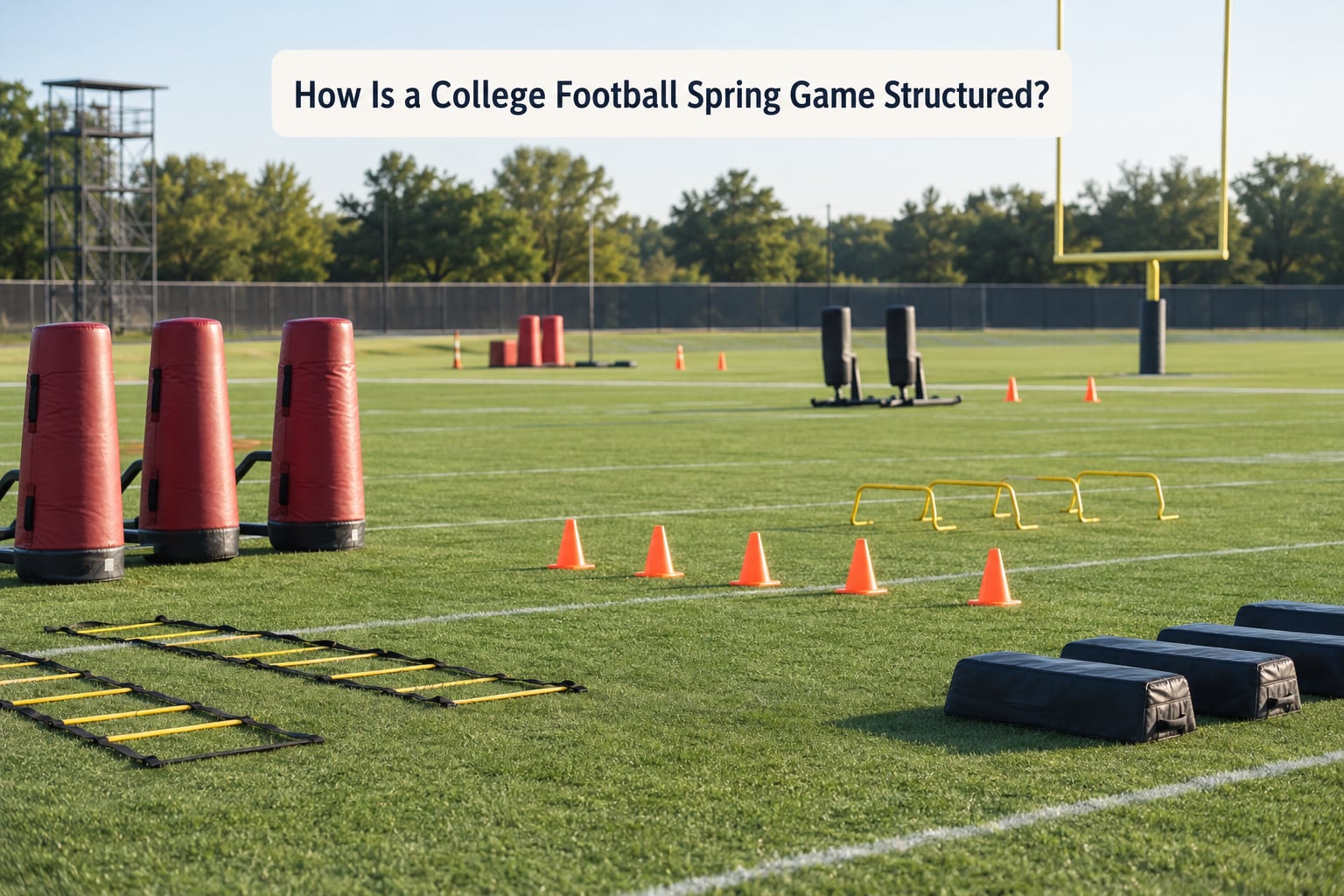
The structure usually runs from warmups through individual work, then into team periods, then into the scrimmage itself. Position groups often start earlier than the whole team, with linemen working on hand placement while skill players run routes against air.
After that come team periods. You might see an inside run period, a passing period, and then full team segments where the first-team offense runs against the first-team defense. Kickers and punters usually take their own period at one end or the other.
The scrimmage at the end is where the format details get strange. A thread in the r/ducks subreddit spelled out the version most programs run: four 15-minute quarters with a running clock, except it stops for scores, penalties, a change of possession, and the final three minutes of each quarter. That is roughly an hour of football, give or take, plus halftime.
Some schools use a two-team scrimmage format instead, where the roster is simply divided in half and everyone plays on live teams. It produces more action and fewer obvious standouts. Others swap periods so the offense gets more reps than the defense. Ask before you go what your school does, because it changes what you should watch for.
What Do Players Do During the Spring Game?
Everything a football player does on a Saturday in October, just less of it and with more instructions between plays. Quarterbacks take snaps from center, run the playbook they have actually installed so far, and call audibles when the coaching staff lets them. Receivers run routes against real coverage instead of air.
Along the line, linemen work pass protection and run blocking against live defenders rather than hand sleds. Defenders tackle, cover, blitz, and take their chances at turnovers, though contact rules vary by program. Some schools limit or eliminate full tackling and put high-profile players in non-contact jerseys that mark them off.
Then there are the specialists. Kickers and punters usually finish with a scoring period near the goalposts, and it turns into an open field goal contest once the quarterbacks have gone inside.
Reps are uneven by design. First-teamers might see most of the live snaps while scout team players run the other half of the roster, and scripted plays can stop the clock after almost any snap. Do not read a stat line from a spring game as a season projection.
What Is the Purpose of the Spring Game for Coaches?
Evaluation is the whole point, and it happens on two different timelines. Practice is where habits get installed and taught. The spring game is where a coach sees whether those habits survive contact from a different set of players.
Coaches are watching technique under pressure, decision-making with a clock running, and how a player responds when the play breaks down. They are also sorting out depth chart questions that a practice field does not answer cleanly, like whether two linebackers can both play on the same unit or which of two quarterbacks handles a defense that shows pressure.
Position changes get settled or at least floated. A tackle might try tight end, a wideout might take reps at slot, and a quarterback might be given a run package to see how the offense adapts. Freshman early enrollees and portal transfers get their first real film against college-level speed, which is the fastest way a fringe player separates himself from the pack.
Conditioning matters too. A coach can watch how a player moves in the fourth quarter of a live period, and count that as a rep. Finally, it is a relationship tool. Players who compete in front of the roster and the crowd tend to buy into the coaching staff, and a staff with buy-in tends to perform better in September.
What Can Fans Expect at a College Football Spring Game?
Expect a stadium that is open but not packed. Parking lots and tailgating setups usually start a couple of hours before kickoff, and the walk to the stadium is the part most die-hard fans enjoy most. Some programs fold a fan festival, a youth football clinic, or a recruiting booth for juniors into the same window.
Inside, you get player introductions with a starting lineup that may or may not resemble anything real, a pep rally or coach’s speech, and a long halftime featuring the marching band, the cheerleaders, the dance team, and the mascot. Merchandise tables often sit near the entrance, and autograph sessions at the end can last as long as anyone will stand in line.
Special teams gets a showcase period, which sounds dull and turns out to be the best cheap entertainment in the stadium. A walk-off field goal or a punter booming one fifty yards downfield does more for a crowd than ten incomplete passes.
What you will not get is the pressure. On r/CFB, fans describe the spring game as a genuine ritual from an intensity standpoint, but the same threads note that a meaningful share of the crowd is there because they have never seen the place before. Expect a family-friendly atmosphere where kids can move around without anyone glaring at them.
How Does a Spring Game Differ From a Regular Game?
The differences run deeper than the clock. A regular season game is a closed competition with records, standings, and an opponent who has studied your tendencies all week. A spring game is a classroom with an audience.
| What it is | Spring game | Regular season game |
|---|---|---|
| Purpose | Evaluate players and teach concepts | Win and build a record |
| Length | Typically four 15-minute quarters | Four quarters with real stopping rules |
| Clock | Usually running, stops on key situations | Standard NFL-style clock rules |
| Contact | Limited or reduced at many programs | Full contact |
| Opponent | Your own roster split into two squads | Another school that wants to beat you |
| Record | No official record or standings impact | Counted toward the season record |
| Starters | Stars often held out or in non-contact jerseys | Full first teams, all-in on every snap |
| Stats | Carry no official weight | Official season statistics |
| Home crowd | Often a fraction of a fall gate, very family-friendly | Full stadium weeknight or Saturday slate |
Historically, reported spring attendance has ranged from around 20,000 at smaller programs up to crowds in the 70,000s at Nebraska and above 90,000 at Alabama. Those are the biggest stages, and even they fill a fraction of what a September home game would take.
Uniforms give it away too. You will usually see two full sets of practice gear or two uniform groups rather than one set of game uniforms. If you were expecting the real thing, that mismatch is the first hint you are watching a scrimmage.
Why Do Rosters and Depth Charts Change After Spring?
Because spring is when competition starts, and competition is how coaches discover things they did not know. A quarterback who struggled in the fall might have spent the winter in the film room and arrive in April looking like a different player. A freshman who looked lost in January looks like a rotation player in March.
Injuries do most of the reshuffling. One tweaked knee during spring practice can send a starter to the sideline for months and promote two players at once. Academics play a role too, since players near the end of their eligibility window have to finish coursework to be eligible, and that conversation sometimes happens in the spring.
Coaching changes cascade. A new offensive coordinator can install a system that favors different body types, which quietly changes what a roster looks like and which players fit it. A new strength coach can do the same thing.
Here is the honest part: one spring game moment almost never decides a starting job. The scrimmage is one data point across dozens of practices, and coaches weight it accordingly. Plenty of great plays get posted from spring games by guys who did not start in September. Plenty of quiet scrimmage days belong to the guy who did.
What Kinds of Plays and Drills Should Fans Watch For?
Focus on the football and you will get more out of a spring game than the people watching the scoreboard. Here is where I would point a first-timer.
How to actually read what happens at a college football spring game
Start with the offensive line, because it decides everything else. Watch how a tackle handles a pass rush rep and whether the quarterback trusts him enough to keep throwing. Blocking technique that survives live contact is the clearest signal in the whole scrimmage.
Then find the quarterback competition. Watch who gets the first-team reps, who runs the designed plays, and who is put in obvious passing situations. Situational football, third down and short yardage, tells you what the staff actually trusts.
Watch route combinations and defensive spacing. A pair of receivers working together on the same concept against a cover three is a coaching decision you can evaluate. So is whether the safety rotates early or late, and whether the corner is playing press or off the line.
Watch the pressure package, since defensive coordinators build their identity there. A blitz you have never seen at your school shows up in the spring first, because the spring is when the staff experiments with new looks before they become a scouting film problem in September.
Special teams is the easiest entry point for a casual fan. Kickoff coverage teams, punt protection, and field goal mechanics are visible, technical, and hard for a casual viewer to fake an opinion about. It is also the part of the roster most obviously unsettled in the spring.
Finally, keep an eye on position battles rather than big plays. The running back taking every first-team rep matters more than any single 20-yard dash through a hole, because reps are the currency coaches actually trade in.
Frequently Asked Questions
Is a college football spring game the same as a regular game?
No. A spring game is an evaluation session and a public showcase, not a competition. Your own roster is split into two squads, quarter lengths are shortened, the clock usually runs, and contact is reduced at many programs. No official record exists, stats carry no weight, and star players are frequently held out or placed in non-contact jerseys. A regular game has full contact, standard clock rules, and an opponent trying to beat you.
Can fans attend a college football spring game?
Almost always, yes. Spring games are explicitly public, and many programs open the stadium to anyone who wants to watch. Some schools hand out free tickets to students and season ticket holders, sell general admission cheaply, or allow walk-ups. A few programs have reduced spring games to closed practices, so confirm on the athletics site before you travel, especially if you are bringing kids or driving a long way.
Are spring games scored?
Most are, and the score is real during the game itself. But it means nothing afterward. Spring games carry no official record, no standings impact, and no statistics that count toward a season. Coaches will sometimes stop scoring after the first quarter or rotate in a full second team. Treat the final number as an artifact of a closed practice rather than a preview of September.
Does playing well in a spring game guarantee a starting job?
No single spring game decides a starting job, and good ones get posted every year by players who do not start. Coaches weigh dozens of practices, conditioning, character, and scheme fit. A strong spring helps, but so does being the right fit for what the staff is building. Plenty of quiet, unremarkable scrimmages belong to players who open the season as the starter.
How long does a college football spring game usually last?
About an hour and a half of actual football. The common format is four 15-minute quarters, based on the version fans describe in the r/ducks thread, with a running clock that stops for scores, penalties, a change of possession, and the final three minutes of each quarter. Add warmups, halftime pageantry, and the postgame autograph session and you are looking at roughly three hours from parking lot to leaving.
Why do some players sit out or participate in limited roles during spring games?
Usually it is health management rather than punishment. Coaches have just finished a contact-heavy practice cycle and know the first fall game matters far more than an April scrimmage, so stars get limited snaps or wear non-contact jerseys. Some players are nursing injuries from winter, some redshirts sit by rule, and others are simply on a different unit in the two-team format. Reduced participation is standard, not a sign of trouble.
Bottom Line
What happens at a college football spring game is a condensed, lower-stakes version of a game day, with less contact, a moving clock, and no result that matters. Go in expecting to evaluate rather than be entertained, check your school’s format and ticket details before you drive, and give yourself until halftime to decide whether you got what you came for.