College athletes handle social media attention by drawing boundaries rather than escaping it. Most keep some kind of public account because their team, their school, and name, image and likeness deals all depend on it, then limit who can see and comment on what they post, schedule posts around practice and class, and build a plan for what happens when a bad game turns into a bad week online.
The difference from an ordinary 22-year-old’s feed is scale and permanence. A college athlete can pick up a national audience with one dunk or one honest post, and every photo taken from the stands lands on their own timeline that night.
Table of Contents
- Why Social Media Attention Feels Different for College Athletes
- What Boundaries Do College Athletes Set Before Posting?
- How Do Athletes Manage Posts During Game Day and Big Events?
- How College Athletes Handle Social Media Attention in Practice
- Who Helps Athletes Control Their Social Media Accounts?
- What Should Athletes Do When Comments Turn Hostile?
- How Can Athletes Stay Focused After a Bad Performance?
- How Do Colleges Support Athletes Without Taking Over Their Voices?
- Which Social Media Strategies Create the Most Unnecessary Stress?
- Frequently Asked Questions
- Should college athletes respond to critical social media comments?
- Can a college athlete delete negative posts about their performance?
- How should an athlete deal with a teammate involved in an online argument?
- What should a college athlete do if social media harassment continues?
- How long should an athlete take a break from social media after a game?
- Conclusion
Why Social Media Attention Feels Different for College Athletes
A regular student can ignore a bad comment and move on. A college athlete usually cannot, because attention arrives from six directions at once: the team’s media operation, the school, alumni boosters, recruiting services watching their class, sponsors, and thousands of people in the stands who feel free to comment.
Add ordinary student life and the effect multiplies. Classmates post screenshots, older fans argue about playing time, and a coach who does not want an athlete criticized publicly still has to be seen reacting to it. One Michigan State baseball player, Christian Williams, keeps his Instagram private and shares only with family and friends, and he has said the pressure to post for deals feels like something he has to do rather than something he chose.
The audience is not one audience
Fans, recruiters, teammates, and journalists want different things from the same account, and no single posting style satisfies all four. That tension is the source of most of the stress athletes describe.
Criticism no longer ends at the buzzer
Boos in an arena last about a minute. A post about a bad night gets screenshotted, shared, and answered by strangers for weeks, which is why sports psychologists describe online criticism as a contact sport.
What Boundaries Do College Athletes Set Before Posting?
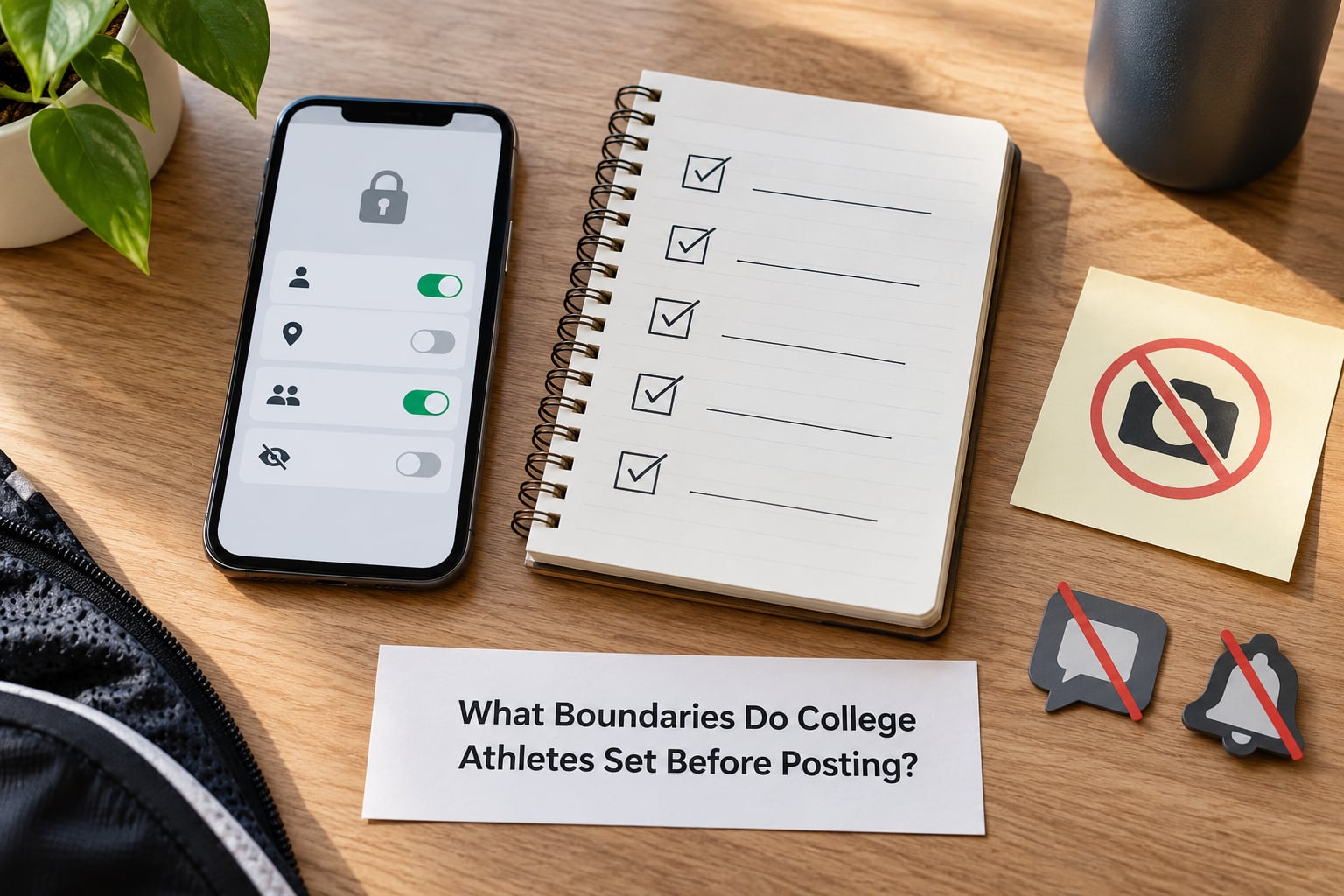
Boundaries work best when they get decided in a calm week, not the night after a loss. The athletes who manage attention well tend to have a short written list of what is off the table.
- Personal details stay private. Home addresses, where a family member works, a girlfriend’s name, a training facility’s empty hours.
- Comments get filtered. Most platforms let you limit who can reply, so they restrict comments to people they actually follow or approve them one at a time.
- Muted words and block lists get turned on early, before a bad game rather than during one.
- Direct messages get narrowed to people they actually know, which closes off the creepiest channel of all.
- Quiet hours get scheduled around exams, practices, travel, and sleep.
- Certain topics are simply skipped, usually anything political or anything involving a teammate’s family.
- Old posts get swept before a season, a NIL deal, or a coaching change, because teams and brands do scroll back through archives.
Michigan State track athlete Mia Rogan did the opposite and still set limits. She grew past 70,000 followers in roughly a year and now reads only comments from people she knows plus the positive replies at the top of her feed, letting the rest go unread.
How Do Athletes Manage Posts During Game Day and Big Events?
Competition weekends carry the highest volume and the lowest judgment. The pattern most athletes settle on is to post less, not more, when the stakes are highest.
Advance scheduling does most of the work. A photo from a walk or a thank-you to a sponsor goes up before tipoff rather than between warmups. Live posting during a game gets limited to a few quiet minutes, usually away from the bench and away from team spaces.
Reactions to results wait. The rule athletes repeat most often is simple: nothing goes out within a set period after a game, win or lose. Sports psychologists use that window to stop the spiral in either direction, since a win can produce its own arrogant post that a coach has to clean up.
Team communications staff usually hold the camera on official channels. The athlete’s account stays personal, which is the boundary most schools try to protect even when they push athletes to be more visible.
How College Athletes Handle Social Media Attention in Practice
This section holds the working playbook. It is less theory than the checklist most athletes and their handlers actually run through.
The core system
The athletes who cope best treat their account like a small operation with four moving parts: a personal posting policy, a tiny support team, scheduled engagement instead of constant reaction, and a clear escalation path for serious abuse.
A posting policy in plain language
One page. What gets posted, what stays private, who has final say. Written once and reviewed at the start of each season, it removes the decision from the moment when an athlete is tired and emotional.
A support team of two or three people
Typically the athlete, one family member, and one professional, either a manager or the communications contact at school. Small on purpose, since every added person dilutes the athlete’s own voice.
Moderation treated as routine maintenance
Clearing comments takes minutes, not hours. Athletes who do it daily never reach the point where a thousand unread hostile replies stack up, which is where most of the real damage happens.
An escalation path agreed in advance
Who gets called when a post crosses from criticism into threats, and who has the phone number for campus safety or a sports psychologist. Agreeing this in advance means nobody has to decide who to call while shaking after a loss.
Who Helps Athletes Control Their Social Media Accounts?
Control is shared, and the sharing needs consent. Nobody speaks for an athlete unless that athlete asked them to.
The athlete makes the final call on what appears. Family members often act as a first filter, since they are the ones who see the late-night creepiest direct messages. Managers and personal handlers handle brand work and scheduling, which is where the boundary between personal life and content gets blurry fastest.
Athletic department communications staff manage official accounts and press obligations. They can advise, and they can flag things that would create problems, but they do not own the personal account.
Agents get involved once there is real NIL money on the table. A qualified mental-health professional, often a sports psychologist, is the one person whose job is the athlete rather than the content, and that person is worth consulting before a bad stretch rather than after it.
What Should Athletes Do When Comments Turn Hostile?
Criticism of performance is ordinary and often fair. Abuse is different, and it gets a different response. Telling those two apart is most of the skill.
Here is the sequence that works:
- Step out before you engage. Close the app for a defined period. Arguing with strangers at midnight helps nobody.
- Document what matters. Screenshot threats, targeted harassment, and anything naming family, school, or address. Save them before reporting.
- Block and mute the repeat offenders, including accounts that only exist to argue.
- Report harassment through the platform, using the reporting tools built for exactly this, and keep the confirmation.
- Escalate serious cases to campus safety or athletic department compliance, especially when threats reference physical harm.
- Protect teammates by not screenshotting their names or reactions into a bigger argument.
- Tell somebody in person. A parent, a coach, a counselor. Abuse that stays inside one feed stays one feed.
The scale is not a guess. An NCAA study published in 2024 with the Signify Group found harassment of athletes is a significant and widespread problem, most often in the form of sexual abuse, with roughly 80% of the abuse detected in posts around March Madness and women athletes receiving about three times as many threats as men.
That gap matters for how support gets allocated. It also explains why women athletes in this sport deal with attention that no setting change fully addresses, since the problem is not always a public account but the sexualization that arrives around one.
How Can Athletes Stay Focused After a Bad Performance?
A bad game now produces a large, fast, public volume of attention. The first move is delay: no reading comments for a set window afterward, however tempting it is to check what people said.
Support from people who knew the athlete before the scholarship matters more than support from the audience. Family, old teammates, and off-campus friends see the person rather than the performance, which is exactly what a difficult night needs.
Temporary disappointment and persistent distress look different. A bad night followed by a normal week is a bad night. Low mood, sleep loss, and withdrawal that do not lift after several weeks are a reason to talk to a counselor or sports psychologist, and most programs offer that confidentially.
Forum discussions around college sports return to one point repeatedly. Athletes are under pressure to keep posting because deals and visibility depend on it, so quitting outright is rarely realistic. The workable answer is boundaries plus support, not blame.
How Do Colleges Support Athletes Without Taking Over Their Voices?
Support should reduce friction without deciding what an athlete says. Schools that manage this well keep the two apart.
- Media training that covers what a post can do to a roster spot, a scholarship, and a job application.
- Privacy checks before seasons, since archived posts get reviewed and old material is the most common surprise.
- Moderation resources, including access to someone who can act on threats quickly.
- Coordinated crisis communication so an athlete is not issuing statements while exhausted.
- Clear limits, so nobody assumes an athlete is speaking for the program.
The generational gap causes most of the friction here. A coach who came up before social media sees a bad post as a character problem, while the athlete sees it as a bad afternoon. A full season-long ban also fails, as coaches themselves admit: asking players to give up something that is part of who they are has a psychological cost, and it does not survive contact with NIL opportunities and modern recruiting.
The line schools should not cross is control of lawful personal expression. Support means training, resources, and a plan. It does not mean approval rights over a personal account.
Which Social Media Strategies Create the Most Unnecessary Stress?
Some habits are much harder to undo than others. These are the ones that reliably make things worse.
- Posting from an emotionally charged moment. The post that follows a bad call or a tough practice is usually the one that has to come down.
- Monitoring every mention. Reading each tag and reply turns a normal week into a full-time job with no break.
- Deleting all criticism. Removing fair feedback teaches an athlete that any dissent is an attack, which is the opposite of resilience.
- Arguing with strangers. Comment threads do not end. The other side usually does not read a reply, let alone concede.
- Sharing real-time location. Where someone eats, trains, or studies is information strangers do not need.
- Letting public disagreement bleed into the team. A roster that argues online pays for it in practice and in the locker room.
- Treating follower count as the measure. Numbers drive some NIL income and attract some abuse, and they say very little about whether an athlete is doing well.
One more deserves mention because it comes up constantly in fan forums: the belief that attention arrives evenly. It does not. Athletes in non-revenue sports, and linemen in high-profile sports, often absorb the same scrutiny with far smaller audiences and far less commercial return.
Frequently Asked Questions
Should college athletes respond to critical social media comments?
Usually not in the moment. Criticism of performance is normal, and most athletes lose more time replying than they gain. A workable approach is to read comments only from people they know, approve replies from strangers individually, and leave anything hostile for later or not at all. If a comment crosses into threats or targeted harassment, the right response is reporting rather than answering.
Can a college athlete delete negative posts about their performance?
They can, and deleting an old post of their own is routine practice. What they cannot do is require anyone else to remove criticism of them, and policing other people’s posts rarely works. A better habit is to sweep old content before a season or a deal, and to accept fair criticism as part of the job while saving energy for the abuse that is not.
How should an athlete deal with a teammate involved in an online argument?
Do not join the thread and do not screenshot it to your own feed. Message the teammate directly and privately, and if the argument is about something the whole team needs to hear, raise it with a coach or staff member rather than settling it publicly. An online fight that spreads usually damages the roster more than either person involved.
What should a college athlete do if social media harassment continues?
Document first. Screenshot threats, block and mute repeat accounts, report through the platform, and keep confirmations. If the content names family or school, or references physical harm, escalate to campus safety and athletic department compliance. Finally, tell someone in person, because abuse that stays inside one feed stays one feed.
How long should an athlete take a break from social media after a game?
Enough to get out of the emotional state. Most athletes who set a rule settle on no posting for a set window after the final buzzer and wait until the next day to read anything. Longer breaks help during a losing stretch or a public controversy. Withdrawing entirely is harder when NIL opportunities and team obligations depend on visibility.
Conclusion
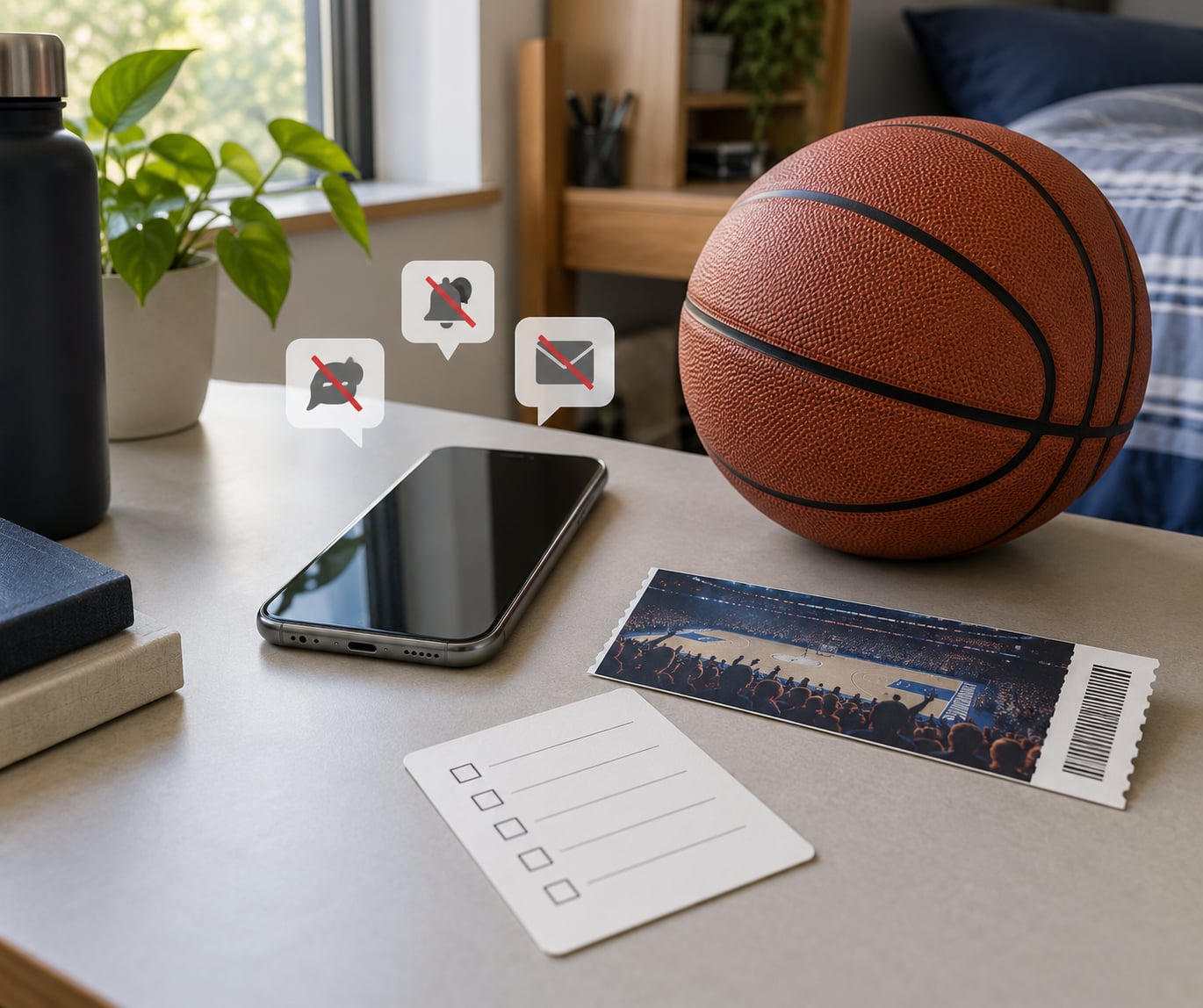
The athletes who handle attention best are not the ones with no problems online. They are the ones who decided their limits before a bad week arrived. Start with three things: write down what stays private, turn off the notifications that create noise, and agree in advance who gets called when a post turns hostile. That work is an hour, and it decides how the rest of the season goes.