Man-to-man defense works by assigning each of the five defenders to one specific opponent, staying between that player and the basket while still tracking the ball, then helping out and rotating when a teammate gets beaten. Understanding how man to man defense works in basketball comes down to four connected habits: pressure the ball, deny the passing lanes, help the drive, and find your man for the rebound.
Updated for 2026.
Table of Contents
- What Is Man-to-Man Defense?
- How Man-to-Man Defense Works in Basketball
- What Makes Man-to-Man Defense Difficult?
- How Man-to-Man Defense Differs From Zone Defense
- How Teams Improve Their Man-to-Man Defense
- Frequently Asked Questions
- What is the main idea behind man-to-man defense?
- Is man-to-man defense better than zone defense for beginners?
- What should a defender do when an offensive player uses a screen?
- How do defenders help each other in man-to-man defense?
- Why does man-to-man defense create more open shots?
- How can a basketball team reduce turnovers while playing man-to-man defense?
What Is Man-to-Man Defense?
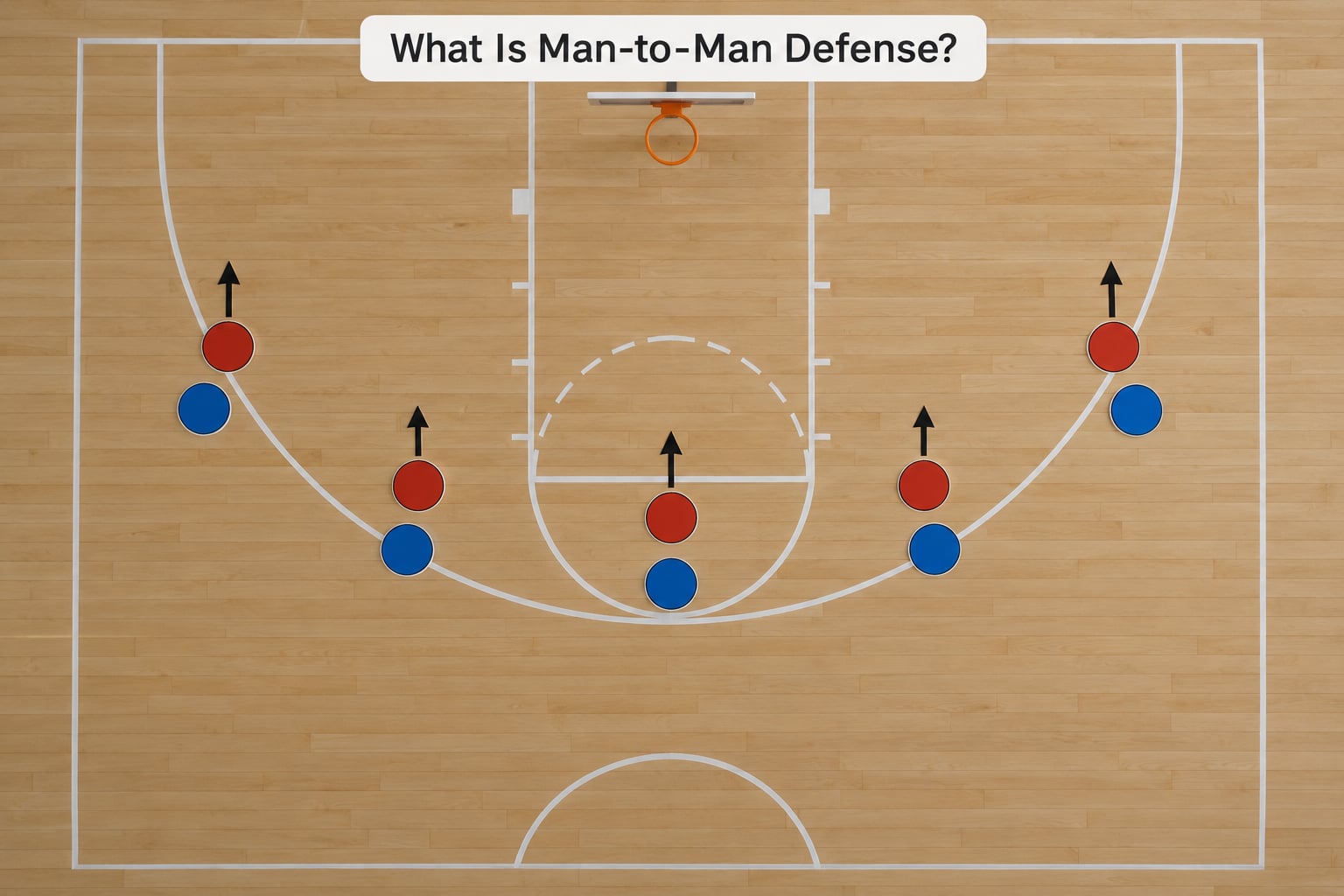
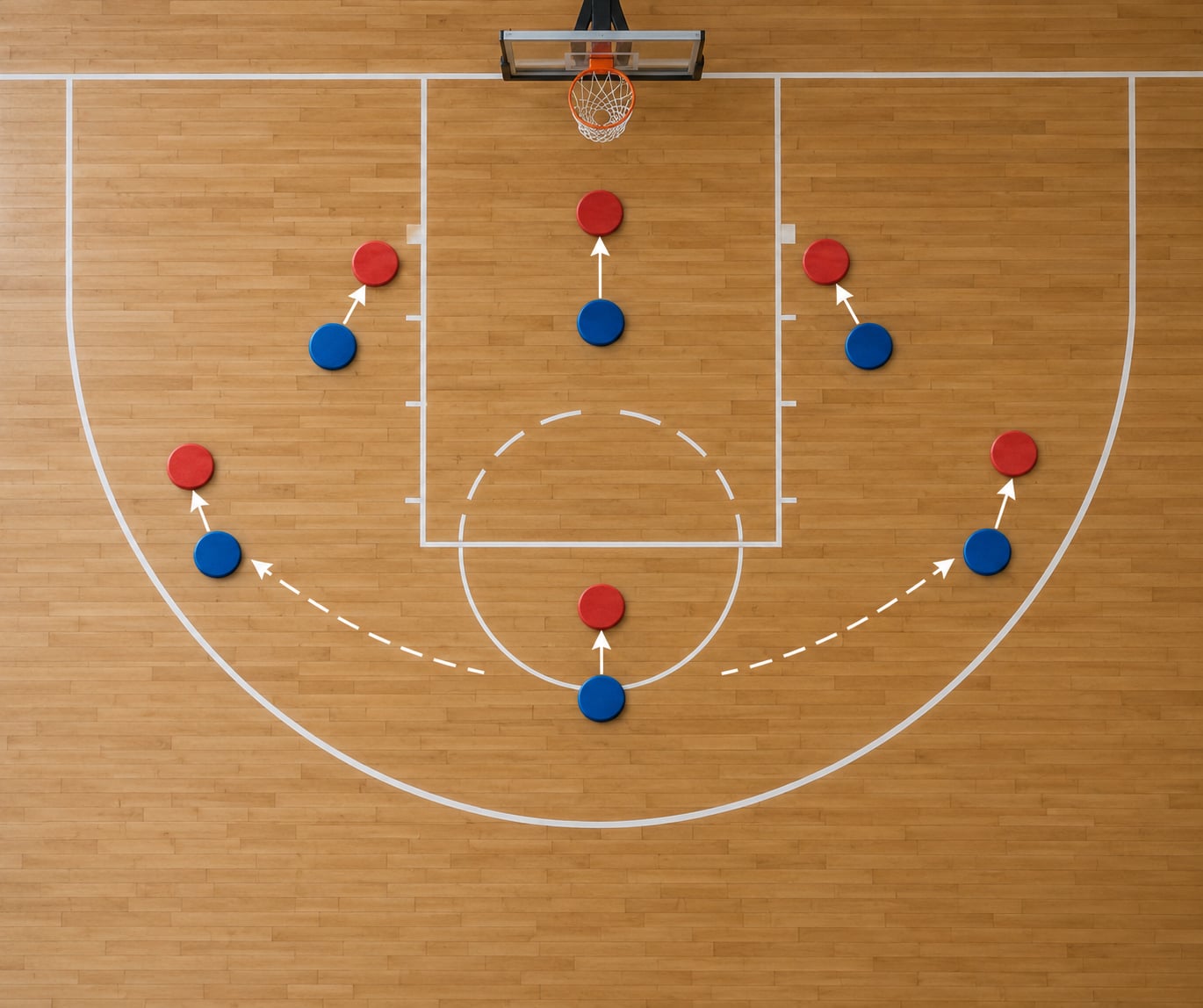
Man-to-man defense is a scheme where every player on the floor is assigned to guard one specific opponent. That single idea is what separates it from zone defense, where each player guards an area of the court instead of a person.
The part that trips people up is that guarding your man is not the same as chasing your man. A defender stays attached to his opponent while keeping his eyes and his body oriented toward the ball. If the ball is on the opposite side of the floor, he is still responsible for his assignment, his passing lane, and his rebounding position.
A basic shell sets two guards on the ball side, one forward on the strong-side wing, and the big near the rim protecting the paint. The two guards nearest the ball are usually the most aggressive, because that is where the offense wants to start.
How Man-to-Man Defense Works in Basketball
The system runs through four phases on every single trip down the floor, and each phase has a named defender. Once you can see the phases, the whole scheme stops feeling like five people chasing each other around.
The Basic Defensive Assignment
The assignment is the foundation. A coach puts five names against five offensive players before the game, then adjusts the matchups during warmups if a bigger player lines up against a smaller one.
Coaches pick assignments based on size, position, and handedness. A left-handed shooter is easier to defend on the block, which is why a bigger defender is often matched there instead of on the wing where that shooter can create an easy drive.
Two assignments matter even when your man has nothing to do with the ball. The first is your passing-lane assignment, the defender who shows toward the ball to cut off a drive. The second is your box-out assignment, the player who seals the opponent closest to the rim when a shot goes up.
On-Ball Pressure and Perimeter Defense
The defender guarding the ball handler does most of the work. The job is not to steal the ball, it is to make the offense play the way you want it to, usually toward the sideline and away from the middle.
Mechanics matter more than effort here. Feet a little wider than shoulder width, weight on the balls of the feet, heels barely off the floor, knees bent so the thighs stay roughly parallel to the court, back straight with a slight forward tilt, hands up and active, eyes on the opponent’s chest rather than the ball.
From that stance a defender slides, never crosses his feet, and stays at an arm’s length of cushion on the ball handler. He fights through screens by turning his body rather than reaching around with his arms, and he recovers to the front of his man before the ball handler turns the corner.
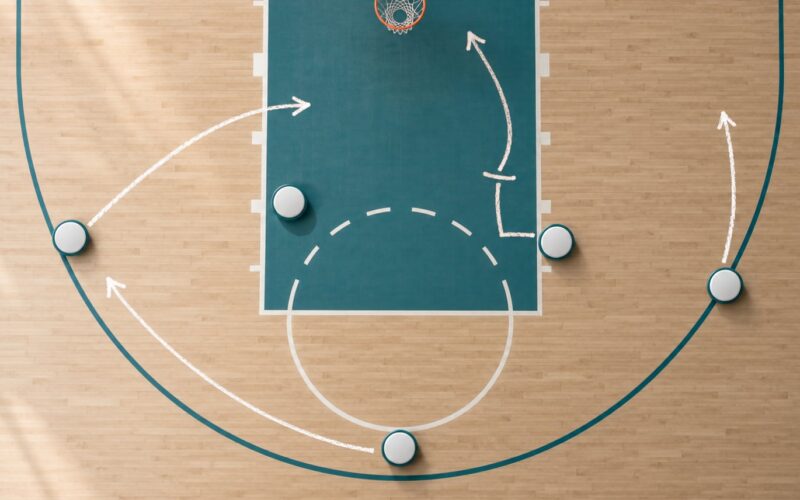
On the off-ball side, the defenders deny the easiest passes. The weak-side defender shades his man toward the lane line and the ball so a pass to the wing has to travel further and arrive to a receiver who already has a defender in his face.
Help Defense, Rotations, and Closeouts
Help defense is what stops a broken assignment from becoming an easy layup. When a ball handler turns the corner, the defender guarding the nearest offensive player shows toward the lane while still tracking his own man. That single movement is the difference between a contested shot and a dunk.
A rule that gets posted around on r/BasketballTips is simple: the low man helps, the high man takes the first pass, then the low man Xs out to the second pass. Other coaches teach the same idea with position labels — ball, deny, ready, help, hoop — written on a whiteboard so every player knows what he is before the pass is made.
After the help, the recovering defender sprints back to his own man before watching the pass. Chasing the ball blindly is how open threes happen, and the sprint back is the step almost every young player leaves out.
The closeout is the last piece of the possession. It starts a step inside the offensive player’s stride, ends with the slide slowing down and the hands up, and it finishes with a chop step so the feet do not cross and the defender does not fly past the shooter into the corner.
What Makes Man-to-Man Defense Difficult?
Screens are the honest answer. A well-timed screen puts the defender between his man and the ball, and because he owns one opponent rather than an area, that screen costs him something real. Every coach picks a coverage for it:
- Fight over (sit or stay). The defender stays with his assignment and powers through the screen. Keeps the matchup, costs stamina and can be beaten by a sharp roller.
- Switch. The two defenders trade assignments and pick up a new man on the fly. Simple and fast, but it creates mismatches that last the whole possession.
- Blitz. The defender goes hard over the screen to trap the ball handler. Great for forcing turnovers, risky when the guard splits the trap and finds a shooter.
- Drop. The defender stunts at the screen and then sinks toward the rim to stop the roll. It concedes the pull-up shot and protects the paint.
Mismatches are the second problem. One good ball handler creates a difficult matchup for a whole quarter, and no amount of scheme fixes a foot of size. The honest answers are to avoid the matchup through team defense, pick up the ball pressure before the screen arrives, or accept the advantage and live with it.
Communication breaks the system apart faster than anything else. When a rotation happens silently, the next defender does not know whether to help, deny, or stay, and the gap opens. Coach after coach says the same thing: if your team does not pressure the ball and your players are not talking to each other, the scheme name does not matter.
Ball-watching finishes it off. When a shot goes up, defenders who watch the ball instead of finding their man get beaten on the offensive glass and give up transition looks. Finding your man first, then watching the ball, is the standard.
Finally, fatigue. Man defense asks players to slide for long stretches and recover on every possession, so conditioning is a defensive skill, not a conditioning drill for its own sake.
How Man-to-Man Defense Differs From Zone Defense
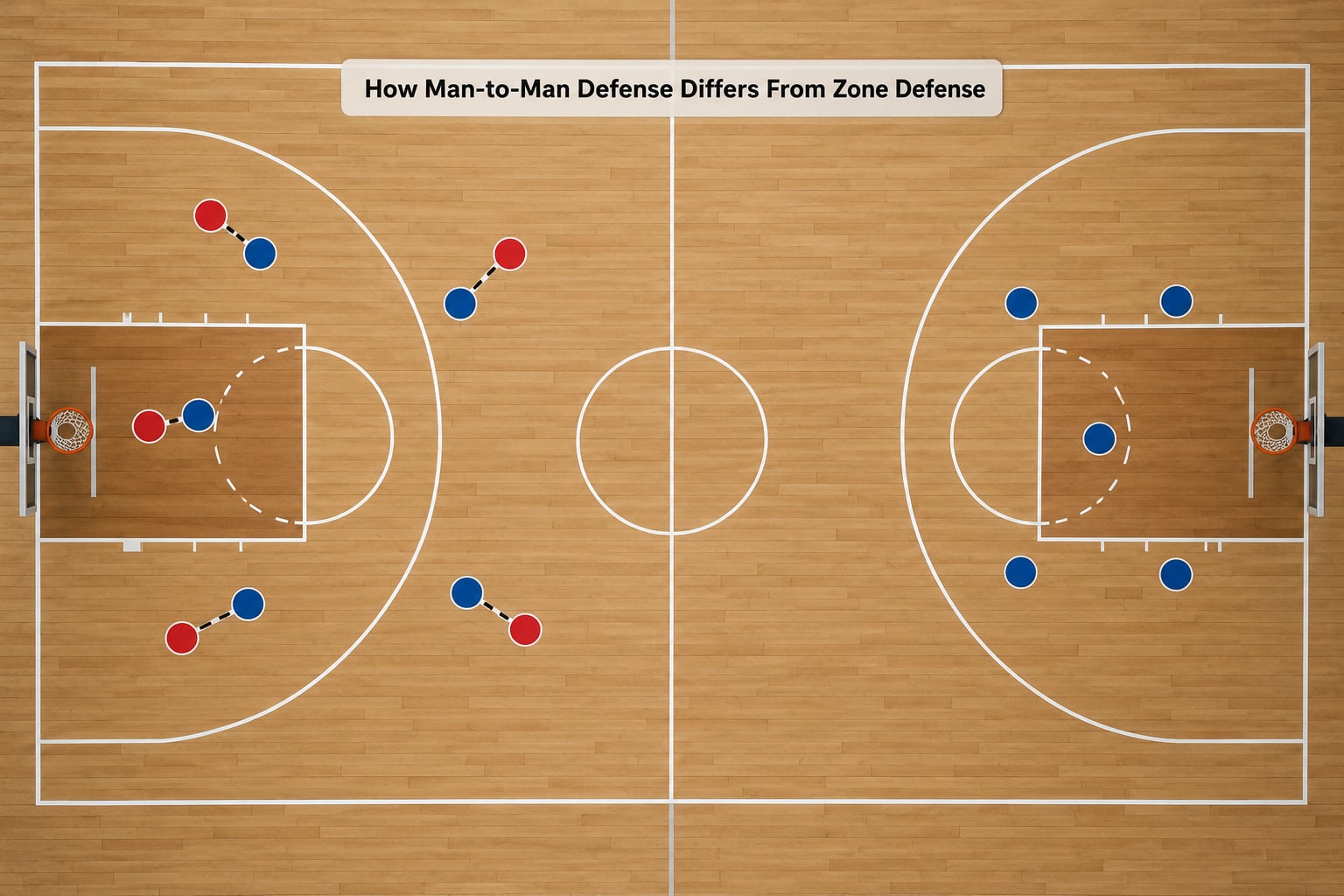
Which is better, zone defense or man-to-man? Neither one wins on its own, because they defend different things. Man-to-man pressure builds trust and court vision; zone control denies passing lanes and protects the paint without needing great defenders. The table below shows where each one wins.
| Category | Man-to-Man | Zone Defense | Matchup Zone |
|---|---|---|---|
| Defender’s job | Guard one specific opponent | Guard a fixed area of the court | Guard a person in zone-like spacing |
| Pressure on the ball | Constant, applied by one player | Shared by several defenders | Varies by alignment |
| Best used against | Dominant ball handlers and post players | Teams that swing the ball and shoot from outside | Spread offenses with one primary threat |
| Shot denial | Weak-side help must read and rotate | Built in by the shape | Mixed |
| Rebounding | Simple, since you know your man | Harder, since assignments shift by zone | Similar to man defense |
| Communication load | High, every rotation is called | Lower, the shape is fixed | High |
| Skill floor | Can be taught young | Needs players who read the floor | Intermediate |
| Ages it suits | Third grade through the pros | Older groups with disciplined spacing | Middle school and up |
A matchup zone, the common hybrid, starts from zone spacing but defenders pick up a specific opponent rather than an area. It gives you the shape of a zone with the accountability of man defense, and it is common at the college level where half-court offenses use a lot of pick-and-roll action.
For younger players, man defense is usually the better starting point. A zone asks a child to advance the ball past pressure, read spacing, and break down a shape, and none of those skills come easily before the game speeds up. Man defense builds the habits first, and a zone player who learned them can be dangerous later.
How Teams Improve Their Man-to-Man Defense
Improvement comes from a short list of priorities, worked in order. Teams that add a new drill every week get a new drill every week and no better defense.
- Stance and slide reps. Ten minutes a session of athletic stance, mirror slides, and close to the closeout. Nothing else works if the feet are wrong.
- Closeout under control. Start close to the offensive player and move back to simulated shot distance. The defender must arrive balanced with both feet down and hands up, and repeat until the slide, not the run, finishes the rep.
- One pass away. Three-on-three with one player on the ball, one in help, one denying. This is the single most valuable drill for reading the court, because it forces the help decision every possession.
- Shell and recover. Five defenders work through ball reversals and pick-and-roll coverage out of a shell, calling every rotation out loud.
- Transition defense. Sprint back, match up first, then communicate. Most open fast-break points come from a team that watched the ball instead of its people.
- Scouting and matchup work. Build the matchup chart from the next opponent, including who handles the ball and who plays on the wing in their sets.
The last piece is honest film review. Watch two minutes of a game with the sound off and count how often defenders are out of position with the ball in a given area. The pattern shows up fast, and it is usually the same mistake every week rather than a different one.
Frequently Asked Questions
What is the main idea behind man-to-man defense?
Every defender takes responsibility for one specific opponent, staying between that player and the basket while still tracking the ball. A defender does not ignore his man when the action is on the other side of the floor; he stays connected to the ball through position, help, and rotation, then recovers to his assignment.
Is man-to-man defense better than zone defense for beginners?
For most beginners, yes. Man defense forces a player to learn ball pressure, help awareness, closeouts, and communication, and those habits make zone defense easier to learn later. Zone is quicker to install, but it lets a young player stand in a fixed area and avoid the hardest parts of the game.
What should a defender do when an offensive player uses a screen?
It depends on the coverage the coach picked: fight over and stay with the assignment, switch onto a new man, go over the pick to trap, or drop to contain the roll. What a defender should never do is watch the screener’s hips and lose contact with the ball. Whatever the call, the coverage gets called out loud before it happens.
How do defenders help each other in man-to-man defense?
Help is one pass away. The defender guarding the man closest to the ball shows toward the lane to stop the drive, the defender nearest the rim protects the basket, and weak-side defenders shade toward the ball. A common rule posted on r/BasketballTips is that the low man helps, the high man takes the first pass, then the low man Xs out to the second pass.
Why does man-to-man defense create more open shots?
It usually does not. Open shots come from breakdowns rather than from the scheme: help arrives too deep, a closeout is taken flat-footed, or a defender chases over a screen and abandons his man. Man defense executed with communication and correct help timing forces harder shots and rushed decisions instead.
How can a basketball team reduce turnovers while playing man-to-man defense?
Take the ball away with pressure on the dribble and on the passing lanes, and chase live-ball turnovers rather than reaching for steals out of position. Deny the middle, keep two defenders in front of the ball handler on the wings, and let the offense swing the ball to the weak side, where the closeouts are waiting.
If you only fix one thing this week, make it the assignment and the voice. Have every player state who he is guarding and who he helps before every possession, then fix the closeout and the recovery after the rotation. Every other piece of man-to-man defense in 2026 college basketball builds on those two habits, and they are the cheapest ones to improve.