To grill for a crowd before kickoff, size the menu with pounds-per-person math, run a two-zone fire so slow items go on first and fast items go on last, and pack a preheated cooler to hold finished food above 140°F. Budget 2.5 to 3 hours of active cooking for a night kickoff, and everything hits the table while the crowd is still eating nachos.
The hard part was never the grill. It was the pile of food sitting in the cooler going lukewarm while I was still working the main grate. This plan fixes that by working backwards from the whistle instead of forwards from the grocery bag.
It works for a parking lot, a backyard, or an RV awning, and the crowd math scales from six people to thirty. Difficulty is low if you follow the sequence, and the only real skill you need is using a thermometer without flinching.
Table of Contents
- What You Need
- Step-by-Step: How to Grill for a Crowd Before Kickoff
- Common Mistakes
- Frequently Asked Questions
- How long should I grill food before a football game?
- Is it better to use charcoal or gas for a large crowd?
- What sides are easy to serve while guests are grilling?
- Can I cook hamburgers and hot dogs on the same grill?
- How do I keep food warm without drying it out?
- What can I prepare ahead of time for a game-day cookout?
What You Need
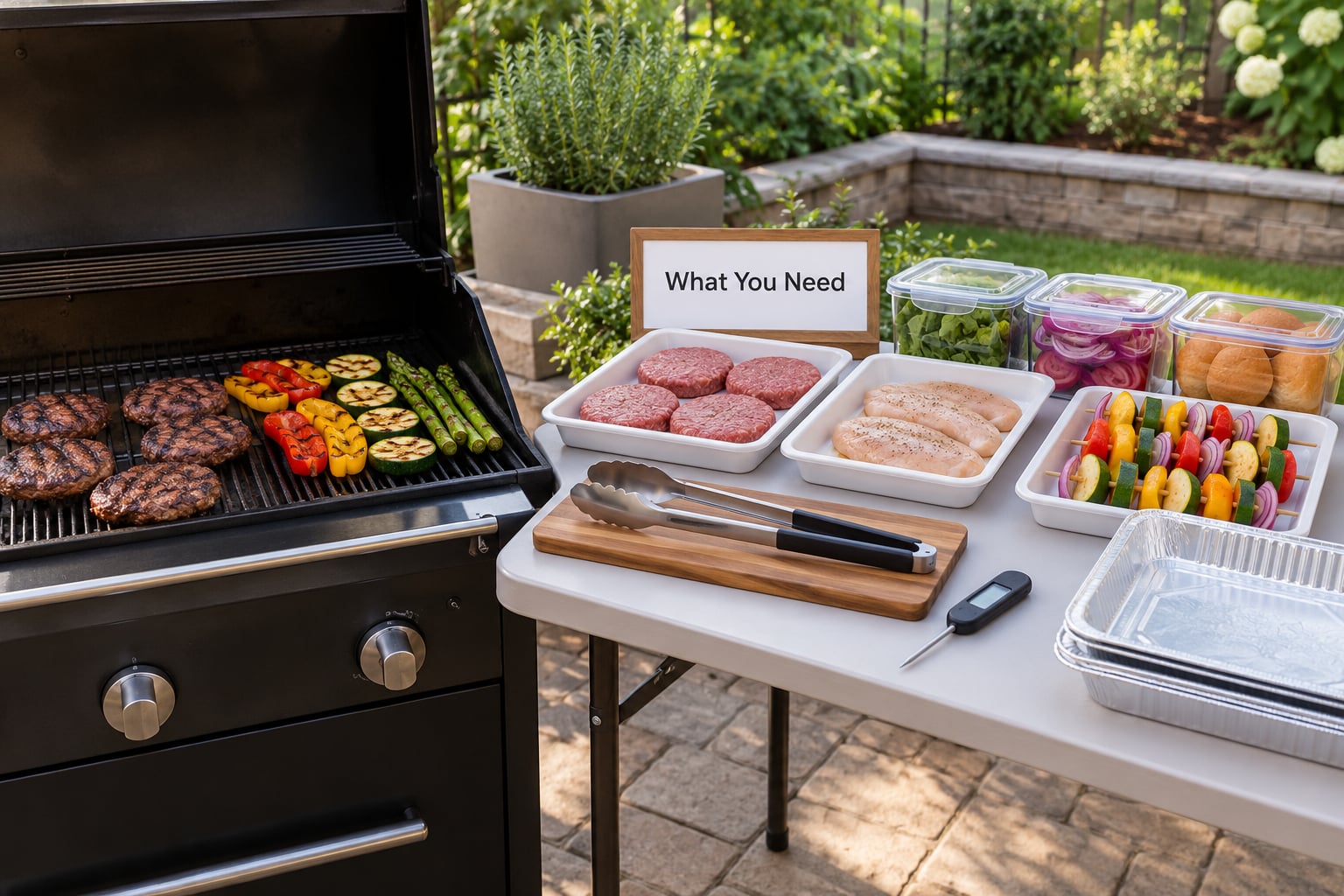
Start with the food, then size the equipment to it. Buy raw meat at 0.5 pounds per adult, bump it to 0.75 pounds per person when hungry fans are the majority, and count children at 0.25 pounds each. That works out to roughly 2.3 guests per pound of raw meat for a normal adult crowd.
| Guest count | Adults (0.5 lb) | Hungry fans (0.75 lb) | With kids (0.5 lb adult / 0.25 lb child) |
|---|---|---|---|
| 6 | 3 lb | 4.5 lb | about 4 lb |
| 10 | 5 lb | 7.5 lb | about 7 lb |
| 15 | 7.5 lb | 11 lb | about 11 lb |
| 20 | 10 lb | 15 lb | about 15 lb |
| 30 | 15 lb | 22 lb | about 22 lb |
Add 3 to 4 ounces of sides per person on top: a tray of potato salad, a bag of chips, a foil pan of baked beans, and a cooler of drinks cover most of it. Plan on a few extra pounds of the cheap handheld item, because that is what disappears first.
For equipment, give each adult roughly 12 square inches of cooking surface. A 22-inch kettle covers about a dozen people on the main grate alone, and a second grill or a sheet pan set on the side burner keeps the sides coming. A charcoal chimney starts a fire faster than any lighter and gives you a real hot zone and a real indirect zone to work with.
Two tools are non-negotiable. An instant-read thermometer is how you know when chicken and pork are actually done instead of when they look done. A cooler with a tight-fitting lid is how the first batch stays hot while the second batch cooks.
On the safety side, pack a bucket of water, a separate cooler for drinks, handwash supplies, and foil pans you can label raw and cooked. Keep raw meat on one end of the table, cooked food on the other, and never reuse the tongs that touched raw patties.
Step-by-Step: How to Grill for a Crowd Before Kickoff
How Many Pounds of Food Should You Plan?
Plan 0.5 pounds of raw meat per adult, 0.75 pounds if the group is mostly hungry fans watching a long game, and 0.25 pounds per child. Add a cushion of 10 percent because game-day appetites run bigger than a normal cookout and leftovers are a bonus, not a plan failure.
Going heavier matters most on the handheld items. Burgers, dogs, sausages, and wings are the foods people eat standing up without thinking, so they go first. Brisket and pulled pork get sliced and passed around, which slows the pace and buys you time on the second round.
What Should You Grill for a Football Crowd?
Keep the main list short and batch-friendly. Burgers, brats or hot dogs, chicken thighs, and a foil pan of something saucy like barbecue beans will feed a group with one grill and one cooler.
Choose at least one long cook and one fast cook. A pork shoulder or a pan of chicken thighs started early gives you food that holds for an hour, while burgers and dogs go on at the end in small batches. Add something people can eat with a plastic fork: a queso dip, a charcuterie board, or a tray of wings with celery and ranch.
For the vegetarian side of the group, grill halloumi or portobello mushrooms on the same grate as the vegetables, and bring a cold dip that needs no heat. Mixed grills with extra peppers and onions usually disappear faster than a tray of plain veggie burgers.
How Do You Set Up the Grill Before Guests Arrive?
Set up the grill 20 minutes before anyone arrives, with a clear path from cooler to table. Light the charcoal with a chimney, then push the coals to one side to build a direct zone and an indirect zone, or set the gas burners to high on one side and low on the other.
Everything else happens before the fire: meat out of its packaging and into foil pans, seasonings within reach, tongs and a spatula on the side of the grill that stays clean, serving trays on the table with the cooked food. Put a handwash station where people actually walk, and park the drink cooler far enough away that nobody opens it with a raw hand.
How Do You Cook in Large Batches Without Burning It?
Work from the most forgiving food to the most delicate, and never let a single layer of food cover the whole grate. When you crowd a kettle, the coals lose the airflow they need, the temperature drops, and everything steams instead of sears.
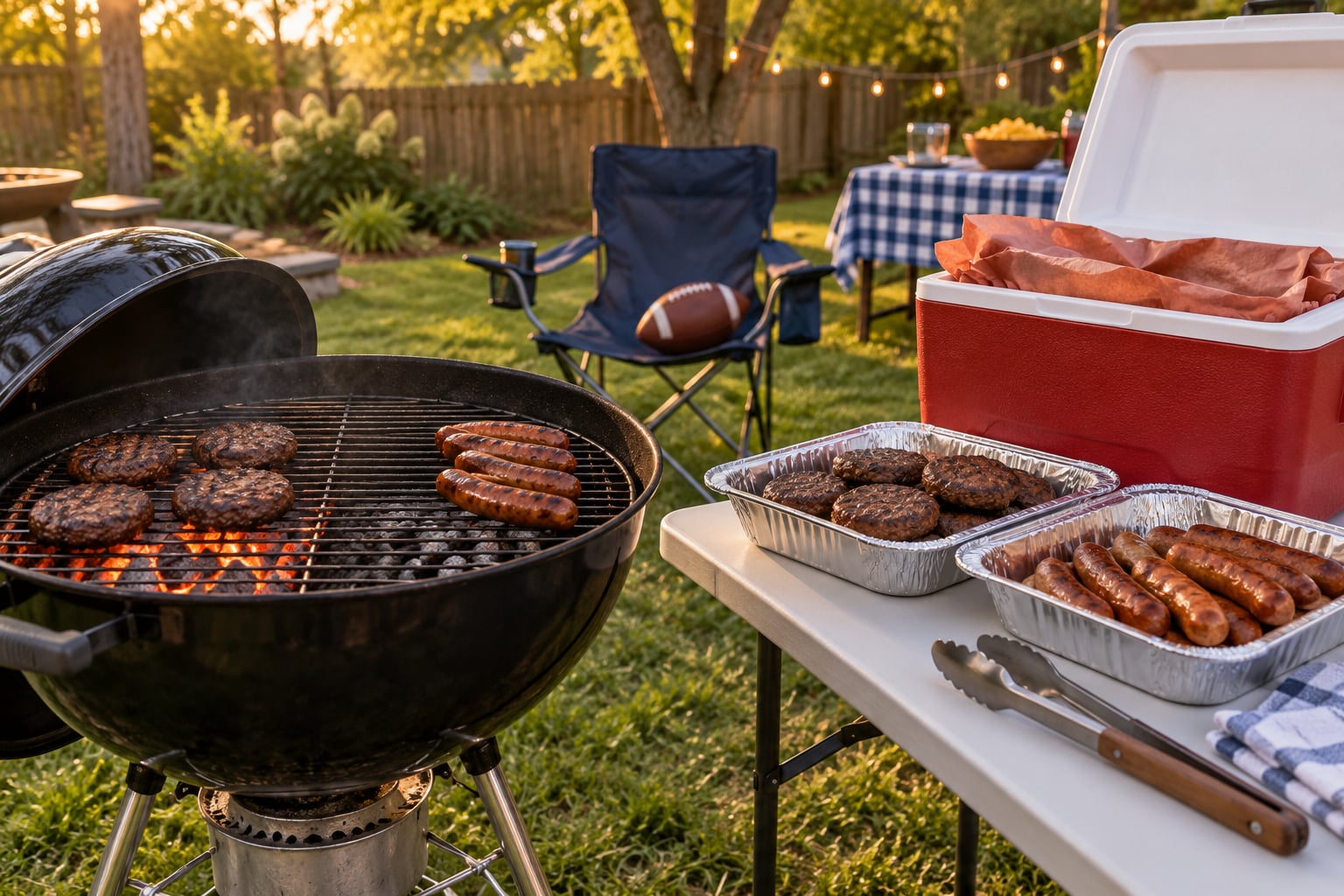
The fix is two-zone batch cooking. Start the pulled pork, brisket, or thighs over indirect heat, where they can sit for an hour without drying. When they hit temperature, move them to a warm side and cover them loosely. Then work the direct zone in small batches of eight to ten burgers or dogs at a time, and hand them off to the serving tray before starting the next round.
Stagger the rounds on purpose. The first batch goes out while people are still setting up, the second lands when the beer has done its work, and the slow meat comes out last because it slices and holds best.
What Food Safety Temperatures Should You Use?
Use a thermometer every time, and hold to USDA minimum internal temperatures: 165°F for poultry, 160°F for ground meat, and 145°F for whole cuts of beef, pork, lamb, and fish. Pull chicken thighs at 165°F in the thickest part, away from the bone, then rest them a few minutes.
Resting is not optional. A steak or a pork shoulder that hits 145°F and goes straight onto the tray loses its juice to the cutting board. Give it 5 to 10 minutes under loose foil, and slice with a sharp knife rather than a garden trowel.
Anything that sits out longer than two hours belongs in the cooler or on the grill’s warm side, not on a paper plate in the sun. Hot food needs to stay above 140°F to count as safe to serve.
How Do You Keep Grilled Food Warm Until Kickoff?
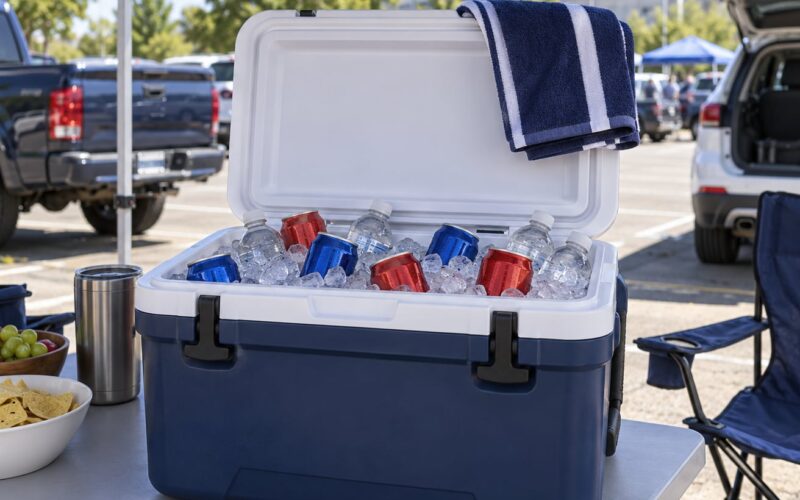
Hold finished meat in a preheated dry cooler, not a cooler with ice. Warm an empty cooler with a grill lighter for a few minutes, line it with unwaxed butcher paper, wrap the meat in towels or paper, and close the lid. That setup holds food above 140°F for several hours without a power source.
The second option is the grill itself. Push the coals aside and let one side sit low, covered, with a pan of water for humidity. Put wrapped meat on that side with a light sprinkle of apple juice or broth if the meat is lean, which slows the drying that plagues reheated brisket and pulled pork.
Batch size is the real answer to holding. Small batches come off the grill at their best and go straight into the serving tray, so you are never reheating a pile of food that has been sitting.
Common Mistakes
The most common failure is overloading the grate. It looks efficient and it kills your heat, so cook in batches and accept the extra trips.
Starting too late is second. Count back from kickoff, subtract your drive time, then subtract setup and lighting. Most tailgate disasters come from a plan that never included the walk from the car.
Skipping the thermometer is third. Looks lie, especially on thighs and ground meat. One check costs two seconds and saves a round of food nobody wants to eat.
Leaving raw and cooked food on the same table is the mistake that makes people sick. Use two foil pans, label them, and put the raw pan on the side closest to the cooler so it never sits next to the buns.
Running one person at the grill when twenty guests show up is the quiet killer. Split the crew: one person on the main grate, one on sides and foil pans, and one on plates, trash, and restocking.
Finally, skip the last batch you cook hot and fast at the whistle. Fire it before kickoff so the grill is a holding oven instead of a last-minute sprint.
Frequently Asked Questions
How long should I grill food before a football game?
Plan on 2.5 to 3 hours of active cooking for a night kickoff, and longer for a noon start if you are cooking cold. Most of that time is setup, lighting, and the slow batch. Start the long cook first, keep the fast items for the last 30 minutes, and have the first batch on the table about 45 minutes before kickoff so nobody is eating cold food during the first quarter.
Is it better to use charcoal or gas for a large crowd?
Gas wins on control and speed, because you can change heat in seconds and there is no chimney to light. Charcoal wins on flavor and on price, and it gives you a natural two-zone fire by pushing coals to one side. A portable gas grill handles up to about a dozen people comfortably. Past that, a kettle plus a second grill or a foil-pan side dish keeps the line moving.
What sides are easy to serve while guests are grilling?
Cold and room-temperature sides win because they need no last-minute heat. Potato salad, coleslaw, a queso dip, pickles, and bags of chips all sit out for hours without turning. Put a pot of beans or a mac and cheese pan on a side burner or a second grill so it finishes on the same schedule as the meat. Skip anything that needs a precise oven finish.
Can I cook hamburgers and hot dogs on the same grill?
Yes, cook them together but sequence them. Put the dogs on first because they take longer and split easily if they overcook, then add the burgers once the grate is fully hot. Use one set of tongs for raw meat and a separate pair for cooked food, and keep the buns off the grill until the very end so they toast off the heat without drying out.
How do I keep food warm without drying it out?
Wrap it and keep it off the direct heat. A preheated dry cooler lined with butcher paper, with the meat wrapped in towels or paper, holds brisket and pulled pork above 140°F for hours with no power. On the grill, use a low indirect side covered with foil and add a light sprinkle of apple juice or broth for lean meats. Small batches served straight from the grate beat reheating a big pile.
What can I prepare ahead of time for a game-day cookout?
Almost everything except the burgers. The night before, season your rubs, portion the meat, make the potato salad, chop the slaw, and pack foil pans with sides. Cook a pork shoulder or brisket ahead and reheat it low and slow with a splash of juice or broth. Make your queso and put the drinks on ice the morning of. All that leaves you grilling fresh burgers and dogs on game day.
Start with the counting, not the fire. Get your pounds right, pick one long cook and one fast cook, and the rest of the day runs itself. Build the two zones, stage the cooler, and put the first batch on the table 45 minutes before kickoff.