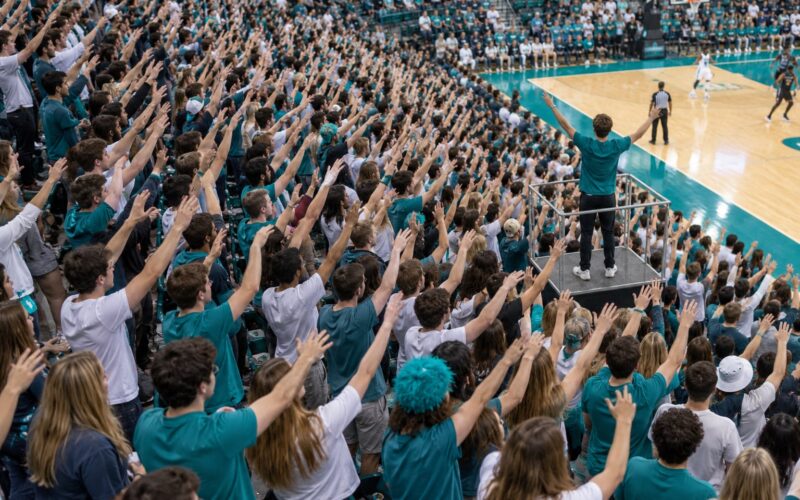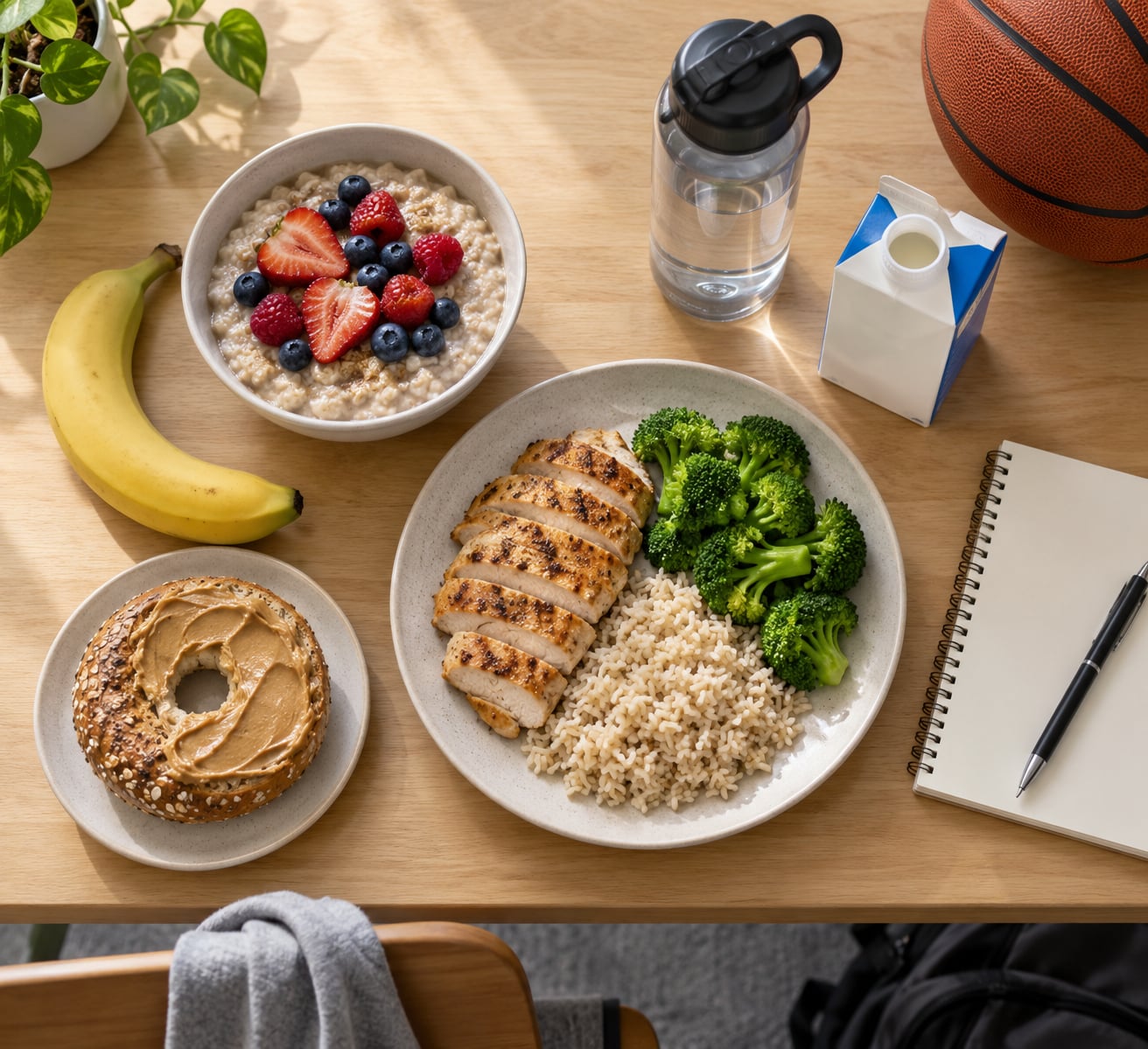
How college athletes eat during the season comes down to a carbohydrate-forward diet that shifts with the training calendar. Hard practice days and game days bring the biggest loads of bread, rice, pasta, potatoes and fruit, while protein stays steady across four to six eating occasions and fluids get topped up all day.
That is the short version. The interesting part is how it fits around a 6 a.m. lift, a chemistry lecture, a 3 p.m. practice that ends at 6 and a dining hall that closes at 7.
Everything below is general information for readers curious about the fuel behind an NCAA season. Individual numbers come from a registered dietitian or the team’s sports dietitian, not from a search box.
Table of Contents
- What Do College Athletes Eat During the Season?
- The Basic Eating Pattern Most Athletes Follow
- How College Athletes Eat Around Practices and Games
- How Much Food Do College Athletes Need?
- Breakfast, Lunch, Dinner, and Snacks
- How College Athletes Stay Hydrated
- What Athletes Eat for Recovery
- How to Handle Travel, Busy Weeks, and Dining Hall Days
- Supplements, Special Diets, and Individual Needs
- Frequently Asked Questions
- Start With the Next Game-Day Meal
What Do College Athletes Eat During the Season?
In-season eating is a pattern, not a menu. Most programs build around the same idea: more carbohydrate when the work is heavy, less when it is light, and a consistent amount of protein every day.
Needs differ a lot between athletes. A football lineman running 300-yard sprints five afternoons a week has a different fuel bill than a distance runner on an easy mileage day, and a walk-on basketball guard with a part-time job is not the same as a starter. Body size, training load, position, season phase and health goals all shift the target.
Two things get confused with this. The first is sports supplements: powders and bars that sit next to a sport-specific plan, not the plan itself. The second is a medical nutrition plan, which a clinical dietitian writes for a diagnosed condition such as diabetes, an eating disorder or a gastrointestinal issue.
Most of what you see a college athlete eat at the table is ordinary food. Rice. Chicken. Eggs. Pasta. Bagels. Peanut butter sandwiches. Bananas. Yogurt. That repetition is not laziness. It is what fits a dining hall schedule and a recovery window, and athletes on road trips say the same thing.
The Basic Eating Pattern Most Athletes Follow
Strip away the sport and the schedule and the day looks like this: three meals, two or three snacks, and fluids between every one of them.
- Carbohydrate at every meal and snack. Oats, rice, pasta, potatoes, bread, fruit, yogurt, sports drinks. This is the fuel for practice and class.
- Protein at every meal and snack. Meat, fish, eggs, dairy, beans, lentils, tofu, nuts. Roughly a palm-sized portion at each occasion.
- Fat in moderation, not avoidance. Olive oil, nuts, seeds, avocado, cheese, fatty fish. Fat slows digestion, which matters before practice.
- Fruit and vegetables most days. Easy calories, fiber and micronutrients, with fiber pulled back close to hard sessions.
- Fluids from wake to wind down. Water as the default, sports drinks when sessions run long or sweat loss is heavy.
Cornell, like most Division I programs, resists handing athletes a fixed meal plan. Their sports nutrition staff teaches decision skills instead: match the plate to the day’s training, and work around whatever the academic schedule throws at you.
How College Athletes Eat Around Practices and Games
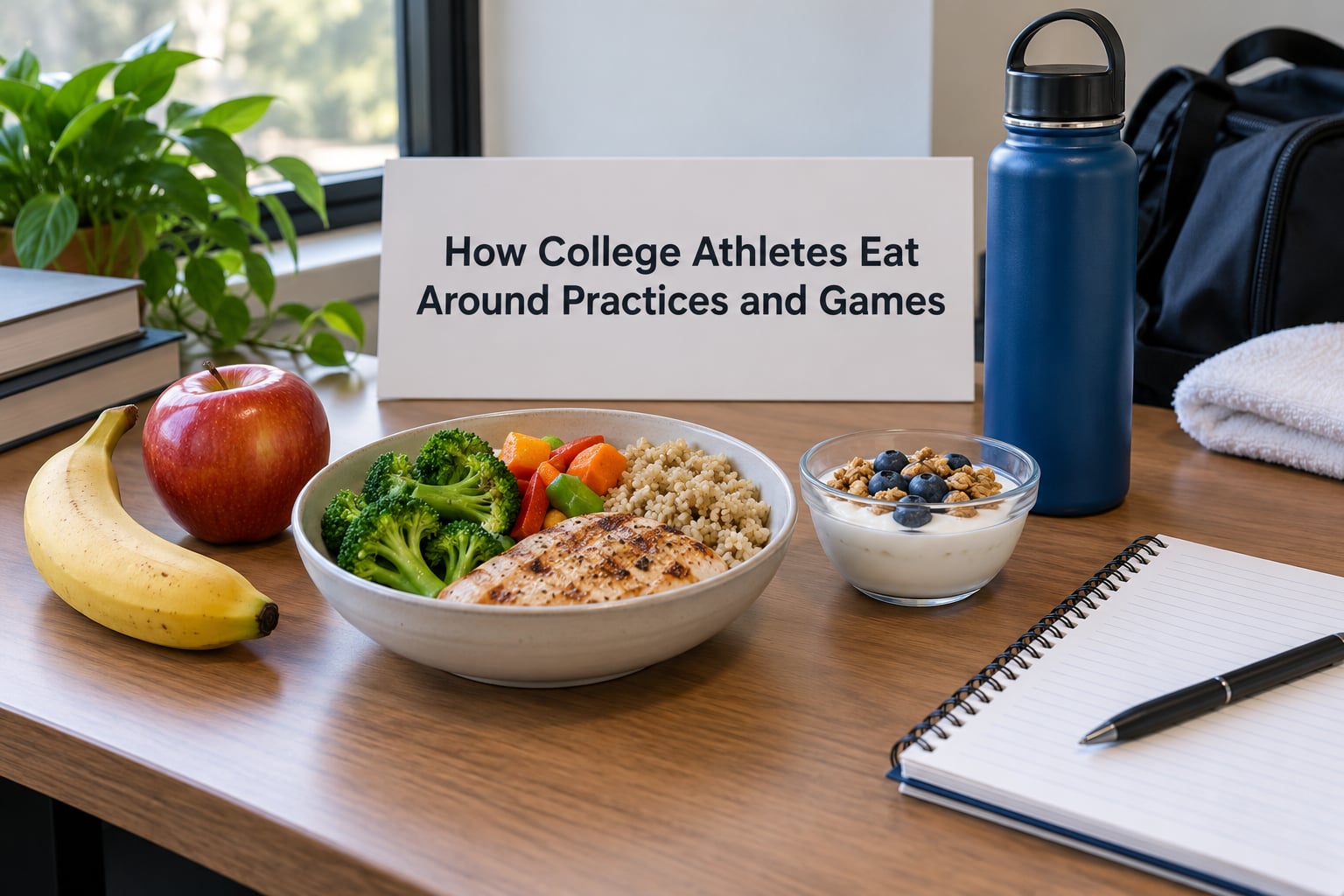
The schedule, not the diet, decides everything. Practices move, classes move, and travel days add a hotel bed and a bus to the mix.
Early morning lifts and first classes
A 6 a.m. workout needs fuel before it, not after. Most athletes eat a small, lower-fiber breakfast an hour or so out: a banana with peanut butter, a bagel with cream cheese, or yogurt with oats. Something they can digest while standing in a hallway.
If the stomach refuses, the backup move is a portable snack eaten between the workout and the first class. Skipping both leaves people flat by mid-morning lecture, and that shows up in practice later.
Double days and strength sessions
Two practices in a day roughly doubles the energy cost. The plate shifts heavier toward carbohydrate in the morning and between sessions, with lunch doing real work rather than being skipped for a snack at the bench.
Evening finishes
This is the part nobody mentions enough. A practice that ends at 7 p.m. meets a dining hall that closes at 7. Athletes talk about racing the closing time for the tray, and about a stand-alone dining option existing only because the schedule demands it.
Some programs solve it with a team meal after evening sessions or a late window at the dining hall. Athletes describe both as the difference between fueling properly and going to bed underfed.
How college athletes eat on game days
The day before and the day of a game are the highest-carb days of the week. Breakfast the morning of is familiar and low-fiber, the meal three to four hours out is normal-sized, and the last thirty minutes before tip-off or kickoff is small: a banana, a handful of cereal, a few sips of a sports drink.
Recovery days
Light days do not mean no food. They mean less carbohydrate and the same protein. Total energy still has to cover a full day of classes, a treatment or weight-room session, and eight hours of sleep.
How Much Food Do College Athletes Need?

Rough ranges beat rules. Sports nutrition guidance widely used by college programs puts a hard-training athlete somewhere around 20 to 25 calories per pound of body weight, and many fall above that on game weeks and twice-a-days. It is an estimate to reason with, not a target to hit.
Carbohydrate is the piece that moves the most, because it is the piece tied to training. Muscle glycogen stores, the stored form of carbohydrate in muscle, run down through hard sessions and get refilled through food.
| Day type | Carbohydrate | Protein | Fat | What it looks like |
|---|---|---|---|---|
| Rest or recovery day | Lower end, roughly 3 to 5 g per kg body weight | Steady, roughly 1.6 to 2.2 g per kg | 20 to 30 percent of calories | Fewer starches, same protein, normal meals |
| Moderate practice day | About 5 to 7 g per kg | Steady, roughly 1.6 to 2.2 g per kg | 25 to 30 percent of calories | Carb at breakfast, lunch, dinner plus two snacks |
| Hard practice, two-a-day or game day | About 6 to 10 g per kg, higher before competition | Steady, roughly 1.6 to 2.2 g per kg | 20 to 25 percent of calories | Bigger starch portions, sports drink during, recovery meal after |
Fat stays in a fairly narrow band. Carbohydrate is the variable. Micronutrients such as iron and vitamin D get attention in sports medicine offices because they show up in energy, bone health and recovery, and low iron is common enough to be screened for.
None of these numbers work without enough total food. Consistently eating too little is the version of the problem that ends careers.
Breakfast, Lunch, Dinner, and Snacks
A season day is mostly logistics. Here is a plausible in-season day, with a night before a home game as the template.
| Time | What happens | What gets eaten |
|---|---|---|
| 6:30 a.m. | Wake, lift | Banana with peanut butter, water |
| 8:00 a.m. | Breakfast after training | Oats with yogurt and berries, milk, coffee |
| 10:00 a.m. | Class | Water bottle, piece of fruit from the bag |
| 12:30 p.m. | Lunch | Grilled chicken, rice, salad, fruit, milk |
| 2:00 p.m. | Pre-practice | Bagel with peanut butter, half a sports drink |
| 3:00 to 6:00 p.m. | Practice | Water early, sports drink in the second half |
| 6:30 p.m. | Recovery meal | Protein plus carbohydrate, ideally within about two hours of finishing |
| 9:00 p.m. | Dinner or team meal | Pasta or tacos, vegetables, protein, dessert is fine |
| 10:30 p.m. | Bed | Nothing heavy; the food was earlier |
Snacks do the heavy lifting when a meal cannot happen. Between-class fuel that athletes actually eat is grab-and-go: wraps, sandwiches, bagels, bananas, single-serve milk, yogurt, trail mix, granola bars. Backpack snacks beat vending machine snacks because they cost less and they are actually there.
Two details make the plan survive a real campus. Reheating leftovers is only worth it if the food reaches 165°F, and cold options like yogurt, fruit and sandwiches need cold storage in a dorm room, not a countertop.
How College Athletes Stay Hydrated
Water is the default drink and most of the fluid on a normal day. Many programs use a simple starting estimate of drinking about half of body weight in ounces across the day, then adjust upward for sweat loss, heat and altitude.
Thirst and urine color are the practical checks. Pale yellow is roughly where you want to land. Dark amber after practice means the day did not go well, no matter how much water got consumed.
Around practice, drinking in small amounts early beats chugging afterward. Athletes often take in somewhere around 16 to 24 ounces in the couple of hours before a session and continue during and after.
Sports drinks earn their place when a session runs past about an hour, when sweat loss is heavy, or when practices happen in heat. They supply carbohydrate and sodium together, which plain water does not. For a normal one-hour lift indoors, water is plenty.
Signs that need a professional rather than a home fix: no urine for long stretches, dizziness when standing, confusion, vomiting, or a headache that does not settle after fluids. The same applies to rapid weight loss during a session or weight gain that shows up the next morning. A sports dietitian or a doctor should see those.
What Athletes Eat for Recovery
Recovery eating has three parts: carbohydrate to refill glycogen, protein to support repair, and fluid to replace sweat. It is not a special product. It is a normal meal eaten reasonably soon.
The often-repeated two-hour window is a practical target rather than a cutoff. A meal with carbohydrate and protein within about two hours of finishing gives glycogen restoration a head start, and a later meal still counts for the day.
Sports drinks, chocolate milk and protein powders are options inside that window, not requirements. Whole foods do the same job, and they come with fiber, fat and micronutrients that a shake does not.
Sleep belongs to the same conversation. Muscle repair and glycogen restoration run while an athlete sleeps, which is why late nights show up in the morning numbers before practice.
How to Handle Travel, Busy Weeks, and Dining Hall Days
Road trips and exam weeks break a normal eating pattern more than anything else in a season.
On the road. A protein and a starch at every stop, plus fruit from a bag rather than the gas station. Breakfast is the meal teams miss most, so pre-packed options travel in the cooler: bagels, wraps, bananas, nuts, granola bars, shelf-stable milk. Restaurants on a highway are fine as fuel, just not as the whole plan.
When appetite drops. Travel, exam stress and fatigue suppress hunger at exactly the moment needs go up. Small, frequent, familiar foods work better than three big meals. This is the complaint most often raised on athlete and fan forums, and the practical answer is a planned snack list rather than motivation.
When the dining hall fights back. Closing times, repetitive menus and long lines are real obstacles, and athletes have said so publicly about their own programs. The workable responses are a team meal, an extended dining window, and knowing where the grab-and-go options are before the evening practice, not after it.
When money is the issue. Surveys of student-athletes have found far higher rates of food insecurity than among students overall, with reports in some studies around 60 percent of athletes and 42 percent of students generally. Programs counter this with meal-plan extensions, team meals and calorie allowances during season. If an athlete is skipping meals for cost, the honest move is to tell a coach or a dietitian, because that is a solvable logistics problem rather than a character flaw.
Families and supporters can help in small, specific ways. Sending shelf-stable snacks that survive a dorm room, avoiding comments about weight at the dinner table, and asking about the schedule rather than the plate all make the season easier.
Supplements, Special Diets, and Individual Needs
Supplements are optional. Whole food comes first, and a program can meet nearly every need without a powder. When a supplement is genuinely useful, such as iron after a low blood test or a vitamin D prescription, it comes with a sports dietitian or a doctor involved.
Supplements are also where rules get complicated. Third-party certification programs such as NSF Certified for Sport and Informed Sport exist because a contaminated supplement can cost an athlete an entire season. Anyone taking one should run the brand through a certification database first and tell the team’s medical staff, since NCAA rules govern what is allowed.
Vegetarian, vegan, halal, kosher and gluten-free athletes can meet their needs, but they need planning. Plant-based athletes usually have to eat more volume and track protein more deliberately, and a dietitian helps with iron, vitamin B12, calcium and vitamin D. Allergy and medical restrictions require a plan built with the team and the dining staff, not improvised at the counter.
One topic deserves plainness. Consistently eating too little relative to training shows up as fatigue that does not improve, missed and irregular periods, mood changes, declining performance, injuries that linger and frequent illness. That pattern is called low energy availability, and the professional version of it is RED-S. It is a medical issue. Anyone seeing those signs should get evaluated by a doctor or a registered dietitian rather than adjusting portions alone.
Frequently Asked Questions
What is the 4-2-1 rule for athletes?
It is a plate model, not a diet. Fill about 4 of 10 portions with vegetables and fruit, 2 of 10 with protein such as meat, fish, eggs or beans, and 1 of 10 with a carbohydrate such as rice, pasta or bread. College athletes often use a larger carbohydrate share than this because training runs on carbohydrate. A team dietitian adjusts it for the sport and the individual.
What does a Division I athlete eat in a day?
Usually three meals and two or three snacks, built around carbohydrate and repeated protein. Breakfast is oats, yogurt or eggs; lunch and dinner carry a protein and a large starch; snacks are bagels, wraps, fruit, milk and sports drinks. Carbohydrate grows on hard practice and game days, and stays steadier on recovery days. Repetition is normal because the dining schedule demands it.
What is a balanced meal for an athlete?
A protein source, a carbohydrate source, some fat, and fruit or vegetables on the side. Picture a third of the plate protein, the rest carbohydrate, and a side of produce. Portions grow with training load and body size, and the meal should sit three to four hours before hard practice. Eating this at every occasion, not once a day, is what makes a balanced pattern.
What is the 3-3-3 rule in nutrition?
It is a simple protein-spacing rule: about 3 servings of protein at each of 3 main meals, or roughly 30 grams at breakfast, lunch and dinner. Snacks add more. The idea is to spread protein across the day rather than saving it for dinner, which supports repair after practice and keeps appetite steady. Whole foods or a mix of whole foods and shakes both fit the pattern.
How much protein do college athletes need?
Most sports nutrition guidance puts college athletes at roughly 1.6 to 2.2 grams per kilogram of body weight per day, which is about 0.7 to 1 gram per pound. A 200-pound athlete would land somewhere near 145 to 200 grams a day, spread across meals and snacks. Needs rise slightly during heavy training and injury recovery. A registered dietitian sets the number that fits the athlete.
Start With the Next Game-Day Meal
If you take one thing from this, make it the ordinary one. Regular meals with a protein and a carbohydrate at each occasion, fluids across the day, and a small snack an hour before practice or the game.
Everything above the basic pattern, the gram targets, the periodization, exists to protect that routine on the days when a 6 a.m. lift, a lecture and a 6 p.m. practice leave no room for it.
For an athlete, the next step is a conversation with the team’s sports dietitian. For everyone else, how college athletes eat during the season is general information rather than a prescription, and individual targets belong to a qualified professional.