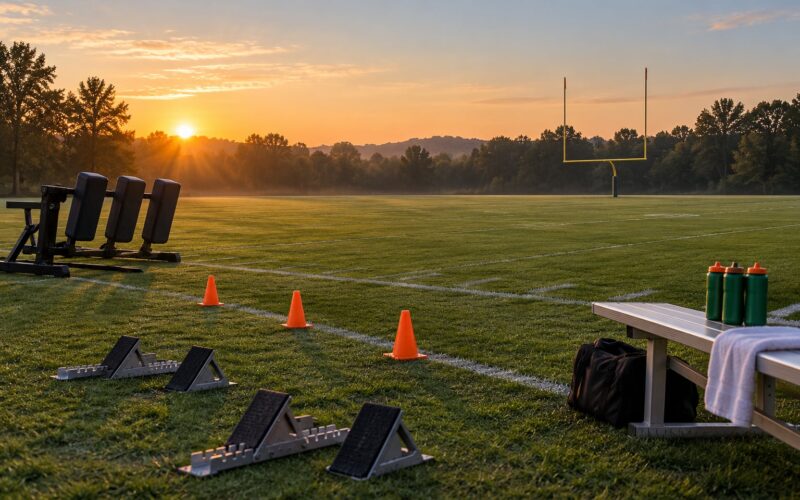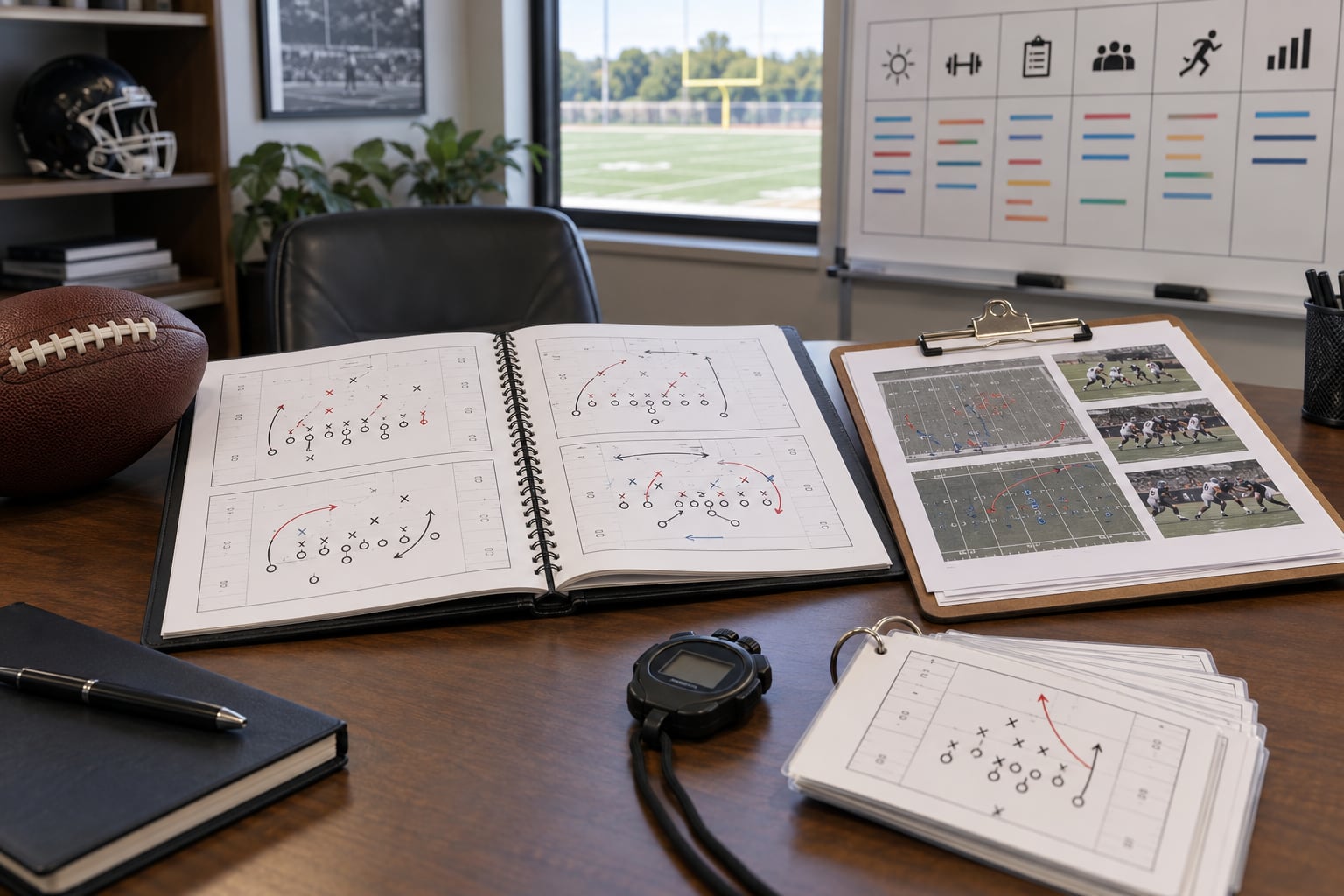
How college football game week preparation works is simpler than the jargon suggests and far more compressed than most fans expect: a team gets roughly seven days, minus whatever travel demands, to scout one opponent, build a game plan, install it on the field, keep everyone healthy, and arrive at kickoff sharp. Coaches call it the week of preparation. Players usually just call it the week.
What follows is that week from the inside, day by day, including the parts fans never see. Roughly 150 hours of work sit behind the three and a half hours you watch on Saturday, and the schedule that produces them changes more often than the public thinks.
Table of Contents
- What Happens During College Football Game Week?
- How Coaches Build the Initial Game Plan
- How the Team Studies the Opponent
- How Practices Are Adjusted Each Day
- What Happens in the Final 24 Hours
- How Travel, Academics, and Media Fit Into the Week
- How Players Prepare Mentally and Physically
- Why the Plan Can Change Before Kickoff
- Frequently Asked Questions
- When does college football game week preparation start?
- How many practices are there during college football game week?
- Do college football players rest the day before a game?
- How much film review happens during game week?
- What do college football players do on game day?
- How do coaches prepare for opponent adjustments?
- The First Step in Understanding Game-Week Preparation
What Happens During College Football Game Week?
Formally, the cycle starts the moment the previous game ends. Recovery work, injury evaluation, treatment, and film breakdown all happen on the same night, which is why the Sunday of the following week is a light day on the field and a heavy one in the film room.
The seven days that follow are not identical across programs. Some teams recover on Sunday and install on Monday. Others front-load installation and taper harder. But every staff is solving the same problem with the same raw material: one opponent, one chance to prepare, and a rulebook that limits how long players can be at it.
What college football game week preparation looks like day by day
- Sunday — Recovery day on the field, with treatment, mobility work, and heavy film and planning work happening indoors.
- Monday — Staff meetings shape the game plan, position coaches deliver opponent film, and the team installs first-down and personnel concepts.
- Tuesday — Installation continues with formations, third-down packages, and pressure looks against the opponent’s coverage shell.
- Wednesday — Situational day: red zone, backed up, short yardage, two-minute, fourth-down decisions, plus a dedicated special teams period.
- Thursday — Meetings, print and digital game plan distribution, and typically a short walkthrough or no-contact session.
- Friday — A brief, fast session under game-like conditions, then treatment, meals, and an early night for home games.
- Saturday — Pregame routine, team meal, arrival at the stadium hours before kickoff, and the game itself.
How many days a week do college football teams practice?
In-season, a college football team usually practices five or six days a week, depending on the program and the NCAA limits in effect. During the season, teams commonly have Sunday free after Saturday games, leaving Monday through Friday for five on-field sessions. Add strength work, meetings, and treatment, and the football-related hours run well beyond the practice field.
How many hours a week do D1 football players spend on football?
Players at the top level describe a typical in-season week as 40 to 50 total hours tied to football, counting practice, film meetings, weight room, treatment, and travel. The declared practice time understates the real total, because hours spent in a meeting or on a table in the training room rarely make the public practice report.
How Coaches Build the Initial Game Plan
The first version of a game plan is built in the days right after the previous game, not during game week itself. Graduate assistants tag and cut the upcoming opponent’s film while the coaching staff is still sorting through highlights from Saturday.
From that film, coaches pull tendencies: which front an opponent runs on first down, which coverage they default to in third and long, how they handle a blitz, what their goal-line package looks like. Those tendencies turn into a set of priorities, and priorities turn into a small number of plays that have to work against several possible answers.
A coordinator working in this phase is usually solving one of two problems. Either the opponent has a habit the staff wants to attack, or the opponent has a habit the staff needs to disguise in their own personnel groupings. Then tempo gets decided, because a team that wants to keep the game in the hands of its quarterback and away from a fast defense will shorten the play list and increase the tempo of every period.
Nobody pretends the game script is predictable. The plan is built around the most likely version of the game, with a smaller set of answers for everything else.
How the Team Studies the Opponent
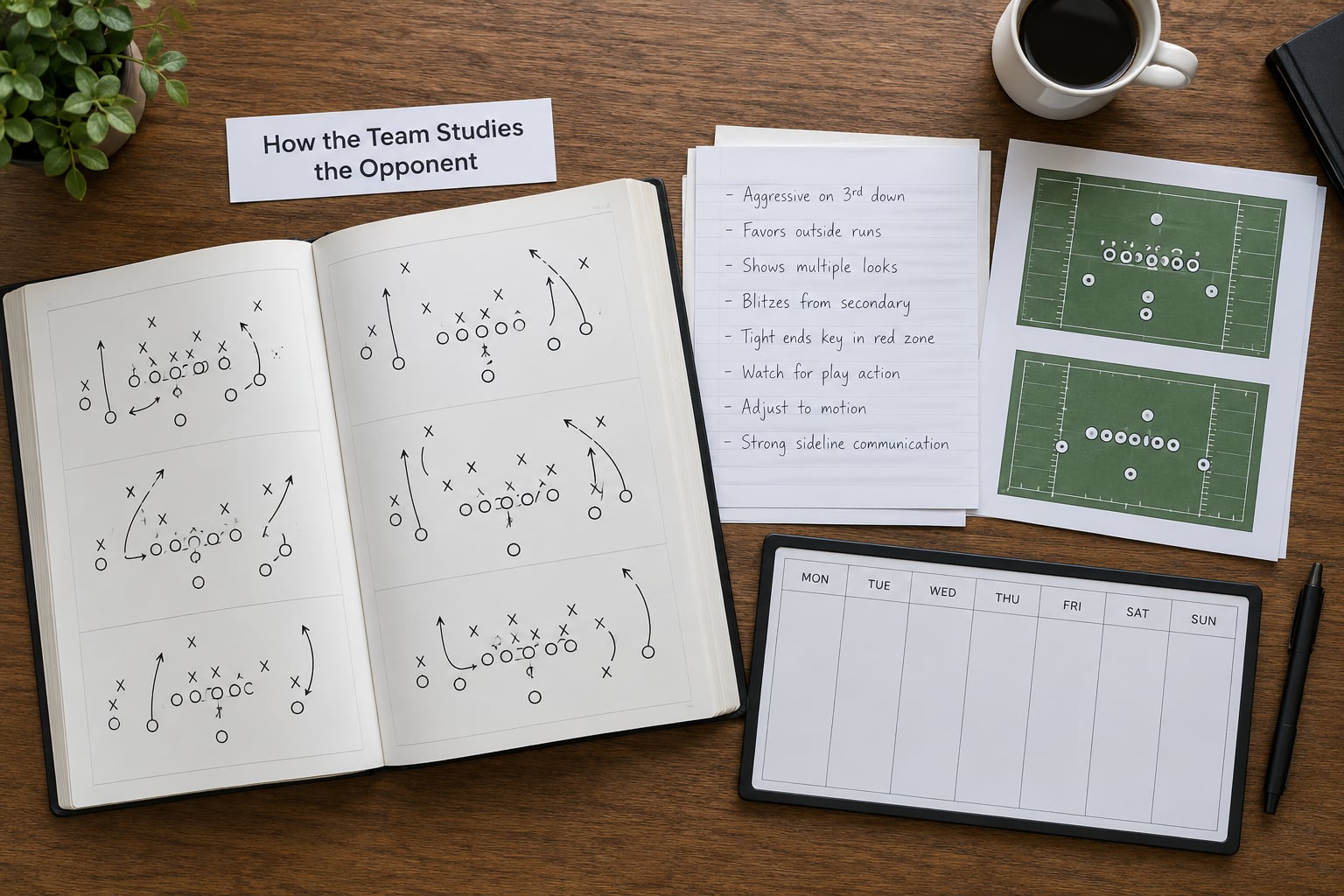
The opponent’s film gets broken down in layers. Graduate assistants tag every snap by formation, down and distance, personnel grouping, and coverage shell, then build cut-ups that coaches can filter by concept rather than watching raw tape.
Each position group receives a narrower version. Wide receivers might see ten clips of how a corner defends outside routes, plus press or off coverage tendencies. Defensive linemen get the opponent’s offensive line’s blocking scheme and the front they have not seen since conference play. Nobody watches 100 percent of the cut-ups, and players often say out loud that they deliberately limit volume to protect focus.
Two concepts that show up constantly in these meetings get misread by outsiders. Install means coaches have shown a concept clearly enough that players can run it from memory. A self-scout is the staff reviewing their own earlier film to find the habits an opponent would notice, which is why the honest version of a scouting report sometimes reads like an apology.
The result is usually printed or pushed to a tablet: a game plan package with the assignments, the checks, and the handful of calls that carry the week.
How Practices Are Adjusted Each Day
The weekly structure is not one template but two competing models, and which one a program uses usually says something about its philosophy. Both versions get defended by coaches, and both produce sharp teams.
| Element | Traditional model | No Sweat Thursday / Full Speed Friday |
|---|---|---|
| Light day | Friday | Thursday |
| Fast, sharp day | Midweek full-speed work | Friday |
| Reason | Rest before the game, less late contact | Build intensity into the days closest to kickoff |
| Risk | Practice can feel flat late in the week | Friday contact so close to the game |
Within either model, a practice day usually moves in the same order. Individual work and position-group instruction come first, because those periods are where technique corrections land. Team periods follow, then situational blocks: third down, red zone, backed up, short yardage, two-minute, and fourth down.
Special teams get their own protected segment nearly every practice. A common structure allocates a short run-through to punt coverage, kickoff returns, field goals, and extra points, since four plays decide a lot of college football games and nobody wants them installed on game day morning.
Scout teams work in parallel. They run the opponent’s most likely offensive and defensive looks all week so the starters face something that resembles Saturday rather than their own installation. The final session of the week is deliberately short, often a fast tempo run of the game plan with limited contact.
What Happens in the Final 24 Hours
Friday night is not football-heavy for most players. A team may hold a brief speed session, then move into treatment, a team meal, and an early night, because for a home game the calendar runs into Saturday morning.
Game day itself has a well-known internal rhythm. Players arrive at the facility several hours before kickoff for a walkthrough, position meetings, and equipment. The pre-game meal is eaten three to four hours out, not one hour out, and specialists typically warm up earlier than the offense and defense.
From there the sequence tightens: a final stretch and dynamic warmup, a team introduction period, and a short pregame routine that most programs keep simple on purpose. Kickoff is the end of a week that started with graduate assistants tagging film.
How Travel, Academics, and Media Fit Into the Week
A road game is the same week with less of it. When a team travels on Friday, everything shifts earlier: the fast session moves to Thursday or gets cut, the game plan gets walked through before departure, and the team bus or charter leaves in the afternoon so players sleep near the stadium.
Whether a team flies depends on distance and money. Short trips go by bus, longer ones charter, and mid-major programs make those calls on a budget far tighter than a Power Five staff. What matters for preparation is simple: every hour of travel comes straight out of practice and meeting time, which is why coaches describe travel as the real reason road weeks feel compressed.
Classes still happen. Student-athletes have academic hours built into a schedule the athletic department does not control, so game-week travel is planned around exam schedules and final assignments. Professors are given game dates at the start of the term, and study hall moves earlier in the week as game day approaches.
Media duties add a second obligation list. Coaches hold press conferences midweek, players do short interview sessions, and head coaches keep recruiting responsibilities off the table so assistants are not pulled into prospect visits during preparation. Sponsorships and community events are usually scheduled around practice and travel, not the other way around.
How Players Prepare Mentally and Physically
The physical side is managed with data as much as instinct. Players answer a short wellness questionnaire each morning covering sleep, soreness, fatigue, and mood, and those scores sit next to GPS workload numbers from practice. A low readiness score does not command a player to sit, but it changes how coaches plan that individual’s reps.
Routines are extremely individual and often mistaken for superstition. Some players nap on a specific bus seat, some listen to the same playlist, some do the same stretching sequence. The common thread is that the routine does something real: it gives a player a short, repeatable script during a week when almost everything else is unsettled.
What players eat in the days before a game
Meal plans at this level are written by team nutrition staff, and the pattern is consistent: more carbohydrate earlier in the week, moderate amounts through the middle days, then a lighter, lower-fiber meal the night before and a carb-focused pre-game meal three to four hours before kickoff. Fluids get tracked by weight, and sodium is not slashed before a game because players need to hold water.
Weigh-ins still happen at some programs during game week, but the goal is hydration status rather than a new weight. Players have told fans that being sore and heavy-legged on Saturday is common, which is why coaches and sports scientists talk about peaking on game day rather than finishing practice fresh.
Why the Plan Can Change Before Kickoff
The plan built on Sunday is a working draft, not a contract. A handful of things routinely rewrite it on Thursday or Friday.
Injuries do the most damage, especially to a starter that forces a personnel grouping change and ripples through every play that protected that player. Weather can move a team from an outdoor field to an indoor facility or shift kickoff times, which changes the whole pregame clock.
Roster moves show up too, with a late transfer clearing in or a player declared out hours before kickoff. Coaches also prepare for the opponent adjusting first, which is why every plan carries a small set of answers for a team that shows up differently than the film suggested.
The result on game day is a two-hour chess match, and the in-game calls come from a cheat sheet built during the week rather than invented on the sideline.
Frequently Asked Questions
When does college football game week preparation start?
Preparation starts almost immediately after the previous game ends. Players recover and get treatment that night, while graduate assistants and coaches already break down the next opponent’s film. By the Sunday after a game, the staff is meeting and the team is in the first stages of installation, so game week really begins before the new week does.
How many practices are there during college football game week?
An in-season week usually holds four or five on-field practice sessions, with Sunday typically given over to recovery and film after a Saturday game. Practices get shorter as kickoff approaches, and the last session before the game is brief and fast by design. Counting strength sessions and mandatory meetings, a player attends far more football activities than the practice count suggests.
Do college football players rest the day before a game?
There is no rule requiring it, but most teams effectively rest on game day itself rather than the day before. Friday or Thursday usually holds a short speed session followed by treatment, a team meal, and an early night. Players still work that day in small ways: meetings, film, and preparation, just nothing that resembles a full practice.
How much film review happens during game week?
Less than outsiders expect. Graduate assistants tag and cut up opponent tape into position-specific clips, and coaches receive narrow assignments instead of the full cut-up. Players generally review short, targeted sessions tied to their own assignment rather than hours of raw game film, because coaches worry that overload costs more attention than it adds.
What do college football players do on game day?
Players arrive at the facility several hours before kickoff for position meetings, a walkthrough, equipment, and treatment. They eat a pre-game meal roughly three to four hours out, then go through a stretching and warmup sequence before taking the field. For a road game, most of that routine happens at a hotel or on a bus rather than on campus.
How do coaches prepare for opponent adjustments?
Every plan includes a small package of alternative calls for situations that film suggests are likely, such as a blitz look or a different offensive front. Staff also scout their own earlier games to find tendencies an opponent might have studied. On game day, those decisions come from a cheat sheet built during the week, not invented on the sideline.
The First Step in Understanding Game-Week Preparation
If you take one thing from this guide, take the constraint: college football game week preparation is a one-week problem, so every part of it is a trade. Coaches trade film volume for clarity, contact for freshness, and practice hours for recovery time.
To read a weekly schedule as a fan, start with the top of the staff’s priorities on Monday, then track how those priorities show up in practice on Wednesday and what got dropped by Friday. The plan that arrives on Saturday was built Sunday and rewritten several times since, and the parts that survived are the ones that mattered most.