How college football players prepare for the NFL draft is a question with a longer answer than most fans expect. A player does not start training for Indianapolis in January. Preparation begins years earlier, with the kind of college production scouts can trust, an offseason built around speed and power, and an eligibility clock that has been running since high school graduation.
The honest version sounds less glamorous than the highlight reels. Roughly 1.5% to 2% of college football players are selected in the NFL draft each year, and only about a third of those make a regular season roster. That number sits in the first paragraph for a reason: it explains why the players who get picked are rarely the ones who trained hardest for one specific test.
This guide walks the whole pipeline, from a player’s freshman year to draft night, including the parts nobody talks about, like the medical recheck and the decision to walk away from three seasons of eligibility.
Table of Contents
- How College Football Players Prepare for the NFL Draft
- How Do Players Build Their Football Skills for the Draft?
- How Does the NFL Combine Help Players Prepare?
- What Happens During Pro Day and the Draft Interview Process?
- How Do NFL Teams Evaluate College Football Players?
- When Should a Player Declare for the NFL Draft?
- Frequently Asked Questions
- How do college football players get into the NFL draft?
- What percent of college football players get drafted?
- What do NFL scouts look for in a college football player?
- How can I train for the NFL Combine?
- How much does it cost to prepare for the NFL Combine?
- Can you go back to college football after declaring for the draft?
- Conclusion
How College Football Players Prepare for the NFL Draft
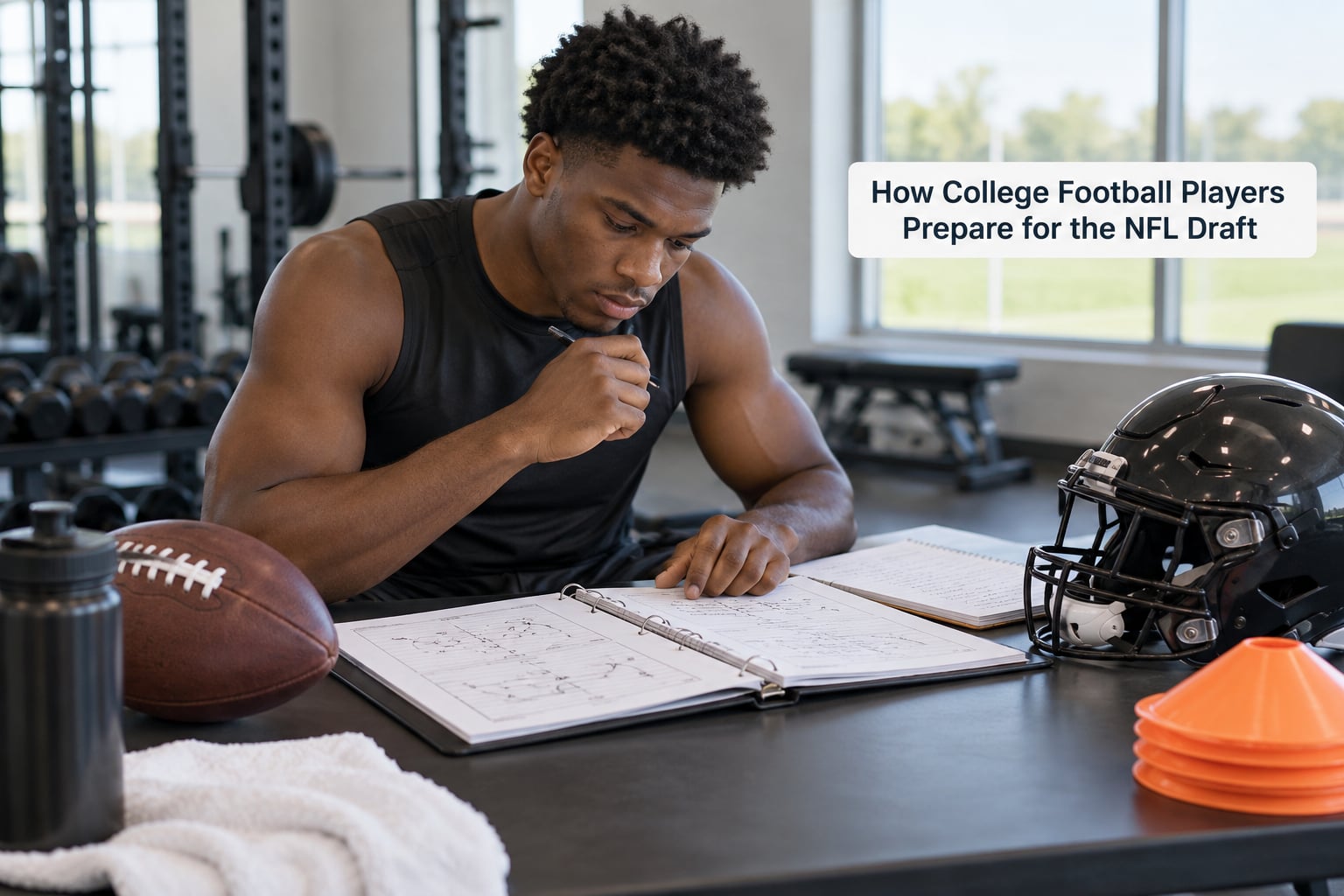
Draft preparation breaks into seven stages, and only the fourth one happens in front of a crowd. A player first protects eligibility and academics, then builds a college resume, then trains through the offseason for power and speed, then decides whether to declare early, then performs at the NFL Scouting Combine, then hosts Pro Day and sits through team interviews, and finally waits on draft night.
Most of the work is invisible. Scouts are watching a player in year three long before anyone talks about the Combine, and they are largely watching how he practices, not how he interviews.
What Should Players Do Before Their Eligibility Year?
Underclassmen should resist the urge to optimize for NFL projections two years out. The productive version of early preparation is boring: better technique, a stronger base, healthy habits, and a coach who trusts you with more snaps.
Three years removed from high school is the NCAA eligibility clock, and it does not care about injuries, position switches, or red-shirt seasons. Players who want that clock understood before it runs out should sit down with an academic adviser early, because certification paperwork can decide eligibility in a way no amount of training can undo.
Health is the other long game. Every medical flag a player carries into the Combine gets re-examined by up to 32 team doctors. Building a clean medical record across three seasons is a real competitive advantage, and it starts with how a player treats a minor knee issue in practice, not how fast he heals it with a staff.
One more underclassman habit pays off later: learning to learn. College players who sit in on opponent film, ask position coaches specific questions, and can explain a scheme in their own words have a head start on the whiteboard portion of team interviews, which is where football IQ gets verified.
How Do Players Build Their Football Skills for the Draft?
College production is the foundation of a draft grade, so the question for players is simple: what will I have done by December that is comparable to what a prospect at another school has done? That means a defined role, repeated success against real opponents, and film that holds up when a scout pauses it.
Position-specific work matters more than generic athleticism. A tight end who blocks well in space and a corner who can play press-man are graded against different checklists, and a player who tries to be impressive outside his role often looks less complete.
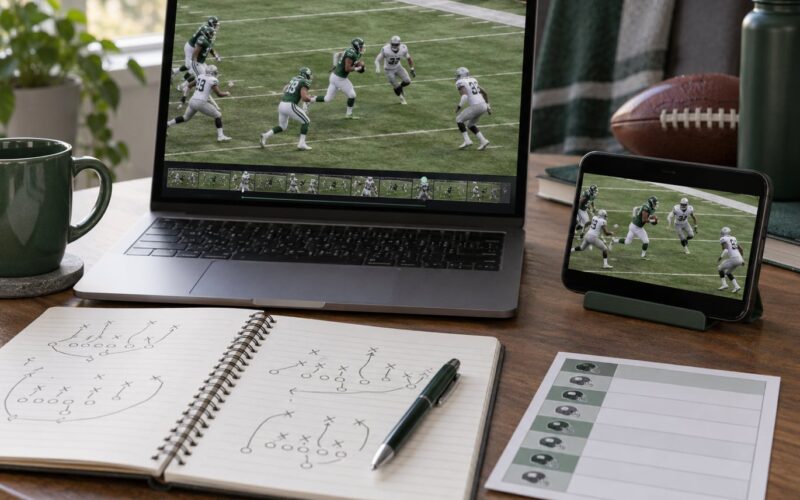
Film study is the least glamorous preparation and one of the most cited by scouts. Reviewing your own snaps, then a future opponent’s, teaches a player to recognize formation clues, motion, and coverage indicators. It also builds the vocabulary used later on a team’s whiteboard.
The strength and speed side follows a familiar pattern: a base phase that builds force, a power phase that converts it, and a speed phase where technique gets the last word. Offseason lifts matter, but a player who adds twenty pounds and loses a tenth off his 40-yard dash has made a bad trade. Speed is the trait most likely to decide a player’s slot between two otherwise similar prospects.
Recovery is part of the program, not an afterthought. Sleep, nutrition, and hydration decide whether a player shows up for a Tuesday practice with the same intent as a Monday. Strength coaches who run draft-prep cycles will tell you the under-trained muscle is usually the one that got skipped because the schedule got busy.
Public grading systems like Pro Football Focus give players a rough sense of where they sit, but they are a conversation starter, not a scouting report. What separates players is the translation, taking a season of production and turning it into traits that a scout can compare across a board with a hundred other names on it.
How Does the NFL Combine Help Players Prepare?
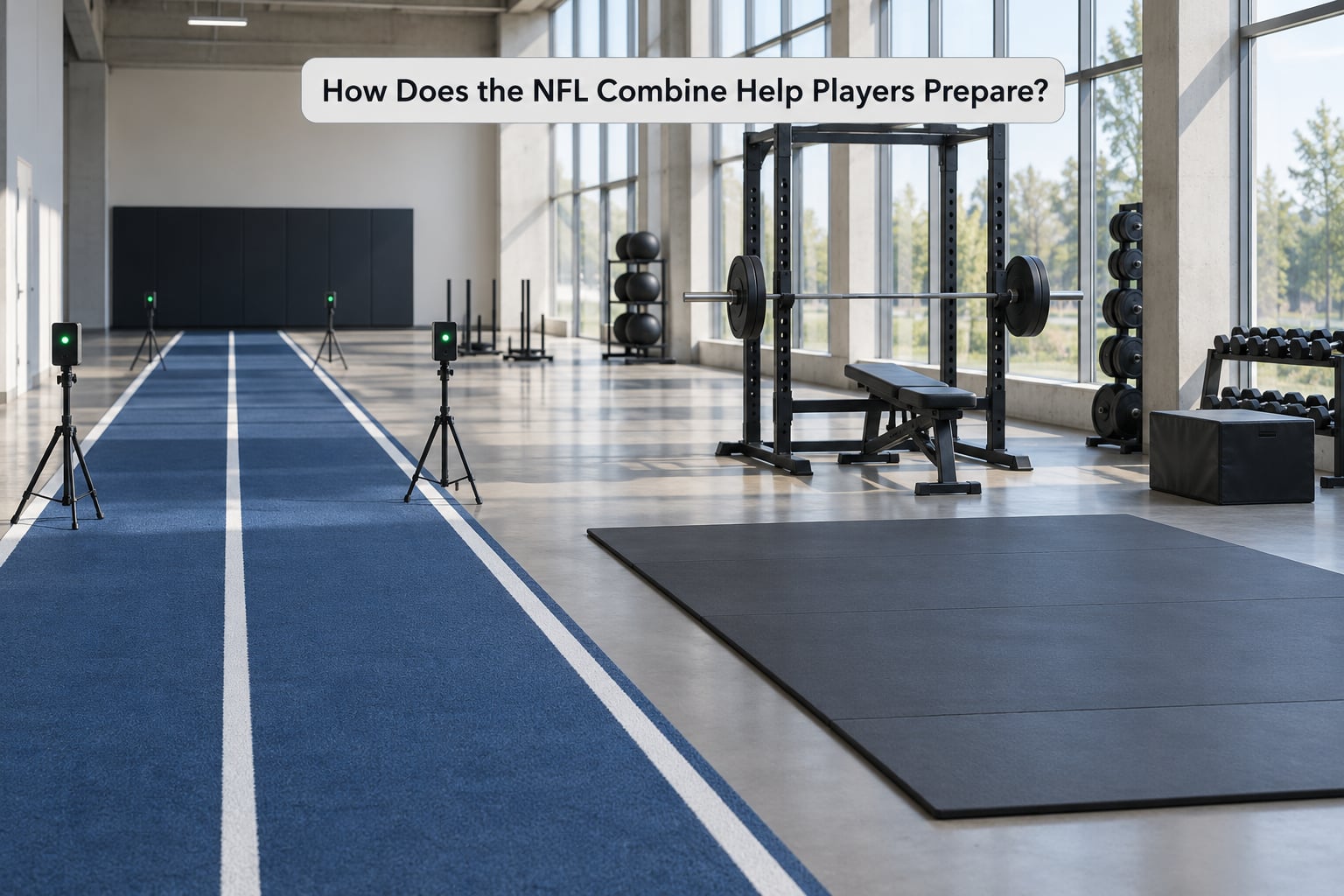
The Combine in Indianapolis is less a test and more a data collection, and that framing matters. It gives every team the same measurements on the same day, which is exactly what evaluators want when comparing players from different conferences who never shared a field.
The testing battery includes the 40-yard dash, the vertical jump, the broad jump, the shuttle drill, the 3-cone drill, and the bench press on 225 pounds, with height, weight, and arm length recorded. The Wonderlic, a short cognitive test, is given twice, and the Cognitive Reflex Test measures reaction time on a tablet. A player who does not declare in time forfeits testing.
Two days are about as important as the four testing days. Every player goes through a full medical evaluation with 32 team physicians, and many teams re-examine an old injury weeks later. Former prospects describe the medical day as the most draining part of the process, and the fear that surfaces is always the same: a high school injury nobody thought was serious.
Interviews run in the evenings, about fifteen minutes per team, and can stretch late. Scouts watch body language as closely as answers, and a person who argues with a coach over a play he was wrong about is making a different impression than one who says he does not know but can explain what he would have tried.
Here is the part that surprises fans: Combine numbers are context, not a verdict. A 40 time that looks slow for a wide receiver may be irrelevant to how that player will block, and teams weigh tests differently by position. The best preparation is doing everything in the Combine well, not optimizing one drill for a number that a single team might not even weight.
What Happens During Pro Day and the Draft Interview Process?
Pro Day is the player’s home turf, and scouts treat it as the most concentrated evaluation day of the cycle. A program invites every team it can, sets a start time, and the morning runs through individual workouts, position drills, and a team practice with the coaching staff.
The individual portion is a 40-yard dash, a bench press, a vertical, and a shuttle. Then comes the part fans underrate, the individual interviews and the whiteboard, where a player diagrams plays from his own film, identifies coverages, and explains what he and his teammates were reading. A general manager once told a former prospect the whiteboard session was the single most revealing thing he did all week.
For players at smaller programs, Pro Day carries more weight rather than less, and school athletic staff will say so directly. A blue-chip prospect gets attention no matter where the workout happens. A prospect from an FCS or Division III program often gets his real evaluation from the teams that show up, and a handful of invites means the board is short.
Interview preparation is mostly about having concrete answers. Players who have thought about their teammates, their role, a scheme they struggled against, and a mistake they made on film come across differently from players who give generic answers. Teams ask about competition, about handling a bad day, and about why they want the NFL. Generic answers to all three are visible from across the room.
One small logistics note: teams record these conversations, and coaches revisit them later when the board is set. What a player says on Pro Day can be re-heard in a draft war room, which is a good reason to treat a lobby conversation like it counts.
How Do NFL Teams Evaluate College Football Players?
Team evaluation rests on four pillars: college production and film, athletic testing, medical and character assessment, and role fit within a scheme. A prospect can be strong on three and still slide on a board, because the fourth pillar decides whether there is a roster spot that fits right now.
Scouting is a network, not a single trip. Area scouts cover a region, regional scouts handle a broader territory, and both feed coordinators and general managers who build the board. Where a player is based affects who sees him most, which is why visibility and film availability quietly shape a lot of draft outcomes.
Draft order runs seven rounds, with the team that finished worst picking first in each round and the Super Bowl champion picking last of all. Boards reward the best player available rather than the biggest need, so a quarterback falls on a board when there is nobody else at the position, not because teams do not need quarterbacks.
Compensatory picks exist for teams that do not sign restricted free agents, which means a team can earn extra picks at the end of a round, and those slots often become the landing place for the fast risers from small programs.
What moves a player up on a board: elite film traits, a role a team can use immediately, strong interviews, and clean medicals. What moves a player down: an undisclosed injury history, a combine number that does not fit the position profile, and a senior season that declined without an explanation. Scouts also read a player’s production against context, so 80 catches in a run-heavy offense means something different from 80 catches spread evenly across a season.
When Should a Player Declare for the NFL Draft?
The declare-or-stay decision is the least predictable and most personal call in the cycle. Underclassmen declare for a reason: a chance to start, a bad coaching situation, a medical risk, or simply a belief that they are ready. The risk is asymmetric, because leaving early burns a season of eligibility for a single night that may not go well.
A useful framework weighs five things. First, eligibility, since players need to have been out of high school for at least three years. Second, role, because a clear starting job at an early round is worth more than a shared role at a later one. Third, degree progress, since a school that will not release a player still controls the timeline. Fourth, medical information, since a full physical before declaring removes a lot of guessing. Fifth, personal goals, which is the factor nobody can argue with.
There is a real safety net, and it is asked about constantly. Players can return to college football after declaring under NCAA rules, and transferring schools is a normal move. The cost is a lost season of eligibility, so it is a genuine reset rather than a free option.
Agents come up here too. A family should ask what fees look like, whether the agent represents other players at the same position, how communication is handled, and how the player would handle a bad draft outcome. Plenty of players go through the whole process without one, and that is a legitimate choice.
The draft calendar itself is a fixed sequence, and knowing it makes the decision easier to time.
| When | What happens |
|---|---|
| Early December | Underclassman declaration deadline to enter the following draft |
| January | Senior Bowl and early all-star invitations, national signing day period |
| Mid-February | NFL Scouting Combine testing, medicals, and interviews in Indianapolis |
| March | School Pro Days, team visits, and thirty-plus team interviews |
| April | Draft week, seven rounds, then rookie minicamp |
One rule changed the calculus for younger players. The league opened all-star games to underclassmen, which means a sophomore or junior can now get a national stage before declaring, and that visibility is a legitimate reason to wait a year.
For fans tracking Arizona or other Pac-12 programs, the same pipeline applies, with one local wrinkle. Scout attention follows the conference, and a big in-conference season can put a player on boards that a player with identical numbers outside the conference would never see.
Frequently Asked Questions
How do college football players get into the NFL draft?
A player must first be eligible, which under NCAA rules means being out of high school for at least three years, then formally declare during the league’s declaration window in early December. The prospect then performs at the NFL Scouting Combine, hosts or attends Pro Day, and sits through team interviews, medicals, and individual workouts. Being selected during the seven-round NFL Draft is the final step, and a player can declare without being drafted.
What percent of college football players get drafted?
Roughly 1.5% to 2% of college football players are selected in the NFL draft in a typical year, and only about a third of those drafted players make a regular season roster. Most college players are never invited to the Combine, which is why Pro Day, Senior Bowl invitations, and school visibility matter so much for players outside major programs.
What do NFL scouts look for in a college football player?
Scouts grade production and film first, then athletic testing, then medical and character assessment, and finally scheme and role fit. They look for traits that translate to the next level, which means a role a player already owns, a season that holds up when film is paused, and answers in interviews that are specific rather than polished. Production is always read against context and competition.
How can I train for the NFL Combine?
Build an offseason that handles power, speed, and recovery in phases rather than one hard effort at the end. Most programs start with a strength base, move into power work, and finish with speed mechanics, while technique work for the specific events, 40, shuttle, 3-cone, and vertical, is drilled in short sessions. Staying healthy through January matters more than any single number, because the medical evaluation is part of the Combine too.
How much does it cost to prepare for the NFL Combine?
Attending the Combine itself is free for invited players, and travel and housing are covered by the league. Preparation is where the cost sits, and it ranges widely, from a self-directed offseason using a program’s weight room to a few months with a private performance coach. The middle ground is using the school’s strength staff and athletic trainers, which many teams view favorably because it shows the player can work inside a program.
Can you go back to college football after declaring for the draft?
Yes. Under NCAA rules a player can return to college football after declaring, and the transfer portal gives a player the freedom to move to a different school in the process. The real cost is a season of eligibility, plus whatever recruiting and academic momentum was lost. Players who leave early knowing their fallback is returning are usually more relaxed in interviews, and that shows.
Conclusion
The players who get drafted are usually the ones who did the unglamorous work early. Protect eligibility, build a season that holds up on film, train through the offseason without breaking anything, and learn to explain your own football well enough to diagram it on a whiteboard.
If you want one first step, make it this week: sit down with an academic adviser and confirm exactly where you stand on the three-years-after-high-school clock. Everything else in the pipeline is downstream of that answer.