College athletes build personal brands by deciding what they stand for, showing up on one or two platforms with useful content on a schedule they can keep through a season, and treating real relationships as part of the work. Follower counts matter far less than people who actually pay attention. The whole thing takes about three hours a week once the positioning is clear, and most of that effort goes into being consistent rather than producing anything brilliant.
NIL, short for name, image and likeness, changed the arithmetic here. Athletes can now sell the right to use their name in college, and since the House v. NCAA settlement the money arrives through more than one channel. A personal brand is what turns that right into something worth signing, and it is also what a player keeps after eligibility ends, when the jersey comes off.
This guide walks through the process in five steps, the platforms each kind of athlete should pick from, the mistakes that burn brands down, and how to measure whether any of it is working. It is written for walk-ons and specialists as much as for stars, because the small-program guard with a tight niche and a loyal audience usually converts better than the highlight reel with a huge but indifferent following.
Table of Contents
- What You Need
- Step-by-Step
- Common Mistakes
- Frequently Asked Questions
- When should a college athlete start building a personal brand?
- How much time should a college athlete spend on social media?
- Can college athletes build a personal brand without becoming an influencer?
- Should college athletes post about their team, school, or sponsors on the same account?
- How can athletes protect their reputation while competing?
- What metrics should college athletes track for personal-brand growth?
- Conclusion
What You Need
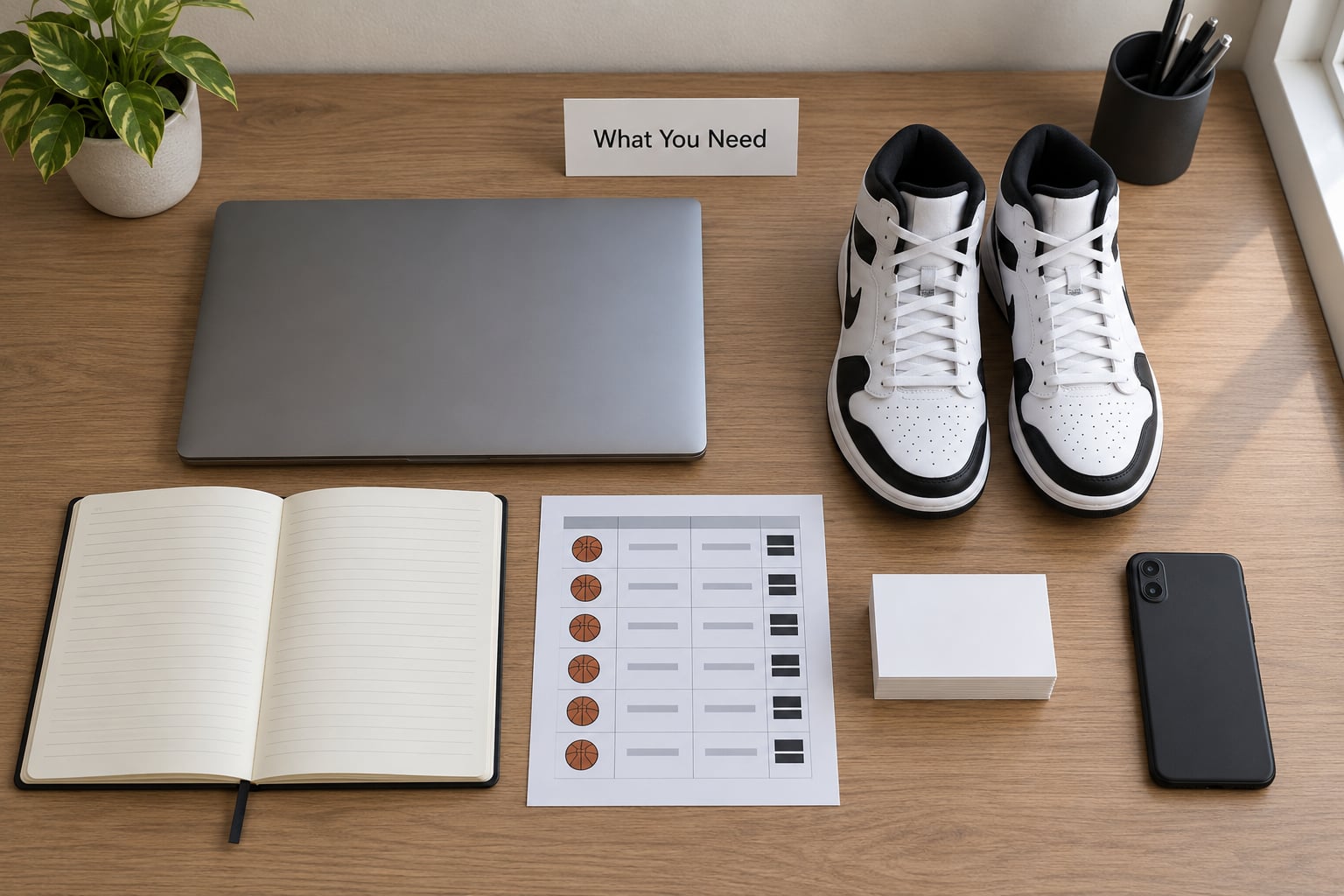
You do not need a camera, an agent or an existing audience to start. You need six things, and most of them cost nothing.
A positioning line. One sentence that says who you help and why you are credible at it. “I teach high school guards how to handle a full-court press” is positioning. “Basketball, motivation, lifestyle” is a category, not a position.
A twelve-month goal. Decide what the brand is for before the first post goes out, because the goal decides the platform. Improving your recruiting film, landing local sponsorships, growing a newsletter audience and preparing a post-eligibility business all want different things from the same account.
A named target audience. Coaches at your level, parents of players your age, fans in your home state, or people who want to train like you do. Pick one to start with. Three specific groups beat one vague one, because you cannot write a post that lands with all of them at once.
Three proof points. Specific things only you can say: a season you played through injury, a workout you built at 6am on empty, a school that gave you a chance nobody else did. These become the raw material for every piece of content you make.
Three content themes. Training and work, team and school life, and one genuine interest outside sport. That third one is the difference between an athlete account and a robot account, and it is what people follow you for once they already know how you play.
A contact list and your school’s rules. Twenty names of people who might hire you, a coaches’ media page listing you are happy to see, and the athletic department’s own policy on name, image and likeness deals. Athletic departments increasingly run NIL and compliance training sessions, so read what your program requires before you sign anything.
Step-by-Step
Five stages, run in order, each one feeding the next. You can finish the whole sequence in a month and then let it compound through a season.
Step 1: Define What You Stand For
Write your positioning line in one sentence, then test it on five people who play your sport. If they can repeat it back to you in their own words, it works. If they say “it’s kind of like what everyone does,” keep cutting until something specific is left.
Then decide the direction. Three archetypes cover most college athletes: the on-field competitor who documents the work and the grind, the voice and culture creator who is funny, sharp and consistent in tone, and the entrepreneur who is building something around the sport, from coaching clinics to gear to content. Plenty of athletes blend two. Pick a primary and treat the other as seasoning.
Your success signal is simple. A month from now, someone who has never met you should be able to describe what you do and who you help in one sentence. If they cannot, the positioning is not finished yet.
Step 2: Choose the Platforms That Fit Your Goals
Pick one platform you can post on well and one you can maintain lightly. Ten weak accounts across five apps will not build anything, and the brands you want have started checking whether your last thirty posts were any good.
| Platform | Who it reaches | Best content type | Realistic cadence |
|---|---|---|---|
| TikTok | Peers and younger fans | Short drills, reactions, honest practice clips | 3 to 4 posts a week |
| Fans, local community, brands | Reels plus carousels for long explanations | 3 posts a week | |
| YouTube | Recruiters and search traffic | Long breakdowns, interviews, vlogs | 2 videos a month |
| Newsletter | The people who will actually open it | Weekly notes on training, school, goals | Once a week |
| Coaches’ media page | College and pro coaches | Bios, high-school game film, stats, contact | Updated each season |
Video is the default for reach, but it is not the only play. A weekly newsletter, written in twenty minutes on a bus ride, gives you an owned audience that no algorithm can take away, and that asset is exactly what a small brand pays for.
Success signal: at the end of a month, one platform has clearly outperformed the others for you. That is the one to build on, and the others become places you repurpose rather than originate.
Step 3: Create Useful, Consistent Content
Useful beats polished. Athletes report that relaxed, honest, occasionally funny clips outperform polished sponsor-style posts, because the polish reads as an advertisement and the honesty reads as access to something real.
Build a repeating weekly rhythm rather than posting when inspired. Three posts a week is enough: one from the training pillar, one from team or school life, one from your outside interest. Repurpose each one everywhere instead of making something new for every app.
Then engage deliberately. Reply to every comment on the day it lands, especially the first hour. Ask questions back. Athletes who treat a comment thread like a conversation rather than a metric get far more out of the same audience than those who post into the void.
Success signal: you can point to a specific post that a stranger replied to or shared. One real reaction is worth more than a thousand views, and it is the number brands actually look at.
Step 4: Build Relationships Beyond the Screen
A polished profile cannot get you the things that matter most: local business owners, off-season training clients, a coach who makes a call on your behalf. Those come from being a known person in a room, so show up in person with a specific ask.
Start with the businesses already around you. The gym that hosts your team’s off-season workouts, the restaurant that feeds after a road game, the local running store, the sports medicine clinic that handles your rehab. Show up, be useful, and ask whether they have ever worked with an athlete. Small local deals are where most first partnerships actually come from, and they convert on trust rather than audience size.
Then protect the relationships that are hardest to build. Coaches, trainers, teachers and teammates are the referral engine long after any deal expires. Entering a treatment room with a thank-you note and no pitch is the most underrated brand move there is.
Success signal: at least one person who did not follow you online introduces you to someone else. That is a signal your brand has spread past the screen.
Step 5: Protect Your Reputation and Measure Progress
Lock down what you do not want public: private accounts, location tags off by default, old posts scrubbed, and a rule that nothing goes up the night before a game when you are tired and annoyed. Younger athletes with no media training cause the most damage this way, and a single careless post is the one thing a small audience remembers longest.
Watch who you are associated with. The company in your feed, the people in your group chat, the retweet you thought was harmless. On platforms, rules for sponsorship disclosure are not optional, and brands will ask you to follow them.
Then track four numbers monthly, not daily: saves and shares per post, comments left by other people, email or newsletter sign-ups, and inbound messages from strangers. Follower count is the one you should mostly ignore. Small, specific audiences convert into opportunities; large loose ones rarely do, and they are exhausting to maintain through a road trip.
Success signal: your inbound message rate rises month over month. That means the right people are watching, whatever the headline view count says.
A thirty-day starting plan. Week one: write the positioning line and test it on five people. Week two: set up the one primary platform and the media page, and clear out anything old. Week three: publish three posts a week and reply to every comment the same day. Week four: message ten local businesses, ask one coach for a recommendation, and write down which numbers moved. Then repeat the calendar for the rest of the season.
Common Mistakes
Most of the damage comes from a handful of habits, and every one of them has a straightforward fix.
1. Chasing follower count instead of attention. A number that looks good on a bio does not build anything. Brands ask about engagement and about whether your audience actually reads what you post, and a thousand people who care are worth more than a hundred thousand who scrolled past.
Fix: track saves, shares and replies. Report engagement per post, not audience size, in your media kit.
2. Being everything to everyone. Training posts on Tuesday, comedy reels on Wednesday, political posts on Thursday. Nobody forms a clear picture of you, and the algorithm cannot find an audience for a page that changes genre every day.
Fix: three content themes, named and written down, and stick to them for a full season before you change anything.
3. Letting the brand outrun the athlete. Promotions, appearances and shoots pile up until they take more time than training. Athletes and their families describe the pressure of brand work competing with film study and school as one of the hardest parts of the NIL era.
Fix: put a hard weekly cap on brand hours and defend it. Say no early; the deal that ruins your season is the one you accepted in October because you were flattered.
4. Signing anything without reading it. First-time athletes routinely accept usage-rights terms, exclusivity windows and morality clauses they do not understand. In discussion boards full of athletes and parents, contract confusion comes up far more often than the money itself.
Fix: have someone qualified read every contract before you sign, and ask specifically how long the brand can use your image, whether the deal is exclusive, and what happens if you transfer schools or go pro.
5. Ignoring the locker room. When one player earns six figures and his teammates earn nothing, the resentment travels faster than any social post. A personal brand that makes the team look like a charity is a liability inside your own program.
Fix: credit the people who made you look good, keep team content in your feed, and tell teammates before you announce anything.
6. Posting without thinking about tomorrow. A reply under heat, a joke about a coach, a photo with the wrong person. Athletes have no media training by default, and the internet keeps receipts.
Fix: wait twenty minutes before responding to anything emotional, and keep one rule you never break.
7. Treating the school as your marketing team. Some athletes assume the athletic department will build their presence for them. Most will not, and the ones that do rarely do it well, so waiting for it wastes your eligibility years.
Fix: read your program’s NIL and compliance policy, then run your own calendar alongside it. Your account is yours; the department’s help is a bonus.
Two smaller points worth keeping. NIL income is taxable as self-employment income and most athletes receive a W-9, so talk to an accountant early rather than at the end of the year. And rules around NIL, disclosure and revenue sharing differ by school and conference and change as the NCAA and courts revise them, so treat any summary, including this one, as a starting point for a conversation with your compliance office.
Frequently Asked Questions
When should a college athlete start building a personal brand?
Start in your first year, because the audience you build in college follows you into a pro career, a coaching job or a business. You do not need to be good yet, only consistent: position yourself, pick one platform, and post three times a week through a full season. Athletes who start late spend their eligibility catching up and have nothing to show a brand when they finally look.
How much time should a college athlete spend on social media?
Three hours a week is enough to build something durable: two short sessions to film and edit, one to post and reply. Protect travel days and heavy training weeks by batching content earlier in the week, and let a slow week be a slow week. The failure mode is not lack of time, it is the athlete who tries to post daily during a season and quits by November.
Can college athletes build a personal brand without becoming an influencer?
Yes, and most successful ones never touch the word influencer. A guard who posts honest practice clips for a small group of players and parents, or a distance runner who posts a weekly training note, has a perfectly good brand. Niche specificity with a loyal audience is what brands actually buy, and it is much easier to build than reach.
Should college athletes post about their team, school, or sponsors on the same account?
Keep team and school content on your main account, since it is genuine and fans expect it. Post sponsor work on the same account but label it clearly as a partnership, and never let a paid post look like an opinion. Rules on disclosure vary, and your program may have its own NIL policy, so check both before you post anything that mentions a company.
How can athletes protect their reputation while competing?
Set your accounts to private where you can, turn off location tagging, and scrub old posts before a season starts. Add one rule you never break, and never post while tired or emotional on a game night. If something goes wrong, correct it once, briefly, and move on. Most reputational damage comes from arguing publicly, not from the original mistake.
What metrics should college athletes track for personal-brand growth?
Track four things monthly: saves and shares per post, comments written by other people, newsletter sign-ups, and inbound messages from strangers. Those four tell you whether the right people are paying attention. Follower count is the least useful of them, because a large audience that never engages makes you look expensive to a brand instead of a safe bet.
Conclusion
How college athletes build personal brands comes down to four habits that repeat every week: say clearly who you help, post useful things on a schedule you can survive, answer people like a person, and guard the reputation you are building. None of it needs a big audience to start, and none of it works if you skip the first step.
So start small this week. Write the one sentence, pick the one platform, and put three posts a week on a thirty-day calendar. If you want the wider NIL picture, the House v. NCAA settlement changed how athlete money moves, and the rules keep shifting, so check your own program policy before you sign anything.