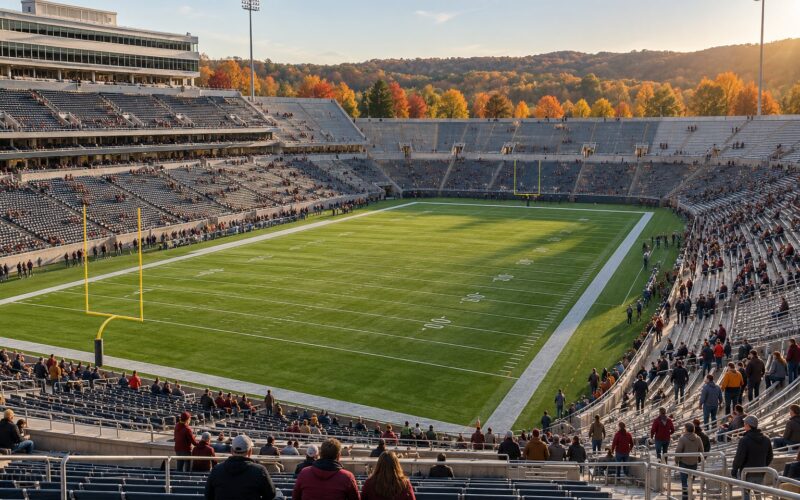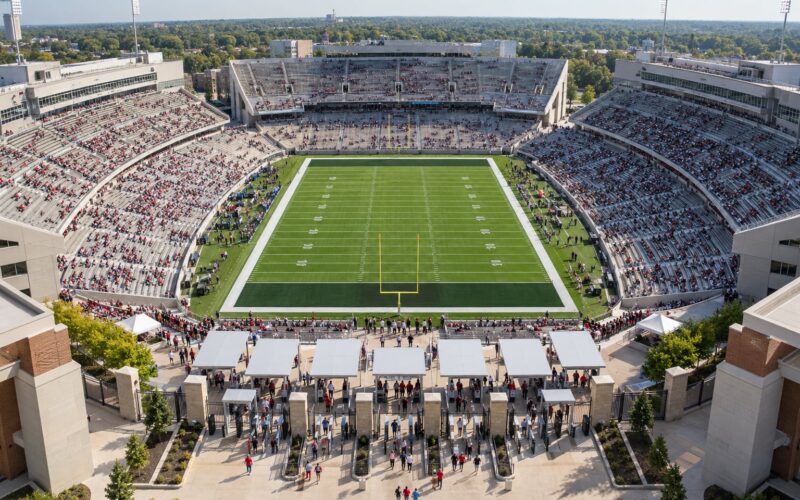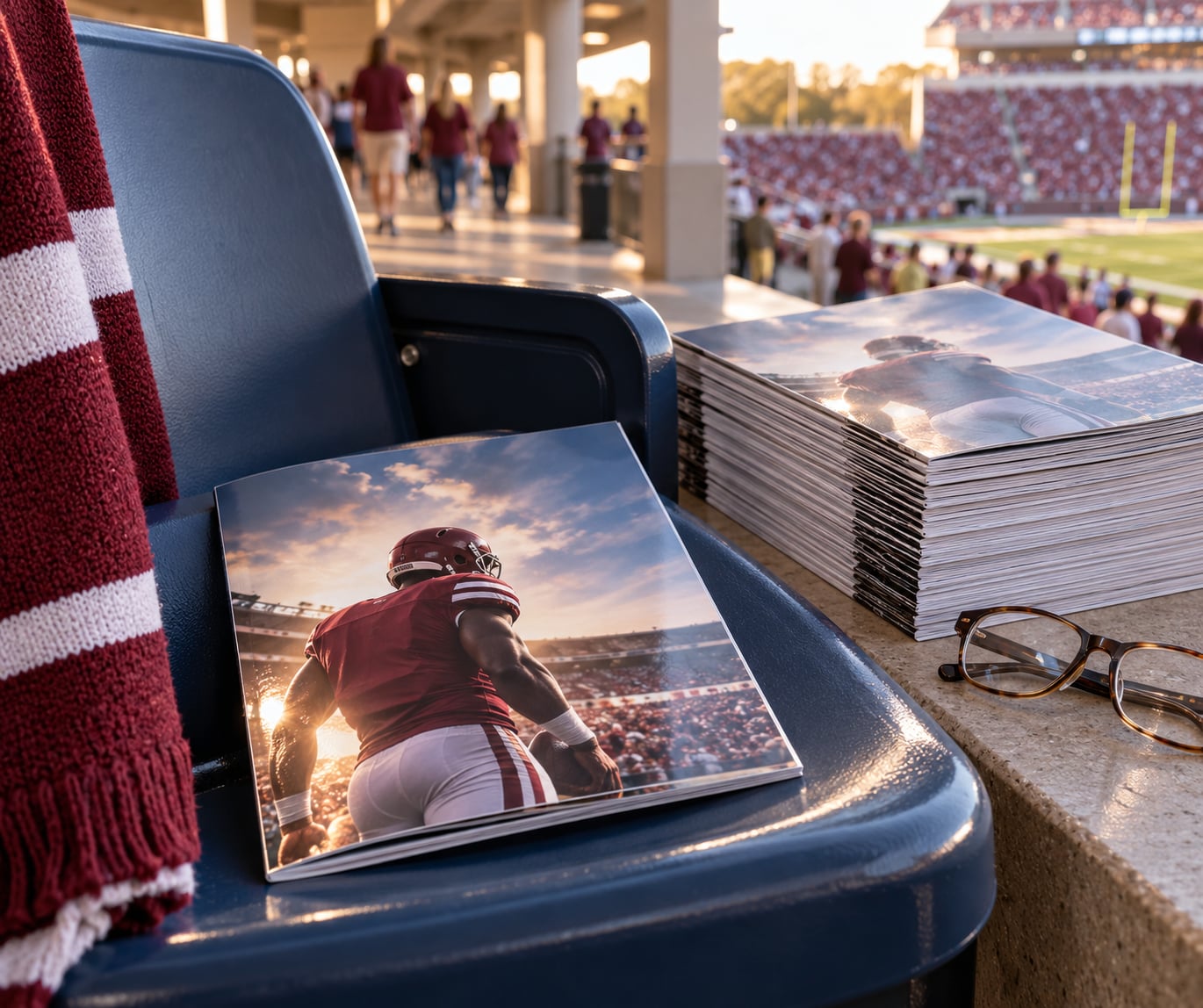
A college football game program is the printed booklet you buy at the gate on game day, not the EA Sports video game. Behind every copy sits a sports information director, a small creative team, a sales operation and a print vendor working a schedule that starts roughly nine months before kickoff.
Here is the short version: a program is planned, reported, designed, sold, proofed, printed and delivered. Each stage has an owner, a deadline and a set of files that move to the next one.
Table of Contents
- What Is a College Football Game Program?
- How College Football Game Programs Are Made: The Production Timeline
- How the Content Is Planned
- Who Makes a College Football Game Program?
- How the Writing and Reporting Are Completed
- How the Pages Are Designed
- What Happens During Proofing and Printing?
- How Programs Are Distributed and Used on Game Day
- What Makes a Game Program Useful to Fans?
- Frequently Asked Questions
- Conclusion
What Is a College Football Game Program?
A college football game program is the game-day booklet a school sells or hands out at the stadium. It carries player profiles, the roster, depth charts, season statistics, opponent history, coaching staff bios, a stadium guide and a set of sponsor advertisements.
It is not the same thing as a media guide. A media guide is the football operations book coaches and sportswriters use, packed with play calls, tendencies and depth chart detail, and it is not sold to fans. Nor is it a playbook, and it is not a recruiting magazine, even though recruiting language sometimes creeps into the player bios.
Typical programs run from about 32 pages for a single-season nonconference game to 96 pages for a rivalry or rivalry-adjacent game with heavy recruiting traffic. The bigger books carry longer player biographies, deeper historical sections and more full-page advertisements.
How College Football Game Programs Are Made: The Production Timeline
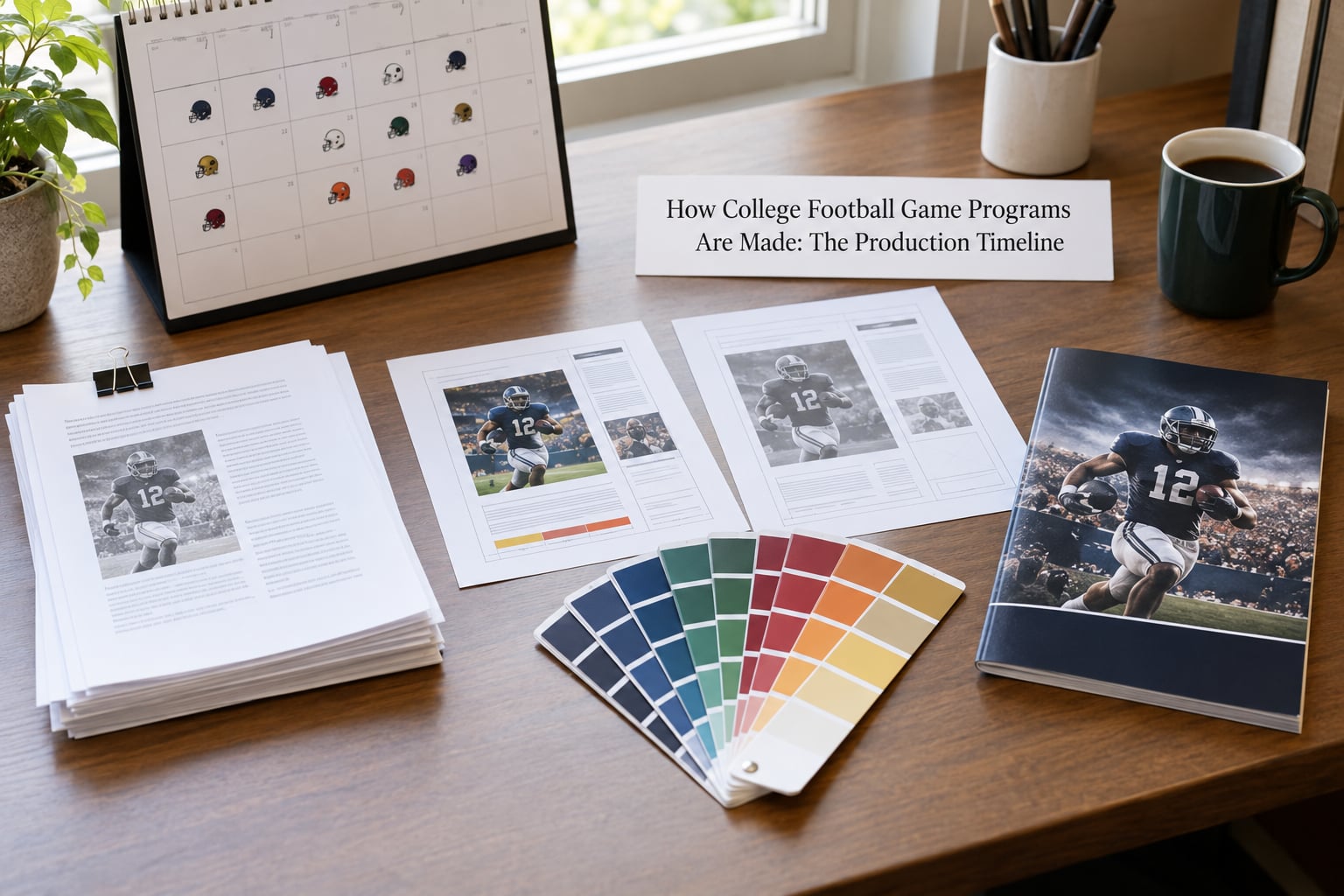
The whole job runs on a season calendar that starts before training camp and ends when the last gate copy is handed out on game day. Schools that print per-game programs repeat a compressed version of this cycle six or seven times a season.
| Step | Who owns it | Typical lead time before kickoff |
|---|---|---|
| Program concept and editorial calendar | Sports information director with the creative lead | 9 to 10 months |
| Cover art commissioned, shot or licensed | Designer, staff photographer or commissioned artist | 7 to 8 months |
| Feature reporting and player bios written | Student interns, assistant SIDs, staff writers | 6 to 7 months |
| Statistics compiled and rosters verified | SID office, team statistician, sports information staff | Rolling, from 6 months out |
| Advertising sold and placed | Account executive, outside agency or department sales staff | Deadline around 12 to 16 weeks |
| Layout and design | In-house designer or outside design studio | 6 to 8 weeks |
| Proofing, fact checking and corrections | Editor, sports information director, coaches | 2 weeks |
| Plate date, print run and delivery | Print vendor | 3 to 5 weeks |
| Gate distribution and in-season corrections | SID staff and student interns | Game week |
That table is the version every athletic department knows internally and no fan has ever seen laid out. Once you know the order, a question like why a program misses a roster change stops being mysterious: the plate date sits downstream of everything, so a correction after that point usually means a digital update instead of a reprint.
How the Content Is Planned
Before anyone writes a word, somebody decides what the program is for. At most schools the game program has four jobs at once, and the editorial calendar is built around ranking them.
The first job is information. Roster, depth chart, statistical totals, coaching staff, conference standings and the opponent profile are non-negotiable because a fan standing in line at the gate will turn to page 40 to check a jersey number. The second job is atmosphere: traditions, senior day, homecoming, band and spirit features, the stadium guide. The third is institutional storytelling, which is where the athletic department tells recruits what campus life looks like. The fourth, and the only one with a hard deadline attached to it, is advertising.
Game-specific relevance does the rest of the sorting. A rivalry game earns a longer historical package and a bigger photo essay. A nonconference home game against a lower-profile opponent often gets a shorter book with more space given to sponsors and campus information. A bowl game program is written for an audience that may not know the campus at all, so it leans heavier on history, tradition and venue logistics.
Anything that can be pulled later goes in the optional column. Player features, photo essays and long-form coach interviews are the first things cut when a deadline slips, because nothing on that list is needed to kick a ball.
Who Makes a College Football Game Program?
The sports information director is the spine of the operation. That role sits inside the athletic department, manages the media relations staff, owns the official records and statistics, and signs off on anything that prints a number or a quote about the team. Everything else hangs off that office.
Day to day, the writing is usually done by student interns and assistant sports information directors who are building portfolios for sports media careers. They interview coaches and players, pull practice reports, transcribe postgame availability, build the two-deep and fact-check biographies. A department might run three interns during the season and still be scrambling to close pages the week of a game.
Photography usually comes from the department’s own staff photographers, working game day and practice, plus a designer or a commissioned artist for the cover. Layout and design may sit in house or be handed to an outside studio that keeps the season template on file and swaps in a new cover and color system each year. On the other side, an account executive from a collegiate marketing agency sells the advertising, or the department does it in house with a rate card.
Then there is the print vendor, which is a separate company with its own production manager, prepress team and press schedule. Schools hand off final files and a plate date, and everything after that is the printer’s problem in the best possible way.
How the Writing and Reporting Are Completed
Reporting starts with availability. The sports information staff decides who talks to the press that week, schedules the interviews and gets the quotes into a shared document. Player features are built from those interviews plus background the writer already has on the athlete’s home town, position history and academic record.
Statistics are the part nobody improvises. Season totals, career records, school records, conference numbers and the opponent’s numbers all come from the SID office or the official statistics system, and they get reconciled against the coaching staff’s own numbers before they go to layout. A wrong rushing total on a keepsake program follows the family forever; the process exists precisely because these books outlive the season.
Quotes get edited for accuracy and length, then approved under the department’s media policy. Sensitive material is handled differently. Injury reports, personnel decisions and anything involving a player’s legal or health status either gets left out or gets written at a general level, because a printed page cannot be corrected once it is in ten thousand hands.
Editing is the unglamorous last mile. One editor reads for numbers, then a second pass handles names, hometown spellings, jersey numbers, titles and consistency between sections. Bylines and editorial credits usually get printed near the front so the writers and photographers are visible, which is also a courtesy that survives in old programs collectors care about.
How the Pages Are Designed
Design work begins before the season with a template. The editor sets a grid, a type scale and a set of section templates: full-page feature, two-column stat spread, player bio module, ad page, stadium map. Once that system exists, a game program becomes a matter of dropping new material into proven boxes.
Typography does most of the quiet work. A condensed display face handles headlines, a readable serif or sans handles body copy and stat tables, and the two never fight because the sizes were chosen together. Team colors drive the palette, with a secondary neutral so the pages stay legible when color runs heavy.
Photography is the emotional layer and the hardest deadline, because it depends on practices, scrimmages and game days that have not happened yet when layout starts. A program that runs a photo essay often photographs the previous season’s finale as the back-cover image, since those images exist at design time. The current season’s fresh action gets used smaller, where the layout can adjust page by page.
Statistics get their own visual treatment because fans scan them. Bolded numbers, lined columns and shaded headers make a totals page readable from six feet away, which is roughly the distance between a program in your lap and the field.
Then there is the digital version. The same content is rebuilt as a flipbook: a web viewer with page-turn animation, video, links and clickable ads. Most schools produce both from one set of files now, and the digital edition has to be designed for a phone screen rather than simply scaled down, or the stat pages become unreadable.
What Happens During Proofing and Printing?
Proofing runs in two passes. The first is an editorial proof, marked up for text corrections, missing statistics and photo credits, and it comes back to the writer as a marked-up set of pages. The second is a design or printer proof, which checks color, image placement, trim, bleed and anything that depends on the physical page rather than the words.
The printer checks the files technically: image resolution high enough for the size printed, color profiles converted correctly, bleed extending past the trim line, fonts embedded or outlined. A cover printed with a spot gloss or foil effect gets checked by eye against the proof, because those finishes show every fingerprint and every misalignment.
Paper choices are decided by feel and by budget. Heavier cover stock gives a program that feels like an artifact in the hand, while interior pages trade weight for bulk so the total page count stays comfortable. Binding is usually saddle stitch for shorter programs and perfect binding once a book passes roughly 64 pages, because folded pages fall out below that.
After the plate date, the files are locked. Anything found after that point does not get reprinted, which is exactly why some schools issue a one-page correction sheet at the gate or push a corrected roster into the digital edition.
How Programs Are Distributed and Used on Game Day
Most programs still print. Copies move from the vendor by freight to the athletics office or the stadium loading dock, then to gate counters, hospitality areas, the student section entrance and the press box. Some schools hand programs out, some bundle them with tickets, and a growing number include one in the season-ticket packet so the book is already in the stadium before kickoff.
What a fan actually uses it for is narrower than the table of contents suggests. Roster and depth chart before the game. Opponent tendencies and last season’s matchup while the bands play. Player bios between series for someone who does not know who number 7 is. Statistics to argue with your uncle about. The back pages for the local business that sponsors the band, which is why that ad stays in the book for years.
Late changes get handled differently depending on the timing. Before the plate date, a corrected roster simply goes into the next proof. After it, the department relies on the digital version, a handout, or an announcement. Anyone who built a collection knows which programs have a hand-written correction page taped inside the front cover, and those copies are often the ones worth holding onto.
What Makes a Game Program Useful to Fans?
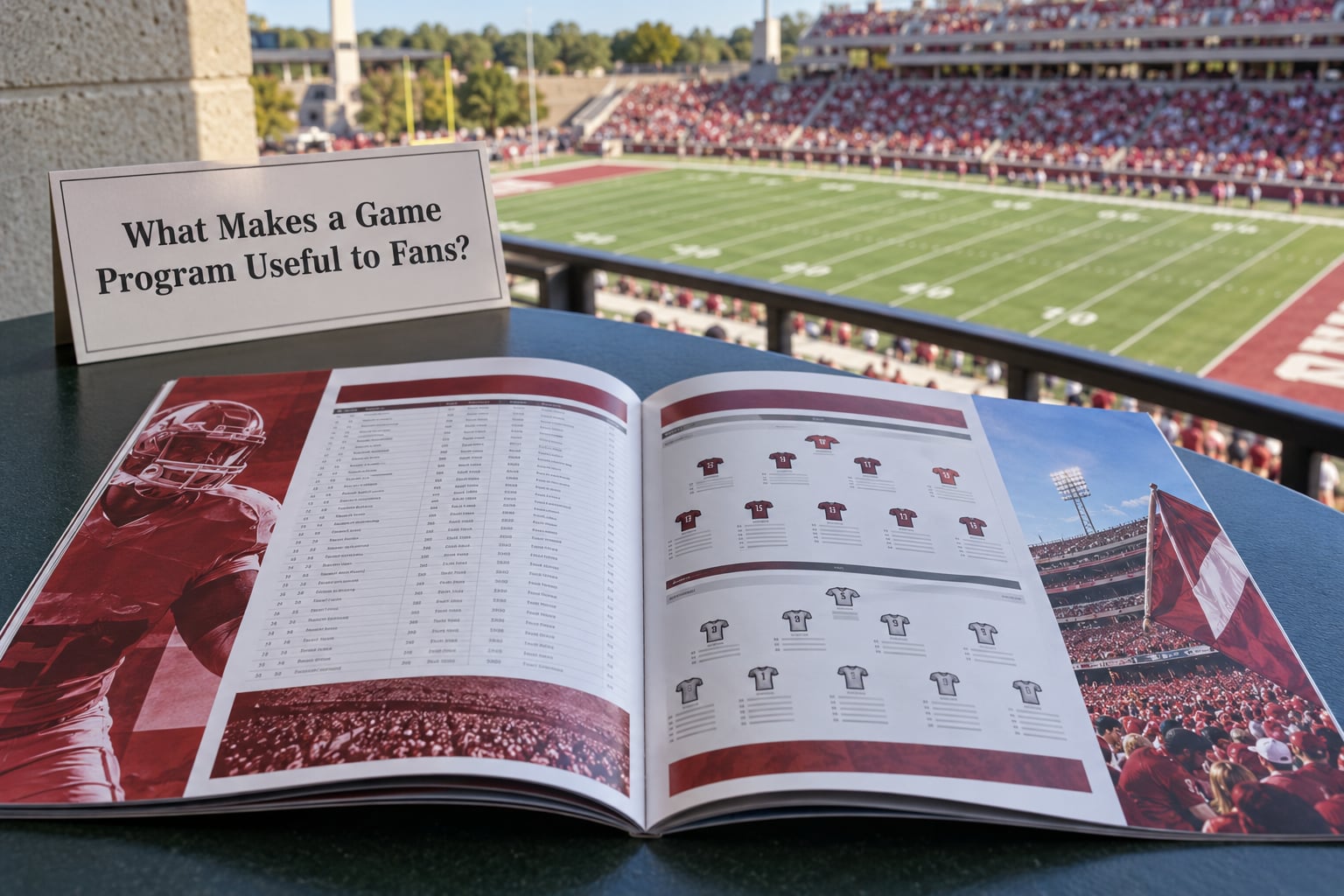
Useful programs share a few habits. Statistics are current and sourced. Rosters match the people actually on the field that week, not the ones printed in August. The depth chart is the version the coaches use, not the public relations version. Photography carries the personality of the program rather than filling space. And the digital edition loads fast on a phone in a stadium with bad signal, because that is where most people will actually open it.
A quick way to judge one: read the editorial credits and publication date on the inside cover, flip to the roster and compare it against the lineup announcements, then check whether the statistics section cites a season. Those three checks separate a program built by someone who was in the building from one that was assembled from a template.
There is one more layer, and it matters more than most fans expect at the time. A game program is a dated record of a team in a specific season, with specific starters, specific coaches and specific records. Decades later it becomes the reference people use to argue about what a roster actually looked like. That archival value is the reason a 40-page booklet from an unremarkable season can be worth more to a collector than a glossy championship artifact.
Some programs are also the only place a name appears. Student section chants, senior day lists and senior portraits show up in these books, and once the season is over, that print is the durable record.
Frequently Asked Questions
What is in a college football game program?
A game program carries the roster, depth chart, two-deep, season and career statistics, player biographies, coaching staff bios, the opponent profile, conference standings, historical records, a stadium guide with seating and campus information, and a set of sponsor advertisements. Page counts range from roughly 32 for a single nonconference game to around 96 for a rivalry game built around recruiting and tradition.
Who actually writes and designs a college football game program?
The sports information director owns the project and signs off on every statistic and quote. Student interns and assistant SIDs do most of the reporting and writing. Staff photographers shoot practices and games, an in-house designer or an outside studio handles layout and the cover, an account executive sells the advertising, and a print vendor handles prepress, proofing and press time.
How long does it take to produce a game program from start to finish?
A season-long game program starts planning nine to ten months before kickoff, with cover art locked seven to eight months out, design files delivered six to eight weeks before the first game and the plate date set three to five weeks ahead of delivery. Schools that print a separate program for every home game run a much tighter loop, often three to four weeks per game.
Why do some game programs cost more at the gate than others?
The gate price reflects page count, paper weight, cover finishes, print quantity and how much advertising the book carries. A rivalry program with a heavier cover, spot gloss and foil runs well above a thin nonconference booklet made in a large run. Schools also set different margins across their market, and some bundle the program into the ticket price rather than charging separately.
How do schools handle roster changes after the program prints?
Everything before the plate date goes into the next proof. After that date the files are locked at the printer, so corrections come out another way: an updated digital edition, a one-page correction sheet handed out at the gate, or a note in the pregame announcements. Programs with a taped-in correction sheet often carry more historical value because they record a real mid-season change.
Conclusion
A college football game program is a small publishing operation run on a season calendar: plan the content around nine months out, report and write it, design it on a template, sell the back pages, proof it twice, lock the files at the plate date and get the boxes to the gate before kickoff. Every copy in the stands is the end of that chain.
When you pick one up, start with the editorial credits and the publication date, check the roster against the lineup that day, and see whether the statistics name a season. Those three checks tell you whether a program was actually built by someone on campus, and a program that passes them is worth keeping long after the season ends.