
A recruiting commitment is a public statement of intent, not a contract. A decommitment is simply a recruit withdrawing that public statement and reopening the process, because nothing signed was ever forced on anyone else. That single distinction explains almost every confusing headline you will read between now and signing day.
Here is the shortest version of how recruiting commitments and decommitments work: a verbal offer is interest, a verbal commitment is a decision announced out loud, and the only document that actually shuts other programs out is a financial aid agreement. In Division I that document is the written offer of athletics aid, which replaced the National Letter of Intent in 2026‘s NCAA era after the Division I Council voted to end the NLI program in October 2024.
Everything else fans argue about in the comments follows from those three tiers.
Table of Contents
- What Is a Recruiting Commitment?
- What Is a Recruiting Decommitment?
- How Does the Recruiting Process Move From Offer to Decision?
- Why Do Recruits Decommit?
- How Recruiting Commitments and Decommitments Affect Eligibility
- What Do NIL, Transfers, and Flips Change?
- How Can Fans Tell a Real Change From Recruiting Noise?
- Frequently Asked Questions
- Can a college football or basketball recruit decommit after announcing a school?
- When does a recruiting commitment become binding?
- Can a university take back an offer after a recruit commits?
- What is the difference between decommitting, withdrawing, and flipping?
- Do NCAA recruiting commitments and the national signing period work the same way?
- Can a recruit decommit because of an NIL opportunity?
- Conclusion
What Is a Recruiting Commitment?
A commitment is a recruit telling schools, coaches, and the public which program he or she intends to sign with. The word carries almost no legal weight on its own. What determines whether a recruit is truly locked in is whether a financial document has been signed and whether the school has formally admitted and selected the athlete.
There are three tiers, and fans routinely blur them.
| Commitment type | Who signs it | Binding? | What it stops | How you exit |
|---|---|---|---|---|
| Verbal offer | Nobody | No | Nothing, it only signals interest | The coach or the recruit ends it |
| Verbal commitment | Nobody | No | Nothing, other programs may keep recruiting | The recruit decommits, which is routine |
| Written offer of athletics aid (Division I) | Recruit and school | Yes, on scholarship terms | Other schools may still contact him or her | Release request, or the school withdraws the offer |
| National Letter of Intent (still used in Division II) | Recruit and school | Yes, one year, with a release provision | Other schools may still contact him or her | Release, with mutual consent and a rescinded-by clause |
Verbal offers and verbal commitments
A coach’s offer, extended during contact periods or through an intermediary, is a statement about interest. A recruit who “commits verbally” is repeating that intent in public. Neither document exists in writing, and neither creates an obligation on the coach’s side to keep the scholarship open.
College coaches have said for years that they do not play hard to get, and the recruiting mechanics back that up. Programs release committed players with regularity. Treat an unannounced commitment as a strong signal of where a recruit stands today, not a promise about next fall.
The written offer of athletics aid
This is the document that matters. A school issues it, the recruit signs it, and the aid terms become enforceable. Even then, other schools may continue to contact the recruit, because contact is legal after signing in some windows. The recruit can request a release, and the school decides whether to grant it.
Did the NCAA get rid of the National Letter of Intent?
Yes, in Division I. The NCAA Division I Council voted in October 2024 to eliminate the NLI program, and written offers of athletics aid took its place as the signing document. Sport-specific signing periods were kept. Lower divisions were not changed by that vote, which is why a correct answer to “can you decommit after signing an NLI” starts with asking whether the recruit is in Division I at all.
What Is a Recruiting Decommitment?
A decommitment is a recruit withdrawing a public commitment so the process reopens. It is a normal, expected event in recruiting, and it happens far more often than the highlight packages suggest. Fans notice the churn and ignore the thousands of recruits who never waver.
It helps to separate four things that get called the same thing online.
Decommitting is the recruit ending their own commitment. This is the recruit-side move and it is entirely voluntary. Nobody is released, no penalty applies, and the recruit can announce it the same afternoon.
Withdrawing an application happens on the admissions side, not the athletics side. A recruit who withdraws an application has not decommitted from a coach’s class. The reverse is also true: decommitting from a program does not withdraw the application, so admissions can still be pending or denied afterward.
A release is the coach-initiated version. The school takes the recruit off its board, and the recruit becomes immediately recruitable again. Programs also quietly reopen a class and leave a committed recruit’s status ambiguous, which fans read as a decommitment when nothing has been announced at all.
A flip is a decommitment that lands somewhere else. Technically a recruit who decommits on Monday and commits to a rival on Wednesday has done both a decommitment and a commitment. Fans who refuse to call a flip a decommitment tend to be the same fans who will not accept that the first school’s coach was recruiting the player too.
Why wait to announce? Timing matters because a decommitment opens the recruit up to contact and offers, and a recruit who waits until a specific date is often waiting for a coach to go on the next staff he is interviewing for. Several programs also re-evaluate their boards right after a new coach is hired, so a recruit sometimes holds off until he knows whether he is still on it.
How Does the Recruiting Process Move From Offer to Decision?
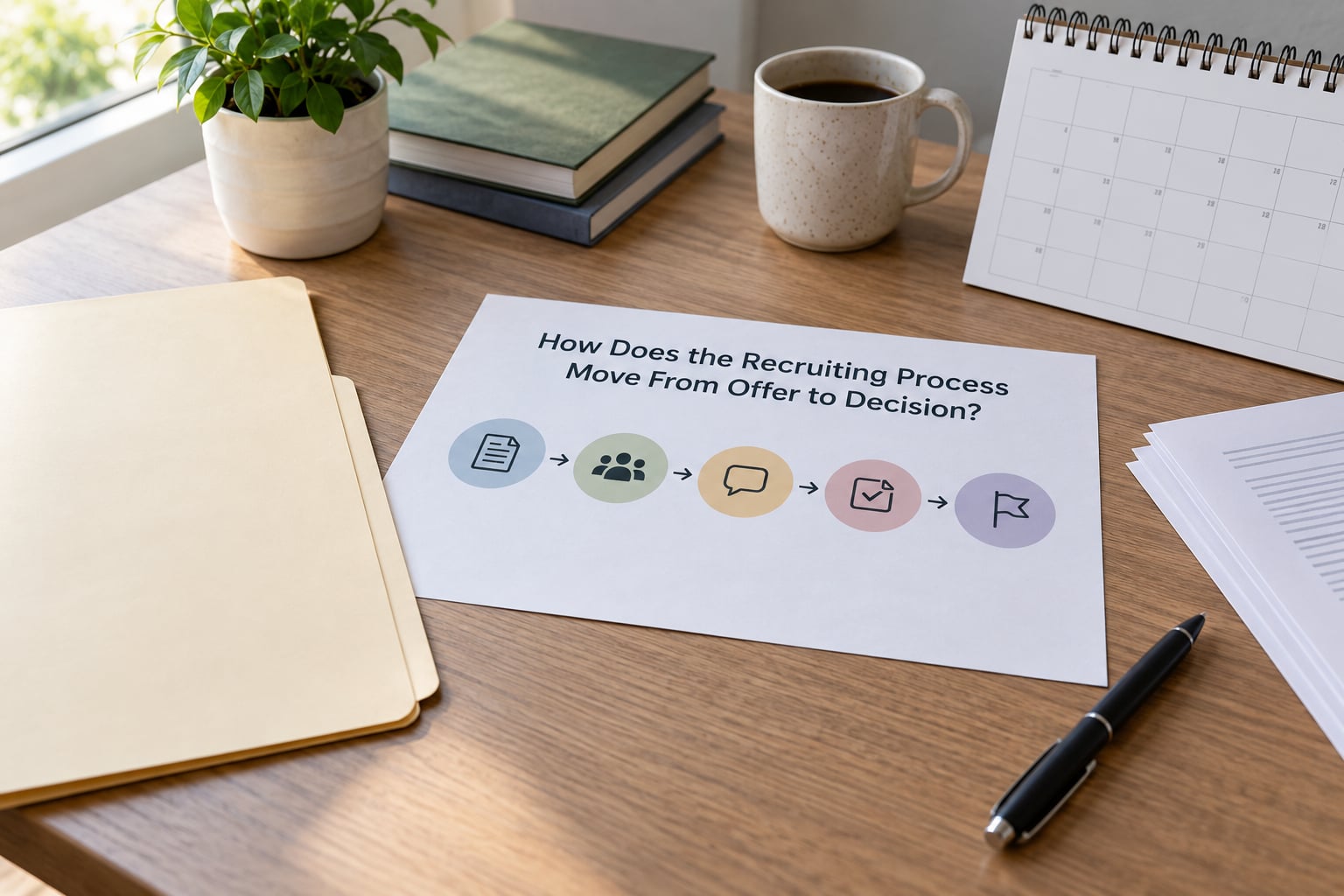
Recruiting runs in calendar stages, and each one carries a different weight. Knowing which stage a recruit is in tells you how much the announcement is worth.
| Stage | What happens | How firm it is |
|---|---|---|
| Early contact | Coaches and scouts build a file on a recruit, contact opens up | Very soft, no decision expected |
| Offers and unofficial visits | Verbal offers extended, campus visits arranged | Soft, most recruits hold several |
| Official visit | School hosts the recruit and families on its own schedule | Meaningful, though not final |
| Academic and geographic review | Cohort, campus and admissions fit get checked | Practical, filters candidates out |
| Announced commitment | Recruit publicly names the school | Strong intent, no legal force |
| National signing period | Sport-specific window closes and financial documents are signed | Enforceable from this point |
| Final verification | Compliance checks signing, eligibility and admissions | Decided by the school and NCAA, not the recruit |
The practical takeaway for a fan: the first four rows are tryouts, and only the last two lock anything in.
Why Do Recruits Decommit?
Most decommitments come down to one of a short list of reasons, and almost none of them are drama.
Coaching changes lead the list. A recruit commits to a coach, not to a logo, and a new head coach arrives with his own evaluations. Long-tenured recruiting assistants on the old staff leave with them, taking the relationship with them.
Position math is the quiet one. If a decommitment lands at the same position, or if the roster takes on two more players at a spot where the class is already crowded, the picture changes fast. Position math, not emotion, is often the actual trigger.
Playing-time competition counts. A recruit told he is the only offer at his position and then watches a higher-rated prospect sign months later has every reason to reopen things. Recruiters make hopeful claims early that the roster math does not always support.
Academic fit and campus geography cause quieter decommitments than fans expect. A family discovers a program is a poor academic match, or the distance from home turns out to be harder to sell than it looked on a visit.
Scholarship changes account for plenty of them. An offer can be revised, reduced, or converted to a different aid form after an equivalency review, and some recruits decide a different school is a better use of the same money.
A late offer from another program finishes the job. A recruit who had three soft offers and no scholarship suddenly has a full offer from a school he grew up following, and the earlier commitment loses its weight.
The decision checklist recruits actually use
A version of this checklist has circulated on recruiting boards for years without changing much. Take a major offer as insurance before senior year. Verify whether the staff is actually recruiting your position or filling a board. Check whether your recruiter is safe. Watch for a better situation opening. Factor in what your parents think. The wording drifts, but the logic has not.
One point from that same conversation deserves repeating, because fans get it backwards: no one stops recruiting a committed recruit unless the recruit says so. That is why a late flip is legally ordinary even when it feels like theft.
A representative example
Take a fictional Wildcats-style case. A four-star guard commits to a program in April. In May, the assistant coach who recruited him leaves for a head coaching job. In June, the new staff signs two guards. In July he decommits, reopens, and signs with a rival in August. Nothing in that sequence was a betrayal, a broken promise, or even unusual. It was four ordinary events in an unusual summer, and it is why coach tenure risk belongs on a family’s list before a commitment is announced.
How Recruiting Commitments and Decommitments Affect Eligibility
A public commitment affects relationships, not eligibility. Nothing about eligibility changes until paperwork is signed and the school completes its review, and that review belongs to the school and the NCAA rather than the recruit.
The chain runs in order. First the recruit signs a financial document. Then the school formally selects and admits the athlete, which is where academic standards, the faculty athletics representative and compliance enter. Then the NCAA clears initial or continuing eligibility for participation. Each step can stop the process, and none of them are controlled by the announcement a recruit made months earlier.
So a decommitment and an eligibility withdrawal are entirely different things. A decommitment is a recruiting event, done by choice, with no consequence attached. A withdrawal caused by an academic or compliance determination is an administrative act, and it can come with restrictions on where a recruit may go next. Voluntary decommitment and administrative release are routinely discussed as if they were the same, and they are not.
NCAA, conference, high school and institutional rules all control here, and the specifics change. Anyone facing a real eligibility question needs their own compliance office, not a fan forum.
What Do NIL, Transfers, and Flips Change?
Name, image and likeness decisions have made money part of the conversation, and recruits do factor it in. What they have not done is changed the legal structure. A NIL deal is a separate arrangement between an athlete and a third party. It binds nobody to a program, it does not turn a verbal commitment into a contract, and a promised deal that never closes is a common disappointment.
The transfer portal is a separate process from recruiting, and the distinction matters more than most fans realize. A decommitment happens before signing, when the athlete has not signed anything. A transfer happens after enrollment, when eligibility rules, scholarship counting and the one-time transfer exception all apply. Expecting a released recruit to land somewhere specific is not the same as expecting a high school senior to flip.
Flips themselves carry no rule of their own. A recruit can decommit on a Sunday and commit to another school on Monday, and every school involved may have been recruiting him the entire time. Recruits who flip most often are usually the ones carrying several offers late, not the ones lacking options.
How Can Fans Tell a Real Change From Recruiting Noise?
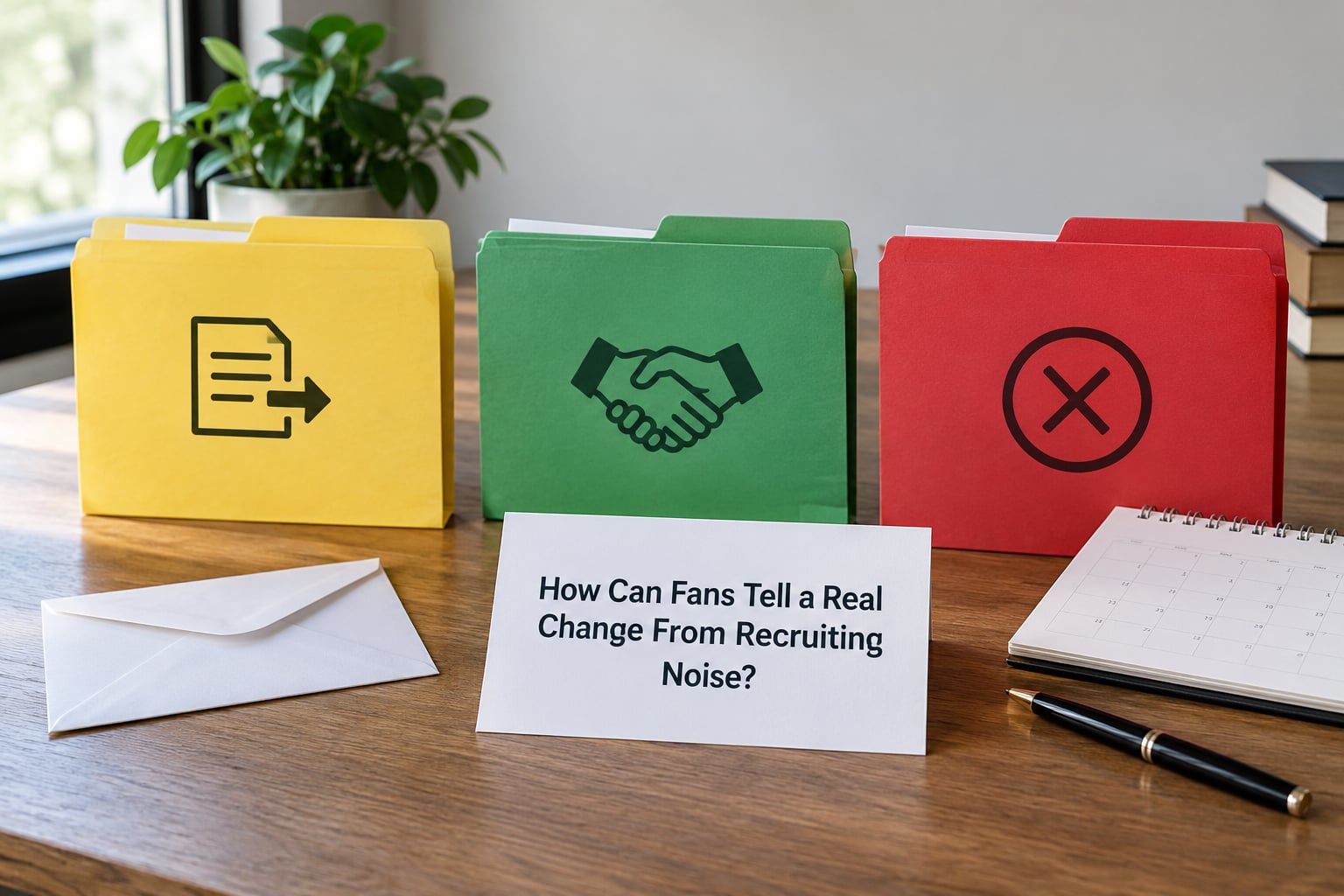
Most of the drama people see online is a category error: treating a soft signal as a firm one. This checklist is the fastest way to sort it out.
| What you saw | What it usually means | What it does not mean |
|---|---|---|
| A coach visited the school | The file is active and being evaluated | That an offer follows |
| A verbal offer was reported | Interest exists as of that week | That a scholarship is reserved |
| A commitment was announced | Strong stated intent | That other programs stopped recruiting |
| A decommitment was announced | The recruit reopened the process | That a rival has won him |
| A coach left the staff | Relationships with his recruits moved with him | That every one of them is leaving |
| A signing was reported | A financial document exists or is imminent | That eligibility is already cleared |
Four habits make the difference for anyone following a commit class day to day.
Check the date before the emotion. A commitment posted in June and a signing posted in December are different events with different weight, and posts often blur the two.
Go to the primary source. The school’s own athletics site, the conference, and the NCAA carry the documents that matter. Aggregators such as 247Sports, On3 and Rivals are fast and useful for tracking, and their decommit trackers exist because fans demanded them, but ratings and star counts are scouting estimates rather than offers.
Watch contact patterns. When the calls and texts stop, interest has stopped, and that is more informative than any post. Coaches do not play hard to get.
Count the class, not the announcements. A class with heavy churn at one position is telling you something about that position’s depth. A quiet class is not a weak class.
Frequently Asked Questions
Can a college football or basketball recruit decommit after announcing a school?
Yes, and it happens constantly. A verbal commitment is a public statement, not a contract, so a recruit may withdraw it at any time and reopen recruiting to every school that is allowed to contact him. Other programs can and do keep recruiting a committed recruit until financial paperwork is signed. That is why an announced commitment is worth reading as strong intent rather than a final answer.
When does a recruiting commitment become binding?
It becomes enforceable when a financial document is signed. In Division I that is the written offer of athletics aid, which replaced the National Letter of Intent after the Division I Council voted in October 2024 to end the NLI program. Signing periods were kept. Until that document exists, other schools may continue recruiting, and even afterward they may still make contact during open windows.
Can a university take back an offer after a recruit commits?
A school can decline to admit or select an athlete, and it can withdraw an offer during the signing period, but it has to follow the rules that govern that window. A verbal offer is far easier to retract than a signed financial document. Most public reversals before signing are not a rescinded offer at all; they are a decommitment, a reopening of the class, or a coach leaving and taking his relationships with him.
What is the difference between decommitting, withdrawing, and flipping?
Decommitting means a recruit ends his own public commitment and reopens his recruiting. Withdrawing usually refers to the admissions side, where an application is pulled, which is separate from the athletics commitment. Flipping is the sequence: a decommitment followed almost immediately by a commitment to another program. Fans treat flips as morally different from decommitments, but the recruiting mechanics are identical in both cases.
Do NCAA recruiting commitments and the national signing period work the same way?
Not quite. Signing periods still exist after the 2024 elimination of the National Letter of Intent, and they still carry weight because they close the window in which most recruits sign. What changed in Division I is the document, not the calendar. In Division II the NLI remains in use, so answers about decommitment after signing depend on which division the recruit plays in.
Can a recruit decommit because of an NIL opportunity?
They can, and plenty of families weigh money as part of the decision. A NIL arrangement is a separate agreement between an athlete and a third party, though, and it does not bind a school or change what is legally enforceable. Recruits have learned the hard way that promised deals sometimes do not close. Treat NIL money as one factor in a decision rather than a reason on its own.
Conclusion
The first thing to check when commitment news lands is which of the three tiers you are actually looking at. An offer is interest, an announced commitment is stated intent, and only signed financial paperwork plus admissions and eligibility clearance actually locks a recruit into a program.
Once you sort the news into those tiers, the cycle stops feeling like a betrayal every summer. Most decommitments are roster management, coaching changes and position math, and none of them break a promise that was ever legally made.