To store and protect sports memorabilia you need four layers: wrap the item in acid-free material, box it in an archival container, block light with UV-filtering glazing or a closed lid, and hold the room between 65 and 72F with 40 to 50 percent relative humidity. Handle with clean gloves or clean hands, and keep everything out of sunlight, damp basements and hot attics.
Condition is the single biggest driver of what a piece is worth later. Faded signatures, warped cards, mold blooms and smoke damage are also the kinds of loss most standard homeowners policies do not pay for, which puts storage squarely in the preservation column rather than the decoration column.
The whole job takes an afternoon for the first setup and about twenty minutes twice a year after that.
Table of Contents
- What You Need
- How to Store and Protect Sports Memorabilia Step by Step
- Common Mistakes
- Frequently Asked Questions
- How long can sports memorabilia be stored safely?
- Is it okay to store sports memorabilia in plastic bins?
- How should I protect signed jerseys and autographs from fading?
- What is the best way to store baseball cards and other trading cards?
- Can I store sports memorabilia in a basement or garage?
- When should I use a professional conservator for valuable memorabilia?
- Conclusion
What You Need
Start with supplies, not with a nicer display case. Most damage traces back to an item that had no protective layer at all, and every layer below costs far less than replacing a faded signature or a warped card.
- Acid-free tissue paper, buffered and unbuffered, for wrapping and interleaving
- Polyester craft batting as a cushioning layer inside frames
- Tyvek garment bags or acid-free tissue for jerseys, caps and uniforms
- Mylar or polypropylene sleeves for cards and flat paper items
- Acid-free board boxes, sometimes sold as archival boxes, sized to the item
- UV-filtering glass or acrylic glazing for anything you intend to frame
- Cotton or nitrile gloves, plus clean dry hands for small pieces
- Soft hog-bristle brush, cotton swabs and a dry microfiber cloth
- A digital hygrometer, silica gel or desiccant packs, and a dehumidifier for humid months
- Level, wall-anchored shelving that holds more weight than you think it needs to
- A notebook or spreadsheet for dates, sources, condition notes and photographs
For a shoebox of common cards, sleeves and one acid-free box cover nearly everything. A framed jersey needs batting, a frame kit and glazing. Match the spend to what you actually own, not to what you might own next year.
How to Store and Protect Sports Memorabilia Step by Step
The order matters here. Deciding what an item is made of before you buy a single sleeve prevents the most expensive mistakes, because a solution that protects a baseball will do nothing for a newspaper clipping.

1. Identify the Material and Item Type
Memorabilia fails by material, and each one reacts to light, moisture and handling in a different way. Sorting first takes five minutes and saves everything that follows.
- Paper and card stock: trading cards, ticket stubs, programs, posters, newspaper clippings, certificates and photos. These yellow, brown and become brittle with age, and newspaper ink stays chemically active for decades.
- Fabric: jerseys, uniforms, warm-up jackets, pennants, towels and caps. Fabric fades unevenly, its dyes bleed onto anything touching it, and folded textiles take permanent crease lines.
- Leather: baseballs, footballs, gloves, batting gloves and footballs. Skin oils darken the surface, and the leather dries, splits or grows a white powdery film when conditioners are used.
- Wood: bats, bat racks, wooden trophies, bases, racks and pens. Wood cracks, checks and splits as humidity swings, and it darkens permanently if damp.
- Plastic, rubber and composite: graded card slabs, hockey pucks, helmets, mini helmets and acrylic pieces. Low-quality plastic off-gases, and older rubber hardens and cracks with age.
- Metal: trophy hardware, medal cases, belt buckles, pucks and coins. Corrosion, verdigris and rust come from moisture plus acidic cardboard or tissue.
Write the material on the outside of whatever container you use. Six months from now you will not remember which box held the program from the 2019 game.
2. Handle Items Cleanly and Minimally
Wash and dry your hands before touching anything, or wear cotton or nitrile gloves for leather, metal and older paper. Bare hands are fine for a clean, modern card in a sleeve.
Hold paper by its edges. Fingers carry oil and salt, and those fingerprints show up first on autographs, on card faces and on any light surface under raking light. Never rest a finger on a signature, a printed face or the stitching of a jersey, even for a second while you get your grip.
Limit handling to one trip per item. Photographing a piece is the cheapest way to inspect it, which means most collections need far fewer physical check-ins than people assume.
3. Clean Items Using the Least Risky Method
Use the driest method that will work, in this order: soft brush, dry microfiber cloth, then a barely damp cotton swab if nothing else does it.
- Cards: a soft brush over the sleeve only. Never touch the card surface, and never use an eraser, since crumbs embed in edges and acid eraser dust is exactly what you are trying to avoid.
- Leather balls: a dry cloth, then barely damp cotton with distilled water if the ball is dirty. Test an underside first. Skip oils, waxes, conditioners and silicone sprays, which leave a white mold-like film on the surface that keeps coming back.
- Fabric: air out the garment first. If it genuinely needs washing, cold water, mild unscented detergent, no bleach, no dryer, and dry it flat.
- Paper and newsprint: do not clean. Air out a musty piece in shade and leave it to a conservator if it is fragile or valuable.
- Wood: dry wipe only. No furniture oils, no silicone, nothing that leaves a film.
What never goes on memorabilia: water, household cleaners, alcohol, solvents, magic erasers, aggressive brushing and photographs. Every one of those removes surface material that cannot be put back.
4. Use Archival Materials for Wrapping and Containment
The container decides how long the item lasts, because it controls what touches the surface and what the air around it does.
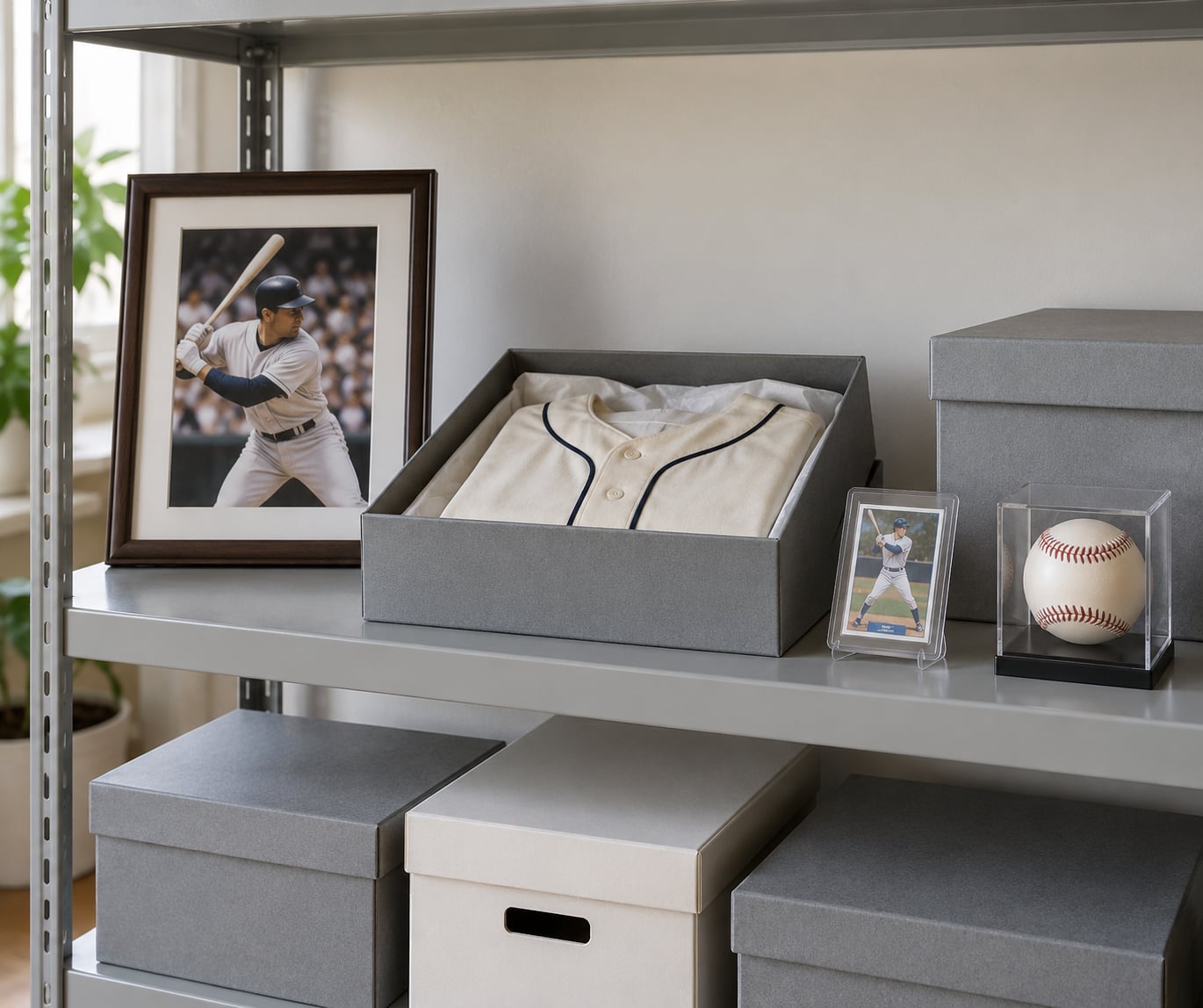
For cards, build a stack. An inner polypropylene or mylar penny sleeve takes fingerprints off the surface, a toploader or magnetic one-touch holder adds rigidity, and a graded card already in its own slab only needs a box to keep it from shifting. Match holder thickness to card thickness, so 35-point for a standard card and 55-point for a thicker insert or thicker modern stock. Mylar blocks moisture and gas better than polypropylene, so use it for long-term storage of high-value or rare cards; polypropylene is cheaper and fine for most common cards.
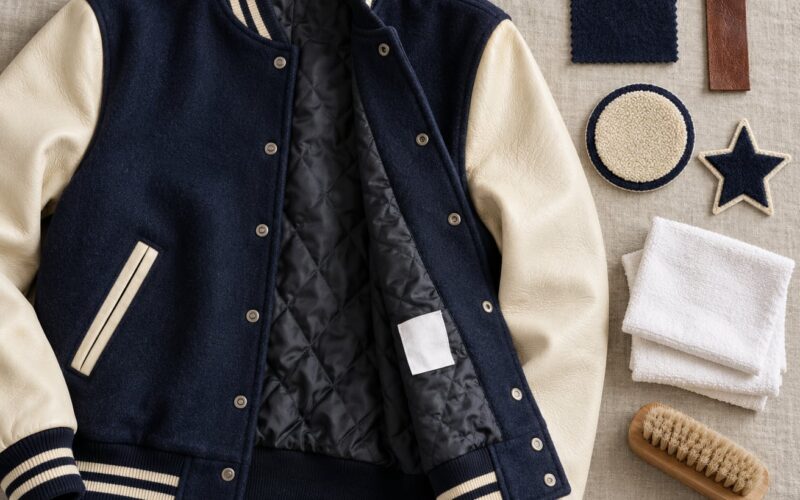
For jerseys and uniforms, frame them or box them. In a frame, lay polyester batting under the fabric so the stitching and any raised names do not press into the backing board. In a box, fold along existing seams, wrap the fold line in acid-free tissue, interleave with more tissue, and place the whole piece in a Tyvek garment bag inside an acid-free board box. Take the dry-cleaning bag off and air the garment out first, because that plastic yellows and transfers acid.
For balls and gloves, set them in a fitted box so they cannot roll or shift, and keep them out of direct light. Leather lasts longer when it breathes, so a closed board box beats a sealed plastic bag.
For hats and caps, keep the shape by filling the crown with acid-free tissue and storing the cap on its brim, not on its side.
Know what never touches memorabilia: PVC vinyl sleeves and bags, rubber bands, tape, ordinary cardboard, foam, wool felt, wood-pulp board without a buffer, and any newspaper. Cheap cardboard and PVC sleeves are the two most common reasons a well-kept collection still browns and sticks together.
5. Store Items in a Stable, Climate-Controlled Location
Aim for 65 to 72F and 40 to 50 percent relative humidity, and the bigger win is steadiness rather than a perfect reading. Swings are what crack wood, curl paper and grow mold, so a stable attic beats a well-sensored closet.
Aim these numbers and check them with a cheap digital hygrometer you can see from across the room. In humid months a small dehumidifier or a sealed box with a desiccant pack inside holds the range; dry winter air is easier to fix with a tray of water and a closed room than anything else.
Where you keep it matters more than the shelf itself.
- Avoid basements, garages and attics. Basements bring flooding, must and pests. Garages bring temperature swings, road salt dust and pests. Attics cook pieces through summer heat and freeze them through winter.
- Avoid exterior walls. A wall that touches outside air passes heat and damp straight into the collection.
- Interior closet or cabinet works. Solid shelf, level, wall-anchored, out of direct sun, with a few inches of clearance behind items so air moves.
- North-facing rooms light better than west-facing ones for a display area.
- Storage units are the weak link. Unheated units swing from below freezing to extreme heat and sit in flood zones. A climate-controlled unit inside a building beats an outdoor unit on almost every count.
For light: LED only, no direct sun, and UV-filtering glazing on anything framed. For fire, a home safe rated UL 150 is the target for records and slabs, which deform above roughly 200F. No safe is waterproof, only water resistant, so keep boxes off the floor. And treat UV claims with an eyebrow raised, because no certification mark exists for display cases advertising full UV protection.
6. Inspect and Rehouse Memorabilia Periodically
Set two dates a year, spring and autumn, and give the collection twenty minutes each time. The point is catching one problem early, because most damage spreads from a single damp or infested box.

- Fading: compare against the photograph you took when the item arrived. New yellowing around card edges or a lighter signature means the enclosure is failing.
- Bending and warping: cards curl, sleeves stick, paper corners dog-ear. Re-sleeve with a fresh sleeve and flatten under clean weight.
- Mold: a musty smell, white or green speckling, or card surfaces that feel tacky. Isolate the box, air it out in shade, and treat the whole box, not just the visible item.
- Pests: webbing, frass, small silvery fish, or chewed card edges. Move everything out, identify the insect, clean the shelving before anything goes back.
- Corrosion and staining: green or rust marks under metal hardware, or a brown ring where leather met cardboard.
- Container failure: yellowed PVC sleeves, brittle foam, peeling tape, a warped lid.
When something looks wrong, photograph it first, isolate it from the rest of the collection, and swap the container before you try to fix the item. High-value pieces with mold, tears or an active signature problem belong with a conservator rather than in your kitchen.
Common Mistakes
Almost every ruined collection I have looked at came down to one of these, and most of them are free to fix.
| The mistake | What it does | The fix |
|---|---|---|
| Plastic storage bins with snap lids | Off-gassing and trapped moisture, so mildew and sticking cards | Acid-free board boxes with lids, one item per box |
| Bubble wrap for years | Plasticizers migrate into leather and paper, which then fuse | Acid-free tissue or polyester batting, gentle pressure only |
| Dry-cleaner bags left on garments | Yellowing, acid transfer, fabric never breathes | Remove the bag, air the garment out, use Tyvek |
| Ordinary non-UV glass or acrylic | Fading continues under the glass, where you cannot see it | UV-filtering glazing, and keep frames off sun-facing walls |
| Permanent display | Light exposure accumulates even under UV glass | A rotation schedule, LED lighting, and dark storage in between |
| Stacking fragile items under weight | Cracked slabs, bent cards, crushed corners | One layer, flat, nothing resting on top |
| Weak or uneven shelving | Sag, collapse, items on the floor | Level, wall-anchored shelving rated above your real load |
| Ink pens on autographs, tags or boards | Bleed-through, fading, ghost marks that cannot be removed | Never write on the item; use archival pencil or pigment ink on a separate label |
| Attic or basement storage | Heat, freeze, leaks, pests, and swings that crack wood | A conditioned interior closet or cabinet |
| Bare hands on leather or signatures | Oils darken leather, prints show, corrosion starts | Gloves, or clean dry hands, holding items by the edges |
| Trusting UV protection claims | No standard seal exists, so protection varies widely | Ask for a stated UV blocking rating, and test with a UV flashlight if unsure |
| No record of what you own | No proof of condition for insurance, a move or a sale | A photo and spreadsheet log, updated as items arrive |
On display, a rotation schedule does more good than any product. Pick three to six pieces for a wall, leave them up about three months, photograph them, then swap them back into an acid-free box. Rotate the wall rather than rotating the frame, and use LED lamps on a timer so nothing is lit all day.
Document before you pack, not after. Photograph every item out of its box, in good light, with a ruler or coin for scale, then photograph the box with its label. Record what it is, where it came from, when you got it, its condition and any certification number. People planning a move or an insurance claim ask exactly this question, and it is much cheaper to answer it in a spreadsheet on Sunday than to reconstruct it later.
Insurance deserves ten minutes of the same attention. A homeowners policy usually carries a modest cap on personal property and pays only for named perils such as fire, theft or a covered storm, which means fading, mold and gradual moisture damage often go unpaid. A collectibles policy is all-risk with much higher limits and typically avoids the claims database that can raise a homeowner’s premium. A fine-art rider floats coverage at an appraised value. If a piece is genuinely valuable, get a written appraisal and confirm the coverage in writing rather than assuming.
Frequently Asked Questions
How long can sports memorabilia be stored safely?
Decades, if the enclosure is right, because most memorabilia does not expire on a schedule. It fails from light, humidity swings, pests and the wrong plastics. Paper in an acid-free box in a stable interior closet routinely outlasts the same items in a plastic bin in a garage. Two things shorten that timeline: acidic cardboard and off-gassing plastic.
Is it okay to store sports memorabilia in plastic bins?
Only if the plastic is PVC-free archival plastic and the items inside are already protected. Common storage totes and bubble wrap off-gas, and a sealed lid traps the moisture that grows mold, which is why cards in bins often stick and curl. Acid-free board boxes with lids do the same job without the chemical side effects, and they cost about the same.
How should I protect signed jerseys and autographs from fading?
Keep autographs out of the light as much as possible, since even UV-filtering glazing slows fading rather than stopping it. Frame jerseys with polyester batting under the fabric so names and stitching do not press into the board, and store anything not on the wall in an acid-free board box. Rotate pieces on and off the wall on a schedule instead of leaving the same items up year round.
What is the best way to store baseball cards and other trading cards?
Layer it. An inner polypropylene or mylar penny sleeve protects the surface, a toploader or magnetic one-touch holder adds rigidity, and the stack goes into a box or binder stored away from light and heat. High-value cards go in mylar sleeves, since mylar blocks gas and moisture better than polypropylene. Match holder thickness to the card, 35-point for standard stock and 55-point for thicker cards.
Can I store sports memorabilia in a basement or garage?
Avoid both if you can. Basements bring flooding, musty odor and insects, and garages bring wide temperature swings plus road dust and pests, all of which warp cards, split wood and mildew fabric. If indoor space is genuinely impossible, use a climate-controlled unit rather than a standard one, seal everything in acid-free boxes and check it a few times a year.
When should I use a professional conservator for valuable memorabilia?
Use one when the piece is high value and the problem is physical rather than cosmetic: active mold, tears, flaking ink, a fading or bleeding signature, warped cards fused together, or a document that needs deacidification. Paper and textile conservators do assessments, and a reputable framing shop can handle UV glazing and mounting. Ask for an assessment first, since conservation costs real money.
Conclusion
Four things to do first, in this order. Work out what each item is made of, since paper, leather, fabric and wood each need their own approach. Keep your bare skin off signatures, card faces and leather. Put each piece in an archival container, an acid-free box or a frame with UV-filtering glazing. Then choose a stable, conditioned interior space and set two dates a year to check it.
Everything past that is refinement. The four habits above stop nearly every form of damage collectors actually run into.